

If you want to increase your tomato yield, using grow lights for tomatoes indoors is a great strategy. This approach gives you a significant advantage, as studies show you can harvest up to 17% more tomatoes. The fruit tends to be larger and ripens faster when using grow lights for tomatoes. However, you may face challenges such as selecting the right compact variety and managing heat, humidity, and disease. Proper light management through using grow lights for tomatoes helps address these issues, keeping your plants healthy and productive.
Key Takeaways
- Pick LED grow lights for tomatoes. They use less energy and make less heat. They help tomatoes grow better than fluorescent lights.
- Change the light color and strength as tomatoes grow. Use more blue light for young plants. Use more red light when plants flower and make fruit.
- Put grow lights at the right height. Keep them higher for young plants. Move them closer for older plants. This stops leaves from burning and helps plants grow strong.
- Set Smart Agricultural Control System for the lights. This gives plants the same light every day. It helps plants rest and make better fruit.
- Check temperature, humidity, and plant health often. Use machines and data to help plants grow better and get more tomatoes.
Choosing Grow Lights

LED vs. Fluorescent
When you look at options for using grow lights for tomatoes, you will see two main types: LED and fluorescent. LEDs stand out for commercial growers. They use up to 75% less power than fluorescent lights and last much longer—up to 50,000 hours. LEDs also give off less heat, so you can place them closer to your tomato plants without worrying about burning the leaves. This helps your plants get more light and grow faster. Fluorescent lights work well for seedlings but do not provide enough intensity or the right spectrum for fruiting tomatoes. If you want higher yields and lower energy bills, LEDs are the better choice.
💡 Tip: LEDs can boost tomato yields by up to 16% compared to fluorescent lights.
| Grow Light Type | Energy Efficiency | Typical Use Case |
|---|---|---|
| LED | Very high | All plant stages, including fruiting tomatoes |
| Fluorescent | Medium | Best for seedlings and small plants |
Spectrum Needs
Tomatoes need both red and blue light to thrive. Blue light helps with leafy growth, while red light supports flowering and fruiting. Full spectrum LED grow lights cover all these needs. For seedlings, a higher blue light ratio speeds up leaf growth. When your tomatoes start to flower, you should use more red light to get more blossoms and fruit. Some advanced LED systems let you adjust the spectrum as your plants grow. This flexibility helps you get the best results at every stage.
- Use full spectrum lights with added infrared and deep red for the best yield.
- Adjust the spectrum as plants move from seedling to flowering and fruiting.
Wattage and Coverage
You need to match the wattage and coverage of your grow lights to your growing area. Tomatoes are high-light plants. They need strong light—about 30-50 watts per square foot if you use LEDs. Make sure the light covers the whole canopy. If you see uneven growth, you may need more lights or to adjust their placement. PAR (Photosynthetically Active Radiation) is a better measure than lumens for plant growth. Aim for 400-500 PAR for healthy tomatoes. Place your lights 12 to 24 inches above the plants and check for even coverage. Using multiple lights can help avoid dark spots and boost uniformity.
Note: Good coverage and the right wattage mean more even growth and higher yields.
Using Grow Lights for Tomatoes

Light Distance
Getting the right distance between your grow lights and tomato plants is key for healthy growth and high yields. If you place the lights too close, you risk leaf burn and stress. If you set them too far, your plants may stretch and become weak. For seedlings, keep your LED grow lights about 24 to 36 inches (60-90 cm) above the canopy. This helps prevent stress and keeps young plants from getting scorched. As your tomatoes mature, you can lower the lights to 12 to 24 inches (30-60 cm) above the plants. This gives them the higher light intensity they need for flowering and fruiting.
You should always watch for signs of light burn, like leaf bleaching or curling. If you see these, raise the lights a few inches. On the other hand, if your plants look leggy or pale, lower the lights or add more fixtures. Using a PAR meter helps you check if your tomatoes are getting enough light. Arrange your lights in a grid pattern to avoid dark spots and make sure every plant gets even coverage.
Tip: Rotate your plants and use lights with diffusers or reflectors. This helps spread the light evenly and prevents hot spots.
| Growth Stage | Recommended Light Height (LED) |
|---|---|
| Seedlings | 24-36 inches (60-90 cm) |
| Mature Plants | 12-24 inches (30-60 cm) |
Duration and Timers
Tomatoes need the right amount of light each day to grow strong and produce fruit. For mature plants, aim for 14 to 16 hours of light daily. Give them at least 8 to 10 hours of darkness. This rest period is important because tomatoes use the dark hours for respiration and recovery. Seedlings need a bit more light—up to 18 hours a day—but always allow at least 6 hours of darkness.
Using grow lights for tomatoes becomes much easier when you use timers. Timers keep your light schedule consistent, so you do not have to remember to turn lights on and off. This prevents plant stress and supports steady growth. Set your timer to match the stage of your crop. For example:
- Seedlings: 16-18 hours of light, 6-8 hours of darkness
- Mature plants: 14-16 hours of light, 8-10 hours of darkness
Timers also help you save energy and reduce labor. You can focus on other tasks, knowing your tomatoes get the right light every day.
⏰ Note: Consistent light cycles lead to healthier plants and better yields.
Adjusting for Growth Stages
Tomato plants need different light intensity and duration as they grow. When your plants are seedlings, use lower light intensity and keep the lights higher. This protects young leaves and helps roots develop. As your tomatoes enter the vegetative stage, increase the light intensity and lower the lights to boost leaf and stem growth.
When your tomatoes start to flower and set fruit, they need the highest light intensity. Lower the lights to 12-18 inches above the canopy and make sure the PAR value is in the 600-1000 μmol/m²/s range. Reduce the light duration slightly to 12-14 hours per day. This shift helps the plants focus energy on producing flowers and fruit.
| Growth Stage | Light Intensity (PPFD μmol/m²/s) | Light Duration (hours) | Light Height (LED) |
|---|---|---|---|
| Seedling | 100-300 | 16-18 | 24-36 inches (60-90 cm) |
| Vegetative Growth | 400-600 | 14-16 | 18-24 inches (45-60 cm) |
| Flowering & Fruiting | 600-1000 | 12-14 | 12-18 inches (30-45 cm) |
Keep an eye on your plants. If you notice leaf burn, bleaching, or stunted growth, adjust the light height or intensity. Always follow the manufacturer’s guidelines for your specific grow lights. Regularly clean your fixtures and check for dust or condensation. Good airflow and proper humidity control help prevent heat buildup and keep your lights working well.
🚩 Common Mistake: Placing lights too close or running them too long can damage your crop. Always monitor plant health and adjust as needed.
Using grow lights for tomatoes in a commercial setting means you need to stay flexible. Adjust your setup as your plants grow, and use timers and sensors to keep everything on track. This approach helps you get the best yield and quality from your indoor tomato crop.
Light Spectrum and Intensity
Blue vs. Red Light
When you set up your lighting, you need to think about the balance between blue and red light. Blue light helps your tomato plants grow strong stems and healthy leaves. It also boosts photosynthesis by increasing the amount of rubisco, a key enzyme. Red light, on the other hand, encourages your plants to stretch and expand. If you use only red light, your tomatoes may grow tall but weak, with less photosynthetic power. Too much blue light makes your plants short and compact, but they might not produce as much fruit.
You get the best results when you combine both colors. Studies show that a blue:red ratio between 30:70 and 50:50 works well for tomatoes. This mix gives you strong, healthy plants with good leaf area and high yields. If you add a bit of green or white light, you can help your plants grow even better by improving leaf expansion and stem growth.
- Red light alone: more height, less photosynthesis
- Blue light alone: compact plants, less biomass
- Balanced red and blue: best for growth and fruit
- Too much blue (over 27%): smaller plants, less yield
Dimming and Controls
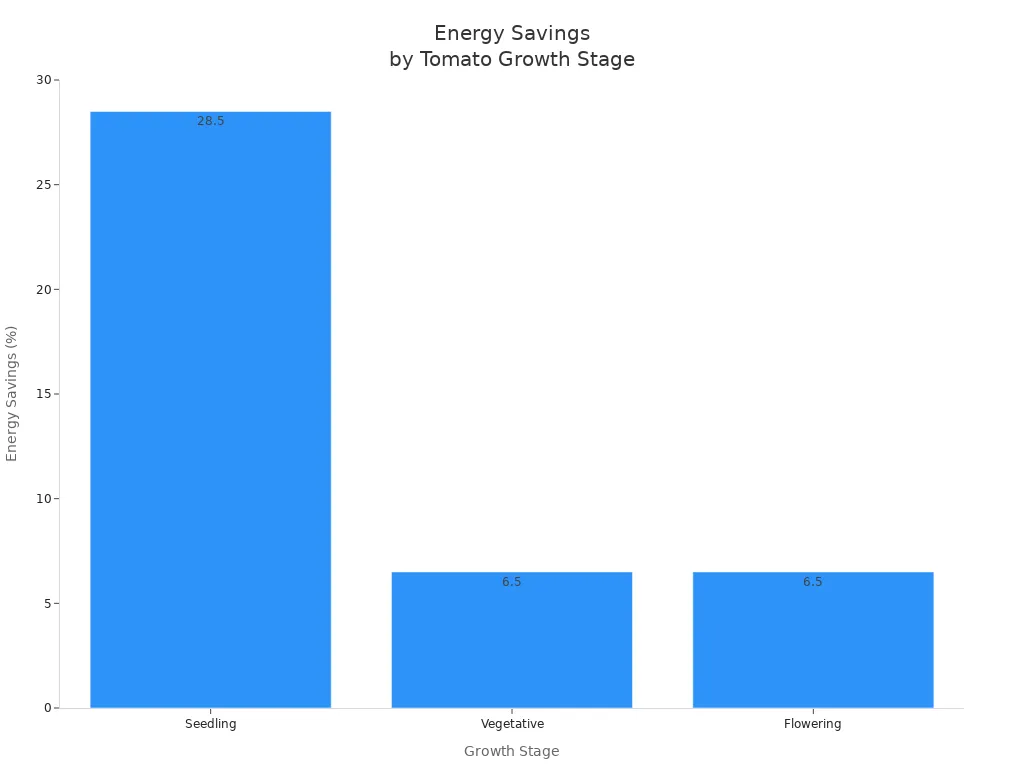
Modern LED systems let you adjust both the brightness and the color of your lights. This feature, called dimming, helps you save energy and match the light to each growth stage. For example, you can turn off far-red and UV channels when your plants are seedlings. This saves up to 28.5% energy and gives you thicker stems and longer roots. During the vegetative stage, adjusting the red:far-red ratio helps your plants build thicker leaves and more dry matter. When your tomatoes start to flower, using far-red light can speed up blooming and improve flower quality.
| Growth Stage | Energy Savings (%) | Plant Health Benefits | Key Spectrum Control Strategy |
|---|---|---|---|
| Seedling | Up to 28.5 | Thicker stems, longer roots, stronger seedlings | Turn off far-red and UV; keep optimal white light |
| Vegetative | 3.5-6.5 | Thicker leaves, more dry matter, stress resistance | Adjust red:far-red ratios dynamically |
| Flowering | Similar to vegetative | More flowers, higher pollen viability, bloom synchrony | Use far-red to speed photoperiod response |
| Fruiting | Not specified | Higher sugar and vitamin C, better fruit quality | UV control to boost secondary metabolites |
You can connect your lighting system to climate controls and timers. This setup lets you meet your daily light targets and respond to changes in outside light or energy prices. Many commercial growers see a return on investment in less than two growth cycles.
Timing for Flowering
Getting your tomatoes to flower at the right time depends on your lighting schedule. Seedlings need 16-18 hours of light each day to grow strong. When your plants reach the flowering stage, you should give them about 12-14 hours of light daily. This schedule encourages blooming and helps set fruit. Always allow a period of darkness so your plants can rest and carry out vital processes.
- Seedlings: 16-18 hours of light
- Flowering: 12-14 hours of light
- Darkness: at least 8-10 hours for recovery
Using grow lights for tomatoes with timers ensures your plants get the same amount of light every day. This consistency leads to better flowering and higher yields.
Supporting Tomato Growth
Variety Selection
Picking the right tomato variety is very important for indoor growing. Some types do better with grow lights and small spaces. You should choose plants that stay small, make lots of tomatoes, and are easy to care for. Here are some good choices for indoor growing:
| Variety Name | Type | Characteristics & Indoor Suitability |
|---|---|---|
| Red Robin | Bush | Super-compact cherry tomato, tops at 8 inches, high yield, ideal for small spaces. |
| Tiny Tim | Bush | Durable cherry tomato, compact, tolerates tough conditions, tasty fruit. |
| Bobcat | Bush | Full-size, durable, compact, suitable for indoor growing. |
| Better Bush | Bush | Grows up to 3 feet, produces about 100 medium tomatoes, low maintenance. |
| Curly Kaley | Vine | Most compact vining type, cherry tomato, fits limited space. |
| Husky | Vine | Cherry tomato, grows 3-4 feet, continual harvest, minimal pruning. |
| Sweet Baby Girl | Vine | Cherry tomato, needs trellis and pruning, grows over 4 feet, sweet harvest. |
Tip: If you do not have much space, pick bush types like Red Robin or Tiny Tim.
Temperature and Humidity
Tomatoes grow best when the temperature and humidity stay steady. Keep the room between 70°F and 80°F during the day. At night, let it get a little cooler. Humidity should be between 40% and 70%. These settings help your plants grow well and make more fruit. If the air is too dry, use a humidifier. If the air feels heavy, use fans to move it around. Fans also stop mold and help seedlings grow strong. Do not let it get colder than 50°F or hotter than 95°F. These temperatures can hurt your plants.
Agricultural Control System
Environmental Monitoring and Regulation
You must watch your indoor tomato area closely for good results. Smart agricultural control systems use special sensors to check temperature, humidity, and CO2. These sensors, like NTC thermistors and capacitive sensors, give you exact numbers. CO2 sensors help keep levels right for photosynthesis, between 1000 and 1500 ppm. The system uses this data to change things like air flow, lighting, and shading. This helps you make the best indoor climate for your tomatoes. You also get live pictures and videos of your plants. This lets you see problems early and fix them fast.
Tip: Watching your plants all the time helps stop stress, disease, and weak growth.
Data-Driven Decision Making and Yield Optimization
Data helps you grow more and better tomatoes. Smart systems collect info about light, temperature, humidity, and plant growth. You can use this data to change your setup. For example, you can adjust LED light strength and color to help plants grow faster or make bigger fruit. Machine learning can spot disease risks by looking at soil pH, moisture, and nutrients. This lets you act early and save your crop. You can also use data to plan when to pick and how to use resources. When you mix your own experience with data, you make better choices and get more from each crop.
| Benefit | How Data Helps You |
|---|---|
| Higher yield | Adjust light and climate for best growth |
| Better resource use | Optimize water, fertilizer, and energy |
| Early problem detection | Spot disease or stress before it spreads |
| Efficient harvest | Plan timing and labor based on real plant data |
📊 Note: Using data helps you grow more tomatoes with less waste and work.
If you want the best results from using grow lights for tomatoes, focus on the right light type, proper setup, and regular care. You should monitor and adjust your system often. This approach boosts yield, improves fruit quality, and helps you use resources better. Commercial growers track success by measuring light intensity, spectrum, and plant response. When you keep up with these best practices, you set your crop up for long-term gains in both yield and nutrition.
FAQ
How often should you check your grow lights for maintenance?
You should inspect your grow lights weekly. Look for dust, condensation, or any flickering. Clean the fixtures and check for loose wires. This routine keeps your lights working well and helps your tomatoes grow strong.
What is the best way to measure light intensity for tomatoes?
Use a PAR meter to measure light intensity. Aim for 400-1000 μmol/m²/s, depending on the growth stage. This tool gives you accurate readings and helps you adjust your lights for the best yield.
Can you use the same light schedule for all tomato varieties?
No, different varieties may need slight changes in light duration or intensity. Always check the specific needs of your chosen variety. Adjust your schedule if you see slow growth or poor flowering.
How do you prevent heat stress from grow lights?
Keep your grow lights at the recommended height. Use fans or a climate control system to move air and manage temperature. Monitor the canopy temperature with sensors. This helps you avoid heat stress and keeps your plants healthy.
What should you do if you see uneven tomato growth under lights?
Rotate your plants every few days. Check for dark spots or weak areas in your lighting grid. Add more lights or adjust placement if needed. Even coverage leads to uniform growth and higher yields.