

You can grow strawberries indoors with led grow lights for strawberries. Growing strawberries this way has some big benefits:
- You control the light and temperature. Your plants grow faster and make more fruit.
- LED grow lights use less energy and make less heat. You can put them closer to your plants without worry.
- Indoor setups help you avoid most pests and diseases. These often hurt outdoor crops.
Many indoor gardeners see their strawberries look brighter. They taste better and smell stronger when using led grow lights for strawberries.
Key Takeaways
- Pick day-neutral strawberry types like Albion for fruit all year. These can grow indoors and give you berries often. – Pick full-spectrum LED grow lights with a 70:30 red to blue mix. Run the lights for 14 to 16 hours each day. This helps the plants grow well and makes the berries sweet. – Keep your indoor garden between 60 and 80°F. Keep the humidity between 60 and 80%. This helps your strawberries stay healthy and make more fruit. – Use vertical racks with LED lights you can move. This saves space and gives every plant the same amount of light. – Use smart systems with sensors and timers. These can water and light your plants for you. This makes caring for your plants easier and helps you get more berries.
Varieties and Starting Methods
Best Indoor Varieties
You want strawberries that grow well indoors and give you fruit for a long time. Day-neutral and everbearing types work best. These plants do not need special daylight hours to make fruit. You can pick berries almost all year.
Some top choices for indoor growing are:
- ‘Albion’
- ‘Sabrina’
- ‘Parous’
- ‘Camarosa’
These varieties did great in a greenhouse test with LED grow lights. The plants grew in cocopeat and perlite, which help roots stay healthy. The best results came from using a mix of red and blue LED light. This made the plants grow faster and gave bigger, sweeter berries.
Here’s a quick look at how different LED light settings affect your strawberry harvest:
| LED Light Mode | Red:Blue Ratio | Yield per Plant (g) | Fruit Number Efficiency | Avg. Fruit Weight (g) | Notes |
|---|---|---|---|---|---|
| LM7 | 70:30 | 46.09 | 451% better than control | 6.32 | Best yield and fruit quality |
| LM5 | Not specified | N/A | 351% better than control | N/A | Second best yield |
| LM1 | Not specified | N/A | 319% better than control (flowers) | N/A | Good for flowers and runners |
| LM2 | Not specified | 6.00 | Lowest yield | N/A | Lowest yield |
| LM6 | Not specified | N/A | Fewest runners, slow fruit | N/A | Poor performance |
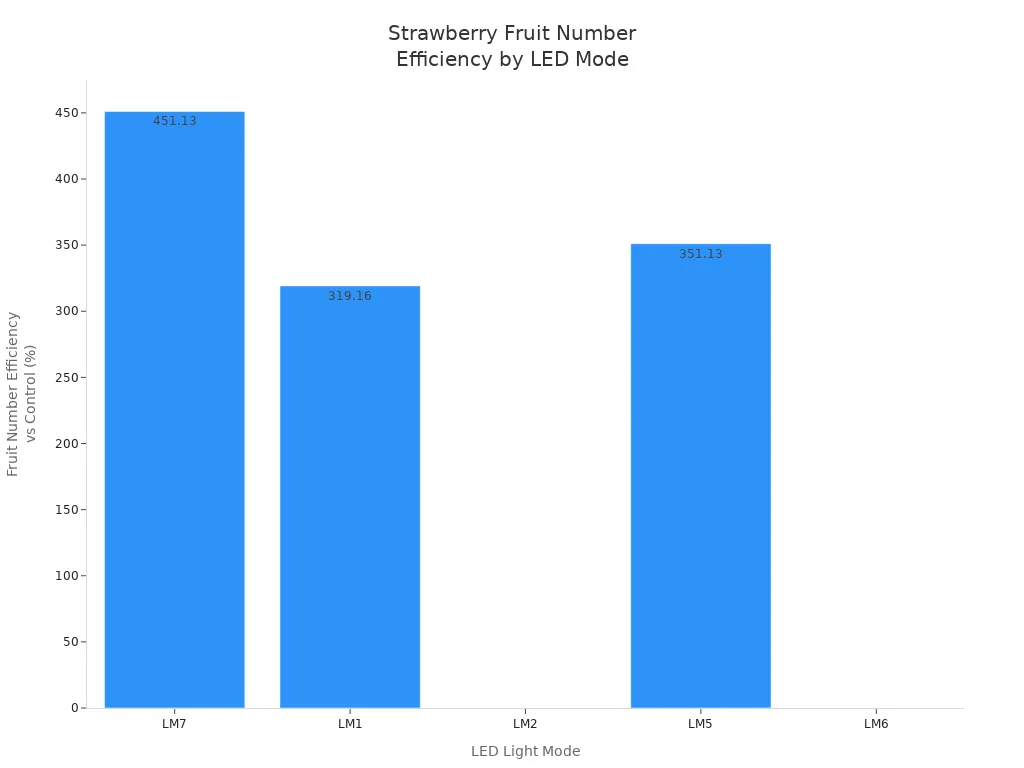
Tip: Use a red:blue LED ratio of 70:30 for the best results. Your strawberries will grow more fruit and taste better.
Seeds vs. Rooted Plants
You might wonder if you should start with seeds or rooted plants. Seeds sound fun, but they take a lot of work. You must chill the seeds in the fridge for about 12 weeks. After that, you plant them and wait 2-4 weeks for them to sprout. Even then, you usually do not get fruit the first year. The plants need time to grow strong roots.
Rooted plants, also called transplants, make things much easier. You plant them, and they start growing right away. Most everbearing types can give you fruit in about 90 to 100 days. You skip the long wait and get berries sooner.
If you want fast results and less hassle, start with rooted plants. You will enjoy sweet strawberries much sooner!
Vertical Strawberry Growing Racks and LED Light Installation

Rack Types, Materials, and Integration with LED Lights
You have a few great options for vertical racks when growing strawberries indoors. Each type has its own strengths and weaknesses. Here’s a quick table to help you compare:
| Rack Type | Description | Pros | Cons |
|---|---|---|---|
| Shelving | Stacked tiers, easy to adjust light | Simple, flexible | Needs space for access |
| Vertical Planters | Pots stacked or hung, watered from the top | Easy to water, good for strawberries | Water may not spread evenly |
| Vertical Hydroponics | Soilless, uses nutrient solution from top to bottom | High yield, saves water, clean | Needs more setup and care |
When picking materials, look for food-safe options. Aluminum racks work well because they resist rust and need little upkeep. Food-grade plastics like PVC are light and easy to clean, but may not hold heavy plants alone. Bamboo is strong and eco-friendly, but can vary in quality. You can even find racks that mix metal and plastic for the best of both worlds.
To install led grow lights for strawberries, mount them above each tier or shelf. Use adjustable brackets or hangers so you can move the lights closer or farther as your plants grow. Make sure every plant gets even light by spacing the lights out and checking for shadows.
Space and Light Optimization
Want to get the most from your space? Go vertical! Stacking your plants lets you grow more strawberries in less room. Use trellis systems or shelves to lift plants up. This keeps air moving and helps prevent rot. Prune extra leaves and runners so your plants focus on making fruit.
For the best light, use Agricultural Automated Planting System to mimic day and night. Red LED lights help your strawberries flower and fruit. Spread the lights out so every plant gets enough. If you see weak spots, adjust the lights or move the plants.
Tip: Keep your growing area between 60-80°F and humidity around 60-80%. This helps your strawberries stay healthy and productive.
Setup, Arrangement, and Maintenance
Start by assembling your rack in a spot with good airflow. Place your plants so each one has space to grow and breathe. Hang or mount your led grow lights for strawberries above each level. Check that the lights cover all the plants.
Water your strawberries from the top if you use soil. For hydroponics, make sure the nutrient solution flows to every plant. Watch for any leaves that block light and trim them as needed. Clean your racks and lights often to stop mold and keep everything working well.
If you use a smart system, set up sensors to track temperature, humidity, and light. This helps you spot problems early and keep your strawberries happy.
LED Grow Lights for Strawberries

Light Spectrum
You want your strawberries to get the right kind of light. Not all light is the same. Plants use certain colors, or wavelengths, to grow and make fruit. Full-spectrum LED grow lights for strawberries work best because they copy natural sunlight. These lights give your plants the red, blue, and sometimes far-red light they need.
Let’s look at how different light colors help your strawberries:
| Light Spectrum & Intensity | Duration | Effects on Growth and Quality | What Happens Inside the Plant |
|---|---|---|---|
| Medium Blue (B15-4) | 15 hrs | Highest chlorophyll a (green pigment) | Turns on genes for light sensing |
| High Blue:Red (2:1) (2C15-5) | 15 hrs | Highest chlorophyll b | Boosts anthocyanin (red color) production |
| Medium Blue:Red (1:1) | 15 hrs | Best for sugar (glucose) in fruit | Helps sugar-making genes work better |
| Blue and Red Combo (C15-4) | 15 hrs | Highest fructose (sweetness) | Activates genes for fruit quality |
Red light helps your strawberries flower and make fruit. Blue light makes the leaves greener and helps the plant grow strong. When you use both red and blue together, your berries get sweeter and look brighter. Some LED grow lights for strawberries also add far-red light, which can help with flowering and fruit size.
Tip: If you want the best berries, pick a light with a mix of red and blue. A 70:30 red to blue ratio works great for most indoor strawberries.
Light Intensity and Placement
The strength of your light matters just as much as the color. Scientists use something called PPFD (photosynthetic photon flux density) to measure how much light your plants get. For strawberries, you want a PPFD between 200 and 450 µmol·m⁻²·s⁻¹. This range helps your plants grow lots of leaves and roots during the early stage. When your plants start making fruit, you can keep the same range.
Here’s a quick guide:
| Growth Stage | PPFD Range (µmol·m⁻²·s⁻¹) | What Happens |
|---|---|---|
| Vegetative Growth | 200 – 450 | More leaves and roots, bigger plants |
| Fruiting Stage | 200 – 450 | Good fruit set, healthy berries |
You need to place your LED grow lights for strawberries at the right height. Keep them about 12 to 24 inches above the tops of your plants. This gives even light and stops the leaves from burning. If your lights are too close, your plants might get too hot. If they are too far, your strawberries might stretch and look weak.
- Move your lights up as your plants grow taller.
- Make sure every plant gets the same amount of light. Avoid dark spots or shadows.
- Use fans or vents if your lights feel warm. Good airflow keeps your strawberries happy.
Note: LED lights make less heat than old-style bulbs, so you can put them closer without hurting your plants.
Light Duration
How long you leave the lights on each day changes how your strawberries grow and fruit. Strawberries like long days. You should give them 14 to 16 hours of light every day. This helps them make more flowers and fruit.
Here’s a simple table to help you plan:
| Parameter | Best Range/Value |
|---|---|
| Daily Light Duration | 14 to 16 hours |
| PPFD | 300 to 350 µmol/m²/s |
| Daily Light Integral (DLI) | 15 to 20 mol/m²/day |
| Light Type | Full-spectrum LEDs |
- Use a LED grow light control system to turn your lights on and off at the same time each day.
- Try not to go over 16 hours of light. Too much light can stress your plants and slow them down.
- If you want the best fruit, keep your light schedule steady. This helps your strawberries know when to flower and make berries.
Pro Tip: Morning light hours are extra important. If you can, set your lights come on early in the day.
You will notice that using LED grow lights for strawberries gives you more control than regular indoor lights. Your plants will grow faster, look healthier, and give you more fruit all year.
Indoor Environment
Temperature
Strawberries love a steady, mild temperature. You should keep your indoor garden between 59°F and 78°F (15–26°C) for the best results. If the room gets too cold, especially during flowering, your plants might stop making buds or grow odd-shaped fruit. When the temperature drops below 45°F (7°C), pollen does not work well, and your berries can look strange. On the other hand, if it gets too hot—over 75°F (24°C)—your strawberries may grow smaller, lose sweetness, and make fewer flowers.
Here’s a quick guide to help you:
| Growth Stage | Best Temperature (°C) | What Happens If Too Low or High? |
|---|---|---|
| Growth | 15–26 | Too cold: slow growth, odd fruit; too hot: small fruit, less flowers |
| Flowering | 16–20 | Too cold: no buds, poor fruit set |
| Fruit Maturation | 15–16 | Too hot: less sugar, faster ripening |
🌡️ Tip: Use a thermometer to check your grow area every day. Try to keep the temperature steady for happy, healthy strawberries.
Humidity and Airflow
Strawberries also need the right amount of moisture in the air. Aim for 60% to 80% humidity. If the air gets too dry, your plants might wilt or stop growing. If it gets too damp, you could see mold or rot on the leaves and fruit. Good humidity helps your berries taste sweet and smell great.
| Humidity Level | What Happens? | How to Fix It |
|---|---|---|
| Too Low (<60%) | Wilting, slow growth, weak fruit | Use a humidifier, mist plants, group pots together |
| Too High (>80%) | Mold, rot, poor air flow, bland berries | Use a fan, open a window, space out plants |
You can keep the air moving with a small fan. This stops mold and keeps your plants strong. Here are some easy ways to boost airflow and prevent disease:
- Remove any dead or yellow leaves.
- Prune runners so plants do not crowd each other.
- Water early in the day so leaves dry quickly.
- Thin out crowded spots to let air move around.
- Clean up old leaves and debris from the soil.
💡 Note: Good airflow and the right humidity make a big difference. Your strawberries will grow better, and you will have fewer problems with pests or disease.
Light Spectrum Effects on Indoor Strawberries
Red Light Impact
Red light plays a big role in how your strawberries grow and make fruit. When you use red LEDs (630-685 nm), you help your plants grow more leaves and form more flower buds. This happens because red light boosts photosynthesis, which gives your plants more energy. You might notice your strawberries start to flower a bit earlier with longer red wavelengths, but blue light usually makes them flower even faster. Red light also helps your plants make more flower buds, which can lead to more fruit. However, the time from flower to harvest does not change much if you use only red light. Take a look at this table to see how red light affects your strawberries:
| Aspect | Effect of Red LED Light (630-685 nm) |
|---|---|
| Flowering Time | Longer wavelength red light can mean earlier flowering, but blue light promotes more flowering overall |
| Number of Leaves | Red light increases leaf number in some types |
| Flower Bud Formation | More flower buds form with red light |
| Photosynthetic Rate | Higher under red light |
| Fruit Yield and Harvest Timing | No big difference in daily fruit production compared to blue light |
Red light helps your strawberries grow strong and make more flowers, but you get the best results when you mix it with other colors.
Blue Light Impact
Blue light is like a supercharger for your strawberry plants’ leaves and roots. When you add blue light, especially in the right ratio with red, you see more leaves, taller plants, and better root growth. Blue light also helps your plants use water and nutrients more efficiently. Here’s a quick look at what blue light does:
| Parameter / Effect | Blue LED Light Role / Effect |
|---|---|
| Vegetative Growth | Stronger with blue light, especially with some red mixed in |
| Number of Leaves | Highest with a 1:6 blue-to-red ratio |
| Plant Height | Plants grow taller with blue light |
| Root Development | Better roots mean healthier plants |
| Photosynthetic Efficiency | Blue light boosts photosynthesis and gas exchange |
If you want lush, green plants with lots of leaves, make sure your led grow lights for strawberries include blue light.
Far-Red and Other Spectra
Far-red light helps your strawberries in a different way. It encourages your plants to stretch and grow taller, which lets more light reach every leaf. Far-red also helps your plants make more flower buds and start fruiting sooner. While far-red does not directly ripen the fruit, it sets the stage for bigger harvests by making sure your plants are healthy and ready to produce.
Far-red light works best when you use it with red and blue light. It helps your strawberries flower and grow, but you still need the other colors for the best fruit.
Optimal Spectrum Combinations
You get the best strawberries when you use a mix of blue, red, and a little far-red light. Full-spectrum LED grow lights for strawberries give you this perfect blend. Here’s what works best:
- Use mostly red light (about 70%) with some blue (about 30%).
- Add a small amount of far-red to help with flowering and plant shape.
- Keep your lights on for 14-16 hours each day.
- Make sure the light is spread evenly over all your plants.
This combination helps your strawberries grow fast, make lots of flowers, and produce sweet, high-quality fruit. You will see bigger harvests and healthier plants when you use the right spectrum.
Smart Indoor Growing Systems
System Components and Setup
You can build a smart indoor strawberry system with a few key parts. Start with a hydroponic setup like a tower garden or a drip system. These give your plants water and nutrients right at the roots, helping them grow fast and healthy. Add LED grow lights above your plants. These lights give your strawberries the right amount of light every day, even if your room is dark. Use sensors to track temperature, humidity, and soil moisture. Good airflow from a small fan keeps mold away. If you want to save space, try a vertical garden. You can even help pollinate your strawberries by gently shaking the flowers.
Tip: Keep your grow area between 60-80°F and humidity at 70-80% for the best results.
Automation and Remote Management
Smart systems make your life easier. Automated watering and lighting mean you do not have to remember to turn things on or off. LED grow light control System and sensors adjust the lights and water for you. Some systems let you control everything from your phone. You can check on your strawberries, change the light schedule, or get alerts if something goes wrong. This helps you keep your plants healthy, even when you are not home. Automation also saves water and energy, so you get more berries with less work.
| Feature | Benefit for You |
|---|---|
| Automated Lighting | No need to switch lights daily |
| App Control | Manage your garden anywhere |
| LED Grow Light Control System & Sensors | Keep conditions just right |
Data Monitoring and Optimization
Real-time data helps you grow better strawberries. Sensors watch temperature, humidity, and moisture all day. If the air gets too dry or too wet, you get a warning. You can fix problems before they hurt your plants. This keeps diseases like gray mold away and helps you get more fruit. Some systems even use cameras to spot pests or track plant growth. When you use data to guide your care, your strawberries grow bigger and taste sweeter.
If you see yellow leaves or slow growth, check your nutrients. Adjust the mix to fix problems fast. Regular checks and cleanups keep your smart system running smoothly.
Growing strawberries indoors is simple when you follow the right steps. Here’s a quick checklist to help you succeed:
- Pick day-neutral varieties like Albion for steady fruit.
- Use full-spectrum LED lights for 14-16 hours daily.
- Keep temperatures between 68-75°F and humidity around 60%.
- Prune runners, check pH, and fertilize as needed.
- Gently pollinate flowers and watch for healthy growth.
Try your own setup! Adjust your care and lighting to see what works best. Happy growing!
FAQ
How often should you water indoor strawberries?
You should check the soil every day. If the top inch feels dry, water your plants. Strawberries like moist soil, but not soggy roots. Use a pot with drainage holes to help prevent overwatering.
Do you need to pollinate strawberries indoors?
Yes, you do! Indoor strawberries need a little help. Gently shake the plants or use a small paintbrush to move pollen between flowers. This helps your berries grow big and sweet.
Can you reuse soil for new strawberry plants?
You can reuse soil, but it’s best to refresh it. Old soil may have pests or lack nutrients. Mix in some new potting mix or compost before planting again. Your strawberries will thank you!
Why are your strawberry leaves turning yellow?
Yellow leaves often mean your plant needs more nutrients or better drainage. Check for soggy soil or use a balanced fertilizer. Remove any yellow leaves to keep your plant healthy.