

You can grow lettuce inside all year with led grow lights for lettuce. Many big growers say these systems work well. You get fast crops and can stack plants up high because LEDs do not make much heat.
- You get more lettuce and do not need as many workers with automation and vertical farming.
- You do not have to worry about bad weather and you can make sure every harvest is good.
- Growing in cities means you pay less to move lettuce and can hire skilled people.
- LEDs use less power and last longer than old lights, which saves you money.
Key Takeaways
- LED grow lights use less energy and make less heat. They help you grow more lettuce inside all year.
- Pick the right light spectrum for your plants. Keep the lights 12 to 18 inches above the lettuce. This helps the plants grow strong and healthy.
- Keep the temperature between 65°F and 75°F. Keep the humidity between 50% and 70%. This stops disease and helps you get more lettuce.
- Make sure air moves well around the plants. Give each plant enough space. This keeps lettuce healthy and makes it better.
- Watch your plants closely with sensors. Fix problems quickly to get more lettuce and make more money.
LED Grow Lights for Lettuce

Benefits for Commercial Growing
You can boost your lettuce business by using led grow lights for lettuce. These lights help you save money and grow better crops. Many commercial growers choose LEDs because they use less energy than old lights like High-Pressure Sodium or Metal Halide lamps. LEDs can cut your energy use by up to 70%. This means lower electricity bills and less heat in your growing area. Less heat also means you spend less on cooling and can keep your plants healthy.
LEDs last a long time—over 50,000 hours—so you do not need to replace them often. This reduces your maintenance costs. You can place LEDs close to your lettuce, which lets you use your space better and grow more plants in the same area. Many growers see a 30% increase in yield after switching to led grow lights for lettuce. Some governments also offer green incentives, making it easier to invest in LEDs.
Tip: LEDs help you control your growing environment. You can keep the temperature and humidity steady, which lowers the risk of pests and diseases. Less heat and better control mean fewer problems with mold and insects.
Here is a quick comparison of common LED types used in commercial lettuce production:
| Type of LED Grow Light | Main Features | Energy Efficiency |
|---|---|---|
| Full Spectrum (White) LEDs | Broad range of light, good for all growth stages, easy for workers to see | Moderate |
| Targeted Spectrum (Red+Blue) | Focused on red and blue light, best for photosynthesis, high yield | High |
| Adjustable Spectrum LEDs | Lets you change light color and strength for each growth stage | Very High |
Light Spectrum and Intensity
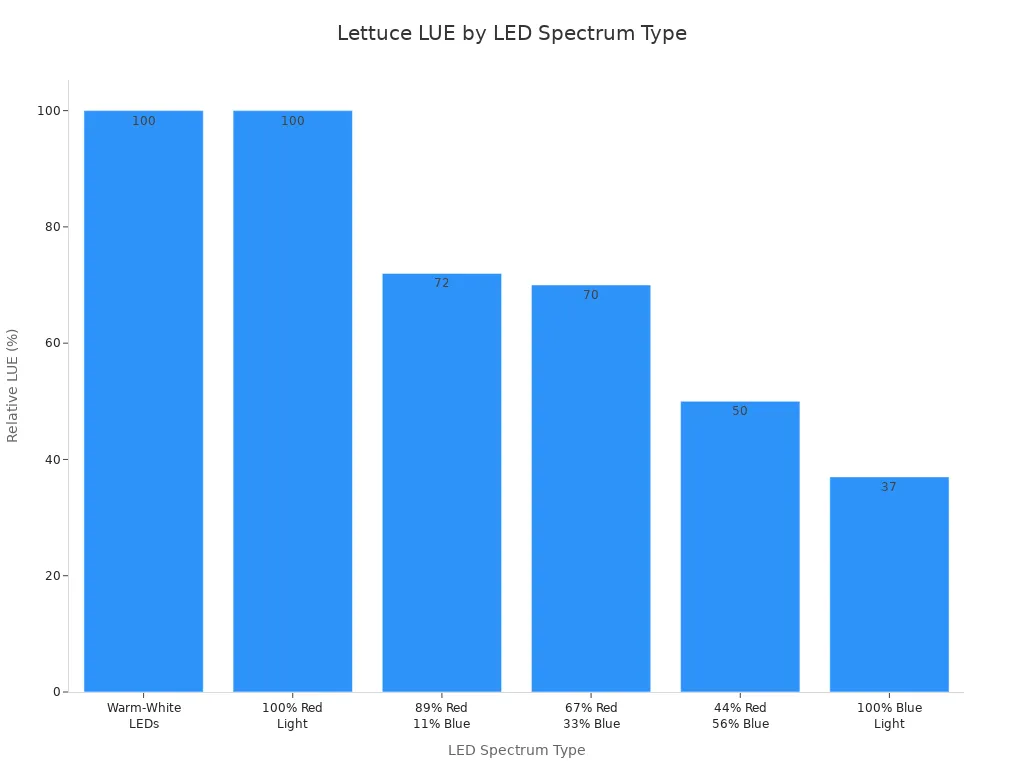
The right light spectrum helps your lettuce grow strong and healthy. Blue light (400–520 nm) is important for leafy greens. It makes lettuce leaves compact and boosts their nutrition. Red light helps with photosynthesis and growth. Many commercial systems use a mix of red and blue, but adding some white light can improve leaf size and quality.
You should aim for a balanced spectrum. Too much blue can lower your yield, while too little can make plants weak. Studies show that warm-white LEDs, which have a small amount of blue and some far-red light, give the best results for lettuce. They help your plants use light more efficiently and grow bigger leaves.
For best results, keep your light intensity at about 280 micromoles per square meter per second (μmol m−2 s−1). This level supports fast growth and high yields. Commercial lettuce, especially head types, needs a daily light integral (DLI) between 17 and 30 mol m−2 d−1. Red-leaf varieties can do well with a bit less, but you should not go below 6.5 mol m−2 d−1 or your crop will suffer.
Note: Using led grow lights for lettuce with the right spectrum and intensity can increase your yield by up to 30% compared to old fluorescent lamps.
Placement and Duration
You need to place your led grow lights for lettuce at the right height. Most growers keep LEDs about 12 to 18 inches (30 to 45 cm) above the top of the plants. This gives even light and stops the leaves from burning. If you put the lights too close, you might get uneven growth. If you put them too high, your plants may not get enough light.
Set your lights to run for 12 to 14 hours each day. Use timers to keep the schedule steady. Seedlings may need up to 16 hours, but mature lettuce grows best with 12 to 14 hours of light. Do not use 24-hour lighting. Plants need a dark period to stay healthy.
- Placement tips:
- Check the light spread with a PAR meter to make sure all plants get enough light.
- Adjust the height as your lettuce grows to keep the distance the same.
- Use programmable timers for easy control.
By following these steps, you can get the most out of your led grow lights for lettuce. You will see better growth, higher yields, and lower costs.
Environmental Controls
Temperature and Humidity
You must keep the temperature and humidity right for lettuce. Lettuce grows best when it is between 65°F and 75°F. Humidity should be between 50% and 70%. If the air is too wet, fungus and disease can happen. If it is too dry, lettuce may wilt or not grow well.
| Environmental Factor | Recommended Range | Additional Notes |
|---|---|---|
| Temperature | 18–24°C (65–75°F) | Suitable indoor temperature range |
| Humidity | 50%–70% | Avoid excessive humidity to prevent fungus |
Try to keep the temperature near 22°C during the day. At night, lower it to about 18–20°C. This helps lettuce rest and grow strong roots. Studies show that 22°C to 25°C during the light period helps lettuce use more CO₂. This makes lettuce grow faster and keeps leaves healthy. Humidity between 70% and 80% helps plants hold water and avoid stress. These settings stop tipburn and help you get more lettuce with better quality.
Tip: Use sensors and automatic controls to keep temperature and humidity steady. This helps stop crop loss and keeps your lettuce looking the same.
Airflow Management
Lettuce needs good airflow to stay healthy indoors. Use fans to move air across all your plants. This stops stale air and keeps mold away. Put fans where every plant gets some air. Clean fans often so dust and mold do not build up.
- Keep lettuce leaves dry by stopping water from pooling or dripping.
- Use vertical racks so air can move around each plant.
- Make sure air moves at the right speed. Air inside the canopy should move at least 0.2 m/s for good gas exchange. Speeds between 0.3 and 0.5 m/s help all plants grow the same and stop tipburn. Too much airflow, above 0.9 m/s, can stress lettuce and slow growth.
| Airflow Parameter | Effect on Lettuce Health |
|---|---|
| 0.2 m/s inside canopy | Maximizes gas exchange, supports photosynthesis |
| 0.3–0.5 m/s inside canopy | Promotes uniform growth, reduces tipburn |
| >0.9 m/s | Causes water stress, reduces growth |
Good airflow keeps lettuce crisp and free from disease. It also helps plants use water and nutrients better, so you get more lettuce and better quality.
Planting and Care

Sowing and Germination
Begin with seeds that are good for indoor growing. Pick types like Little Gem, Winter Density, or Paris Island. These usually sprout well, with rates from 85% to 95%. Keep soil between 55°F and 65°F. Make sure the soil stays moist in the first week. Do not let water build up too much. Put seeds under LED lights at 220–250 μmol/m²/s. Keep the lights on for 14 to 16 hours each day. Seedlings pop up in about 7 to 14 days. This careful method helps seeds sprout evenly and grow strong.
Tip: Set a timer for your LED lights. This keeps the light schedule steady. It helps more seeds sprout and keeps your growing on track.
Watering and Nutrients
Hydroponic lettuce needs careful water and nutrient control. Use a nutrient mix made for leafy greens. Keep the pH between 5.5 and 6.5. Check the EC and keep it from 1.4 to 1.8 mS/cm. Change or fix the solution if plants need it. This stops too much or too little nutrients. Use drip systems or tanks that move water around. This gives roots food all the time.
| Parameter | Recommendation |
|---|---|
| EC | 1.4–1.8 mS/cm |
| pH | 5.5–6.5 |
| Watering Method | Continuous or timed drip irrigation |
| Nutrient Formula | Balanced for lettuce, avoid excess |
Indoor growing lets you control nutrients better than outside. Using less nutrients often works best. Too much can hurt plants or slow their growth.
Spacing for Yield
Good spacing helps you get more lettuce and keeps plants healthy. Most growers start with 16 plants in each square meter. Change the number based on lettuce type, weather, and how you grow. You can use up to 24 plants per square meter if you keep air moving and stop disease. Do not use less than 12 plants per square meter, or you will not make enough money.
| Lettuce Type | Row Spacing | In-Row Spacing | Notes |
|---|---|---|---|
| Head Lettuce | 30–42 inches | 12 inches | Two rows per bed can increase yield |
| Leaf/Butterhead | Double rows, 12 in. | 8–12 inches | 3–4 seed lines on 40–48 inch bedtop |
Watch your plants and change spacing if needed. Putting plants closer gives you more lettuce in the same space. But it can make each plant smaller. Find the right balance for the most lettuce and best quality.
Monitoring and Quality
Growth Tracking
It is important to watch lettuce growth closely for good results. Many big farms use special systems with sensors for each batch. These sensors check temperature, humidity, and CO₂ all the time. Stereo vision cameras can take pictures of your crops every 15 minutes. These cameras measure leaf area, plant height, and crop size without touching them. Computer vision tools look at these pictures and give you live updates on how your lettuce is doing. Farm management software gathers this data and uses AI to help you make smart choices. You can change lighting, spacing, and harvest times based on the data. This saves labor and resources. You also get more even crops and bigger harvests. Many growers use these tools to find problems early and fix them fast.
Tip: Set alerts in your system. You will know right away if something changes, like a drop in humidity or a rise in temperature.
Preventing Issues
You need to watch for common problems to keep lettuce healthy and high quality. Here are some main issues and ways to stop them:
| Common Issue | Causes/Indicators | Prevention/Remedies |
|---|---|---|
| Yellowing Leaves | Not enough nutrients, too much water | Use balanced fertilizer; let soil dry a bit |
| Leggy Growth | Not enough light | Give 12–16 hours of light; move lights closer |
| Bolting | Too much heat, not enough light | Keep temperature and light at the best levels |
| Pest Infestation | Aphids, gnats, mites | Use insecticidal soap; check often; keep area clean |
| Overwatering | Root rot, yellow leaves | Water every 3–5 days; do not let soil get soggy |
| Poor Air Circulation | Fungal disease, pests | Prune leaves; use fans; keep space tidy |
| Plant Stress | Drafts from vents | Do not put plants near HVAC vents |
| Uneven Growth | No plant rotation | Rotate plants every 1–2 weeks |
You should also check leaf color, size, and anthocyanin content. Keep airflow steady to stop tipburn. Control light and temperature, especially at the end, to boost color and nutrients. Regular checks and quick fixes help you get top-quality lettuce every time.
Note: Checking your lettuce often and acting fast keeps your crops healthy and your business strong.
Harvesting and Handling
Timing and Methods
You should pick lettuce at the right time for best results. The best time is early in the morning. Cooler air keeps lettuce crisp and fresh. Look for bright green leaves and big, full heads. Most types are ready in 30 to 70 days. Watch for tall flower stems, which means bolting. Bolting makes lettuce taste bitter, so harvest right away if you see it.
- Pick lettuce in the morning to stop wilting.
- Look for leaves that are big and have strong color.
- Do not pick after you see bolting.
- Use soft scissors or your hands to avoid bruises.
- Clean your tools before each use to stop disease.
- Cool lettuce right after picking to keep it crisp.
- Try picking only some leaves or use cut-and-come-again for more harvests.
- For head lettuce, gather the outer leaves and cut an inch below the base.
- Keep blades sharp and clean for smooth cuts.
Tip: Teach your team how to spot the best time to pick. Use cameras and sensors to watch plant growth and help decide when to harvest. This stops picking too early or too late, which can hurt quality.
Storage and Packaging
After you pick lettuce, work fast to keep it fresh. Cool it quickly to keep it crisp. Hydrocooling and icing help remove heat fast. Store lettuce at 32–36°F (0–2°C) with high humidity, about 90–98%. Cold rooms need good walls, vapor barriers, and even air flow. Smart sensors help you check temperature and humidity, so lettuce lasts longer.
Use packaging that lets lettuce breathe but keeps in moisture. Do not wash lettuce from indoor systems, since it is already clean. Sealed storage rooms keep out bugs and germs. Traceability systems let you track each batch from picking to delivery, which cuts waste and helps with quality control.
Keeping lettuce cold and packed well slows wilting and browning. This helps you give your customers the best lettuce every time.
Troubleshooting
Light Problems
Sometimes, lettuce grows unevenly or has pale leaves. These problems often mean there is a light issue. If lettuce looks tall and thin or leans toward the lights, the light is too weak. Move your LED lights closer, but keep them 12–18 inches above the plants. This stops the leaves from burning. If you see burnt spots or curled leaves, the lights are too close or too strong. Change the distance and check your timer to fix this.
- Use a PAR meter to check light levels everywhere.
- Keep your lighting schedule the same every day. Sudden changes in light can stress your lettuce.
- Do not change light quickly. Lettuce needs time to get used to new light. If light changes too fast, lettuce will not grow as well.
Tip: When lighting is steady, lettuce grows thicker leaves and gives more harvest. Sudden light changes can make your harvest smaller.
Nutrient Deficiencies
Nutrient problems show up quickly in indoor lettuce. Check your plants every day for early signs. If old leaves turn yellow, your lettuce needs more nitrogen. Brown edges on leaves mean it needs more potassium. Tip burn shows a lack of calcium. Keep the pH of your nutrient solution between 5.5 and 6.5. Test and adjust EC often for best results.
| Nutrient Deficiency | Symptoms on Lettuce Leaves | Recommended Solutions |
|---|---|---|
| Nitrogen (N) | Older leaves turn yellow | Add nitrogen-rich fertilizer; check pH and EC |
| Potassium (K) | Brown leaf edges | Apply potassium fertilizer; monitor solution |
| Calcium (Ca) | Tip burn, leaf distortion | Add calcium nitrate; adjust irrigation |
| Magnesium (Mg) | Yellow between veins | Use Epsom salt; check pH and EC |
- Change all the nutrient solution if you see big problems.
- Change nutrient amounts for each stage of growth.
- Keep your system clean to stop disease and pests.
Environmental Fluctuations
Lettuce needs steady temperature and humidity to grow well. Too much heat or cold slows growth. High humidity can cause disease. Low humidity dries out the leaves. Use sensors to watch these things. Set your controls to keep temperature between 65°F and 75°F. Keep humidity close to 60%.
If light or temperature changes too much, lettuce will be smaller and not as good. Lettuce leaves need time to get used to changes. Fast changes in light or temperature lower photosynthesis and yield. Keeping things steady helps lettuce grow strong and even.
Keep your growing area steady. This helps you get better lettuce and fewer problems.
Scaling and Profit
Expanding Production
If you want to grow more lettuce indoors, you must plan well. First, look at your setup and see if it works. Make sure your LED grow lights give enough blue light for young lettuce. Blue light helps lettuce grow short and strong. Use smart controls and sensors to change the light schedule and brightness. These tools help you save power and keep plants healthy.
- Cut and pick lettuce often. This stops plants from touching the lights and keeps leaves safe.
- Look for bugs every week. Take them off by hand or use safe sprays. Always treat plants away from the lights so nothing gets hurt.
- Clean your growing systems every three months. Wash all tools to keep things working well.
- Watch the temperature and humidity. Lettuce likes cool air and steady water in the air. Good airflow and heat control help your LEDs last longer.
If you do these things, you can grow more lettuce without losing quality.
Cost and ROI
You must watch your spending when you grow bigger. LED grow lights use less energy than old lights, so you pay less for power. Pick LEDs that give more light for each watt. Smart sensors and controls help you use only the power you need.
| Cost Factor | How to Manage It |
|---|---|
| Energy Use | Use efficient LEDs and smart controls |
| Maintenance | Clean and reset systems regularly |
| Labor | Automate lighting and climate controls |
| Equipment Lifespan | Use good thermal management |
Most big growers get their money back in two to three years. Lower bills and more lettuce help you make money faster. Cleaning and resetting your system often also saves on repairs.
Market Strategies
You can make more money by finding new places to sell. Indoor lettuce grows fast and stays fresh, so you can sell all year. Use tracking systems to show buyers your lettuce is safe and clean. Sell to local stores, restaurants, and food services that want fresh greens.
- Grow different kinds of lettuce for more customers.
- Use packaging that keeps lettuce fresh and easy to carry.
- Tell buyers about your clean, chemical-free growing methods.
With smart tools and good business ideas, you can grow your lettuce business and be noticed in the market.
You can make your lettuce business stronger with led grow lights for lettuce. These systems help you grow fresh lettuce all year. You control the light, temperature, and humidity. This means you get steady harvests and high quality. You also lower your risk from pests and weather. If you want to grow more or improve your system, now is a great time to start.
FAQ
How many hours should you run LED grow lights for commercial lettuce?
Run LED grow lights for 12 to 14 hours each day. This helps lettuce grow strong and gives you more lettuce. Use timers so the lights turn on and off at the same time every day.
What is the best temperature for indoor lettuce production?
Keep your growing area between 65°F and 75°F. Lettuce grows best in this temperature range. Use sensors and controls to keep the temperature steady and stop plant stress.
How do you prevent pests in an indoor lettuce system?
Keep your growing area clean and control the humidity to stop pests. Put up insect screens and check your plants often. If you find pests, use safe sprays or natural controls that are allowed for commercial use.
Which lettuce varieties work best for indoor commercial systems?
Pick types like Little Gem, Butterhead, and Romaine. These kinds grow well indoors and give you lots of lettuce. Buy seeds from trusted sellers to get good results every time.
How do you maximize yield in a vertical farm setup?
Place your plants close together and use full-spectrum LED lights. Make sure air moves well and check nutrients often. Automated systems help you watch plant growth and change settings for the best harvest.