
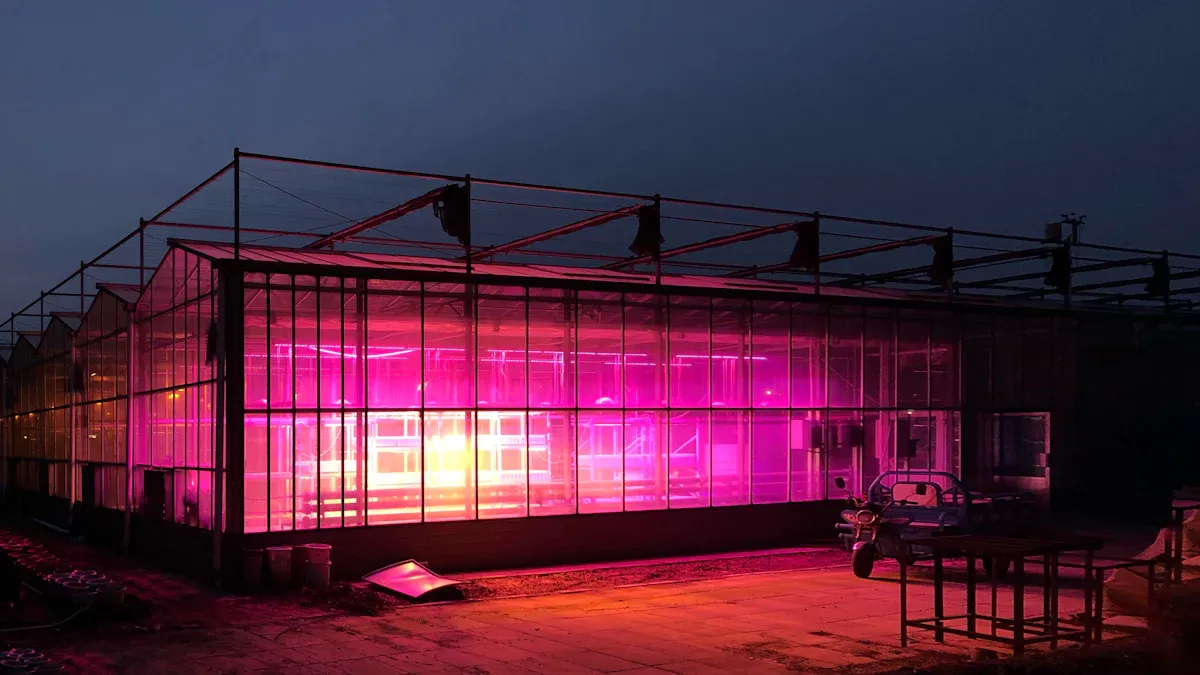
Switching to LED grow lights for greenhouse use can save a significant amount of energy. You can reduce your energy costs by up to 80% compared to traditional lighting. These LED grow lights for greenhouse applications also use less water and require less cooling since they don’t generate as much heat.
You’ll notice a big drop in your electric bills while also benefiting the environment.
Energy efficiency matters for both your business and the planet:
- You spend less on electricity.
- Your crops grow healthier and faster.
- You reduce your greenhouse’s carbon footprint.
Making the switch to LED grow lights for greenhouse setups now can lead to substantial benefits in the future.
Key Takeaways
- Using LED grow lights can lower your energy bills by up to 80%. They also make less heat, so you spend less on cooling.
- LED lights help plants grow well. They give the right colors and strength of light for each plant stage.
- Putting lights in the right spot is important. Adjustable hangers help spread light evenly and stop shadows on plants.
- Timers, dimmers, and smart controls help save energy. They make sure plants get the right amount of light and use sunlight too.
- Clean your lights often and upgrade to new LED systems. This keeps your greenhouse working well and helps plants stay healthy.
Energy Efficiency Importance
Cost Savings
Energy efficiency is very important in greenhouses. You spend a lot of money on heating, cooling, lighting, and ventilation. If you make your greenhouse more efficient, you can save money and earn more.
- Energy is one of the biggest costs for greenhouse growers. If you use less energy, you get to keep more of your money.
- Fixing leaks and cracks in your greenhouse can lower heating bills by 5% to 10%.
- Movable thermal screens help keep heat inside at night. This can save you 30% to 40% on heating.
- Using better fans and adding insulation to the sides or north wall can stop heat from escaping and save money.
Here is a table that shows how much you can save each year with different energy-saving ideas:
| Energy-Efficient Practice | Estimated Annual Energy Savings |
|---|---|
| Double polyethylene coverings (inflated double poly) | Reduce heating costs by 40% to 60% |
| Single layer of plastic over glass | Reduce heating costs by 5% to 40% |
| Foundation insulation (1-2 inches polyurethane or polystyrene) | Can reduce foundation heat loss by half |
| Cleaning fan blades and safety screens | Save as much as 20% of total energy use |
If you use these steps together, you can save 15% to 60% on your yearly energy costs. These savings help your greenhouse make more money and work better.
Environmental Impact
Making your greenhouse use less energy also helps the environment. Old lights like High-Pressure Sodium lamps use a lot of power and make extra heat. This means you need more cooling, which causes more carbon emissions. Fluorescent lights have mercury, which is bad for the environment when thrown away.
LED grow lights use up to 75% less energy than HPS lights. They make less heat, so you do not need as much cooling. LEDs last much longer, so you do not have to replace them as often. This means less waste. LEDs also do not have dangerous materials like mercury.
Switching to LEDs can cut down a lot of carbon. Some companies have saved over 177,000 tons of carbon in one year by using LEDs. The U.S. Department of Energy says LEDs could lower carbon emissions by 222 million metric tons in 30 years. By picking energy-saving lights, you make your greenhouse better for the planet.
LED Grow Light Benefits

Lower Energy Use
You can save a lot of energy by switching to LED grow lights for greenhouse use. LEDs use about 30% less power than high-pressure sodium (HPS) lights, but they give your plants even more of the light they need for photosynthesis. This means you get better plant growth while using less electricity.
- LEDs convert 50-60% of their energy into usable light. HPS lights only convert 30-35%, so most of their energy turns into wasted heat.
- You can lower your power costs by about 40% when you use LEDs instead of HPS lights.
- LEDs deliver more photosynthetically active radiation (PAR), which helps your crops grow up to 40% better than with HPS lights.
- Because LEDs use less energy, you also spend less on cooling your greenhouse.
Here is a table that compares the main features of HPS and LED grow lights:
| Feature | HPS Grow Lights | LED Grow Lights |
|---|---|---|
| Energy Efficiency | High electricity use, significant heat output | More energy-efficient, lower wattage, minimal heat |
| Light Spectrum | Mostly yellow and red, best for flowering stage | Full spectrum (blue, red, UV), supports all stages |
| Lifespan & Maintenance | About 24,000 hours, needs frequent replacement | Up to 50,000+ hours, minimal maintenance |
| Plant Suitability | Best for flowering plants needing intense light | Suitable for many plants and all growth stages |
Tip: LEDs can be customized to give off the exact colors of light your plants need. This means you waste less energy on light that plants cannot use.
Reduced Heat Output
LED grow lights produce much less heat than traditional greenhouse lights. HPS and fluorescent lights give off a lot of heat, which can stress your plants and force you to use more cooling equipment. LEDs solve this problem by staying cool.
- LEDs use about 40-60% less energy than HPS lamps, which means they emit much less heat.
- You can place LEDs closer to your plants without burning them. This helps you use your greenhouse space better and boost plant growth.
- Lower heat output means you do not need as many fans or air conditioners. This saves you even more money on energy bills.
- Less heat also means your plants stay healthier. They do not get stressed or damaged by high temperatures.
LED grow lights for greenhouse use let you try new lighting strategies. For example, you can shine light from below the leaves to help your plants grow even more. You cannot do this with hot HPS lights because they would burn the plants.
Note: By reducing heat, LEDs help you keep your greenhouse at the right temperature. Your plants grow better, and you spend less on cooling.
Choosing LED Grow Lights for Greenhouse
Selecting the right LED grow lights for greenhouse use can make a big difference in your crop yield and energy savings. You need to match your lighting to your plants’ needs, your greenhouse setup, and your budget. Here’s how you can make the best choice.
Spectrum Selection
Plants need different colors of light for each stage of growth. The light spectrum you choose affects how your crops grow, their color, and even their taste.
| Crop Type | Optimal Spectrum | Reason | Best Light Choice |
|---|---|---|---|
| Leafy Greens | Blue-heavy (400-500 nm) | Promotes chlorophyll production and strong root development for leaf growth | Full-spectrum or blue-targeted lights |
| Fruit-bearing | Red-heavy (600-700 nm) | Supports flowering, fruiting, and photosynthesis during fruiting phase | Full-spectrum with more red or targeted red lights |
| Herbs | Balanced blue and red | Needs strong vegetative growth (blue) and flowering (red) for flavor | Full-spectrum or blue-dominant early, shifting to red during flowering |
Tip: Full-spectrum LED grow lights for greenhouse use cover all the colors plants need, from blue to red, and even some UV and far-red. This helps you grow healthy crops at every stage.
You can also use targeted-spectrum lights. These focus on specific colors for each growth phase. Targeted lights save energy but need careful management. For example:
- Blue light helps young plants and leafy greens grow strong.
- Red light boosts flowering and fruiting in crops like tomatoes.
- Green light reaches lower leaves and helps with overall plant health.
- Far-red and UV light can change plant shape and quality, but too much can hurt your plants.
Intensity and Wattage
The amount of light your plants get matters as much as the color. You need to know how much light your crops need each day. This is called the Daily Light Integral (DLI). You also need to check the Photosynthetic Photon Flux Density (PPFD), which tells you how strong the light is.
Here are some guidelines for common greenhouse crops:
| Crop Type | Recommended Wattage (LED Grow Light) | Placement Distance from Foliage | DLI Range (Mol/m²/day) | Notes on Light Spectrum and Intensity |
|---|---|---|---|---|
| Lettuce/Leafy Greens | ~10W (with lens/optics) | 7-9 inches | 15-20 | Lower wattage works; optics help |
| Tomatoes | 100-200W full spectrum | ~16 inches (for 200W) | 20-30 | More red light for fruiting |
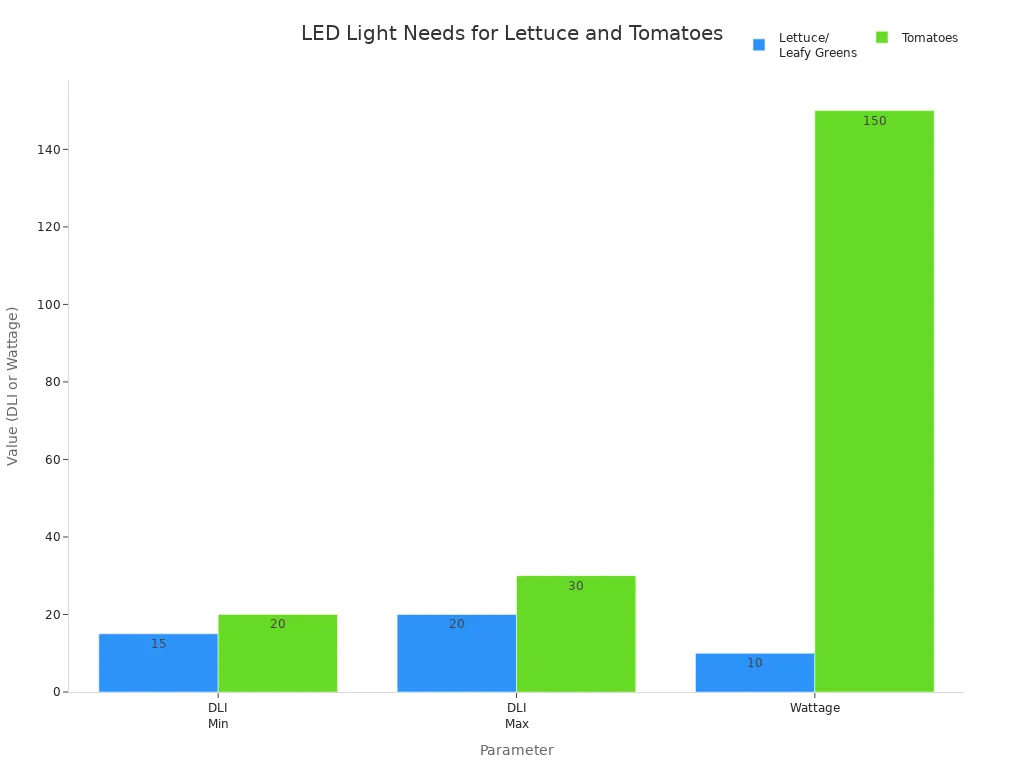
- Use full-spectrum LED grow lights for greenhouse crops like tomatoes and lettuce.
- Tomatoes need more red light for fruiting and higher wattage.
- Lettuce and leafy greens need less wattage and more blue light.
- Place lights closer for seedlings, but move them higher as plants grow to avoid burning leaves.
Note: Always check the PPFD map from the manufacturer. This helps you see how much light reaches each part of your growing area.
Retrofitting Options
If you already use HPS lights, you can switch to LED grow lights for greenhouse use without rebuilding your whole system. Retrofitting saves money and improves efficiency.
- When you replace HPS with LEDs, you need to adjust your greenhouse environment. LEDs give off less heat, so humidity can rise. You may need dehumidifiers to keep plants healthy.
- LEDs do not warm the air as much as HPS. In winter, you might need to raise the temperature by 2–2.5°F to keep plants growing well.
- Place LED panels carefully to spread light evenly. Choose panels with more diodes for better coverage, especially in tight spaces.
- Retrofitting costs more at first, but you save money over time with lower energy bills and less maintenance.
- Many companies offer help with planning your retrofit. You can choose full LED systems or mix LEDs with your old HPS lights.
Pro Tip: Start with a small section of your greenhouse. Test how your plants respond to the new lights before changing the whole setup.
Placement and Light Distribution

Where you put your LED grow lights is important. It helps plants grow well and saves energy. Every plant should get enough light. You do not want dark spots or wasted power.
Avoiding Shadows
Shadows can make plants grow unevenly. Some plants may become weak. You can stop this by doing a few things:
- Put your LED grow lights so their beams cross over each other. This gives all plants the same amount of light.
- Keep your lights about 60–90 cm apart. This stops empty spots and makes sure every plant gets light.
- Use shiny materials on the greenhouse walls. These bounce light back to your plants and cut down on shadows.
- Stack plants on shelves or racks. This helps use space better and gives more light to each plant.
- Move your lights higher as seedlings grow. Young plants need lights farther away, but older plants can have lights closer.
Tip: Clean your lights often. Dirt and dust block light and make more shadows.
Adjustable Hangers
Adjustable hangers let you move your LED grow lights up or down. They use strong hooks and ratchets to hold the lights in place.
- You can raise or lower lights as plants get taller.
- Keep lights at the right height to stop leaves from burning.
- Put lights right above your plants. This copies sunlight and helps plants grow evenly.
- Let light from different lights mix together. This stops dark spots.
- Changing the height of your lights saves energy. Plants get just the light they need.
Note: Adjustable hangers make it easy to change your setup. You can do this when your plants grow or when the seasons change.
Light-Diffusing Materials
Light-diffusing materials help spread LED light everywhere. This makes sure every leaf gets some light. Here are some good choices:
- Milky-white polyethylene film and Solexx coverings. These spread light in all directions and stop harsh shadows.
- Solexx gives 100% light diffusion. It also keeps heat in and stops water drops. This helps plants stay healthy and lowers your energy bills.
- Twin-wall polycarbonate spreads some light, but not as much as Solexx.
- Shade cloths can spread light and keep things cooler. But they also block some light from reaching your plants.
Using the right material to spread light helps your LED grow lights work better. Your plants will grow evenly and you will not waste energy.
Automation and Controls
Timers and Scheduling
Timers and scheduling systems help you control when your LED grow lights turn on and off. You can set exact times for lights to match your plants’ needs. This keeps your crops on a steady routine and helps them grow better.
- Timers give your plants the same amount of light every day. This makes growth more reliable.
- Automated schedules reduce mistakes and save you time. You do not have to remember to switch lights manually.
- You can change the schedule for different seasons or plant stages. For example, some plants need longer days during flowering.
- Timers can also mimic dawn and dusk. This gentle change helps plants adjust and reduces stress.
Using timers and schedules means your plants get the right light at the right time. You also save energy by not running lights longer than needed.
Dimming Features
Dimming features let you adjust how bright your LED grow lights are. You can lower the light when plants need less or when there is enough sunlight.
- Dimming helps you save energy. You use less power when you do not need full brightness.
- You can match light levels to each crop and growth stage. Some plants like less light when they start growing.
- Sensors can work with dimmers to change light based on weather or time of day.
- Dimming during peak energy hours can lower your electricity bill.
Dimming gives you more control. Your plants stay healthy, and you avoid wasting energy.
Sunrise/Sunset Settings
Sunrise and sunset settings slowly increase or decrease light. This copies what happens in nature.
Plants use these gentle changes to set their internal clocks. Sudden light changes can stress plants and slow growth. With sunrise and sunset simulation, you help your crops grow strong and healthy.
LED grow lights with these settings use less energy. They do not run at full power all the time. You also protect your plants from heat and save on cooling costs.
Sunrise and sunset features make your greenhouse more efficient. Your plants get natural light cycles, and you lower your energy use.
Balancing Natural and LED Light
Daylight Utilization
You can save a lot of energy by making the most of natural sunlight in your greenhouse. Start by thinking about how your greenhouse is built and where it sits. The right design lets in more daylight and reduces the need for artificial lighting.
- Place your greenhouse so it faces the sun for most of the day.
- Use skylights and clerestory windows to bring in more sunlight from above.
- Add light shelves and reflective surfaces to spread daylight deeper into the space.
- Choose roofing materials that let in plenty of light but also keep heat inside and stop water drops from forming.
Smart lighting systems help you use daylight even better. These systems use sensors to check how much sunlight is coming in. When the sun is bright, the system dims or turns off the LED grow lights for greenhouse use. This saves energy and keeps your plants healthy.
Tip: Combining good building design with smart lighting controls helps you cut down on electricity bills and makes your greenhouse more eco-friendly.
Supplemental Lighting
Sometimes, natural sunlight is not enough for your crops. Cloudy days, short winter days, or shaded spots can leave plants needing more light. Supplemental LED lighting fills in these gaps and keeps your plants growing strong.
LED grow lights for greenhouse use can adjust their brightness and color to match what your plants need. Some advanced systems, like the GH Pro 340, use photosensors to change light output based on sunlight levels. This means you never waste energy by running lights when you do not need them.
Supplemental lighting helps in many ways:
- Extends the day length when sunlight hours are short.
- Keeps light levels steady, even when clouds block the sun.
- Improves plant growth by giving the right mix of red and blue light.
- Allows you to place lights close to plants without burning them, thanks to low heat output.
Scientific studies show that using supplemental LED lighting increases crop yields, especially during low-light periods. You get healthier plants, faster growth, and more stable harvests all year round.
Note: By balancing natural sunlight with smart supplemental lighting, you can grow better crops and save money on energy.
Maintenance and Upgrades
Cleaning Fixtures
Keeping your LED grow lights clean is one of the easiest ways to boost energy savings and plant growth. Dust, condensation, and debris can block light and lower efficiency. You should clean your fixtures every few months or after each harvest cycle. If you see dust or notice dimmer lights, clean them sooner.
Here are the best steps for cleaning your LED grow lights:
- Unplug the lights before cleaning to stay safe.
- Wipe lenses and diffusers with a soft cloth. Use a mild, non-corrosive cleaner on the cloth, not directly on the fixture.
- Check for dust and debris on all parts, especially around the bulbs and covers.
- Inspect for moisture or condensation and dry any wet spots right away.
- Look for signs of overheating or damage. Fix any problems before turning the lights back on.
Tip: Regular cleaning can increase light output by up to 20%. This means your plants get more light without using extra energy.
You should also check the temperature and humidity near your lights. Use waterproof or vapor-tight models if your greenhouse is very humid. Make sure all wiring and connections stay dry and safe. Using GFCI outlets and waterproof enclosures helps prevent electrical hazards.
Upgrading Technology
Upgrading your LED grow lights can lead to big energy savings and better plant growth. Newer LED models use up to 70% less energy than old lights. Some greenhouses have saved nearly $130,000 a year just by switching to advanced LED systems.
Modern LED grow lights offer:
- Full-spectrum lighting that mimics sunlight and helps plants at every stage.
- Automated scheduling and dimming features that adjust light based on plant needs and sunlight levels.
- Remote monitoring and control, so you can track energy use and make changes from your phone or computer.
- Integration with smart sensors and AI, which lets your system adjust lighting for the best growth and lowest energy use.
Note: Upgrading to the latest LED technology not only cuts costs but also reduces your greenhouse’s carbon footprint. You help your plants and the planet at the same time.
You can maximize energy savings in your greenhouse by taking these steps:
- Replace old HPS lamps with LED grow lights for greenhouse use.
- Use spectral control and automation to match light to each crop’s needs.
- Clean and maintain your lighting system often.
- Upgrade to smart controls and sensors for even more savings.
LED grow lights for greenhouse use lower your costs, boost plant growth, and help the environment. Start reviewing your setup today and make energy-efficient upgrades for better results now and in the future.
FAQ
How often should you clean LED grow lights in your greenhouse?
You should clean your LED grow lights every few months or after each harvest. Dust and dirt can block light. Clean lights help your plants grow better and save energy.
Can you use LED grow lights with natural sunlight?
Yes, you can use LED grow lights with sunlight. LEDs work well as supplemental lighting. They fill in when sunlight is low. This helps your plants get enough light all year.
Do LED grow lights work for all types of greenhouse crops?
LED grow lights work for most crops. You can adjust the spectrum and intensity for each plant. Leafy greens, herbs, and fruiting plants all benefit from the right LED setup.
Will switching to LED grow lights lower your energy bills?
Yes! LED grow lights use much less energy than old lights. You will see lower electric bills. You also spend less on cooling because LEDs make less heat.