

When you pick a vertical farming system, look at these main things:
- Measure your space. Check the height, not just the floor.
- Make sure the system fits your crops and room.
- See if the design lets you work easily and reach plants.
- Look at the tech for lights, air, and water control.
- Compare what the system is made of for strength and safety.
- Think about modular systems if you want to grow later.
- Check how much energy and water it uses. Think about how hard it is to fix and how many people you need.
- Look at your budget. Find vertical farming systems for sale that meet your needs.
Top companies like AeroFarms use systems that save 95% of water and grow more crops. Indoor vertical farming can use up to 98% less water. It uses stacked layers to grow more food in small spaces.
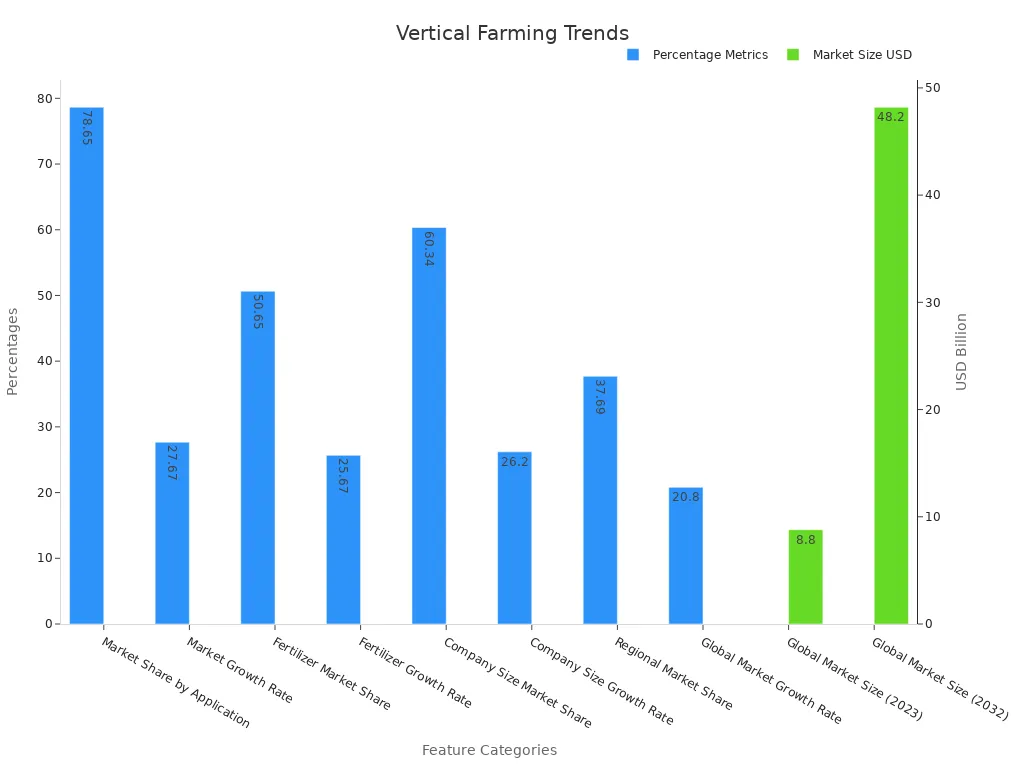
| Metric | Value / Description |
|---|---|
| Market Size (2023) | USD 8.8 billion |
| Market Size (2032) | USD 48.2 billion |
| Compound Annual Growth Rate | 20.8% (forecast period 2025-2032) |
Key Takeaways
- Measure your full space, including height, to fit vertical racks and grow more crops in layers.
- Choose a system that matches your crops and lets you work easily with good access to plants.
- Use smart technology like LED lights, sensors, and climate controls to save energy and water.
- Pick strong, food-safe materials and growing media to keep plants healthy and your farm safe.
- Consider modular systems that let you start small and grow your farm as your needs change.
Space and Layout

Cubic Dimensions
When you set up a vertical farming system, measure the whole space. Do not just look at the floor. You need to check the height, too. Vertical farming uses tall racks and shelves. You can stack plants in layers. This lets you grow more crops in the same area.
- Vertical racks and shelves let you put plants on many levels. This helps you use your space better.
- High-density mobile carriages can hold more plants. They can increase your storage by half or even more. These systems let you put plants at different heights. They also work with many types of shelves.
- If you focus on cubic space, you can fit more crops. This means you get bigger harvests and your system works better.
Tip: Always look at the ceiling height before you buy. Check for things like pipes or lights that could get in the way. This helps you avoid problems when you set up your system.
Workflow and Accessibility
A good layout makes your work easier. It also keeps your plants healthy. You should be able to reach every plant without trouble. A smart design lets you move, harvest, and care for crops with less work.
- Some systems, like Sky Greens in Singapore, use towers that turn. These towers help you reach plants fast and make your job easier.
- AeroFarms in the United States uses stacked systems and machines. This setup means you need less work from people. It also helps you run your farm better.
- Workstations that you can adjust help workers feel less tired. Good designs help people work faster and better.
- Sensors and machines can watch plant health, water, and nutrients. These tools make your work easier and help you waste less.
Indoor vertical farming works well in cities. Some tall buildings in Hong Kong have farms inside. This lets people grow food close to home. It makes farming easier and better for the planet.
Note: A good layout saves time and energy. It also helps you keep your farm clean and safe.
Systems for Growing Different Types of Plants
Leafy Greens
Leafy greens grow very well in vertical farming. Most people use hydroponics or aeroponics for these plants. Hydroponic vertical farming is good for lettuce, kale, arugula, and spinach. These systems use water and nutrients, not soil. This helps you control how plants grow and what they eat. Aeroponics also works for leafy greens. It sprays roots with mist so plants grow fast.
New farms use AI and IoT to change light, water, and nutrients right away. These smart tools help you grow more crops and waste less. LED lights are in most U.S. vertical farms now. They give plants the best light and save energy. Modular farming units let you add more space when you need it.
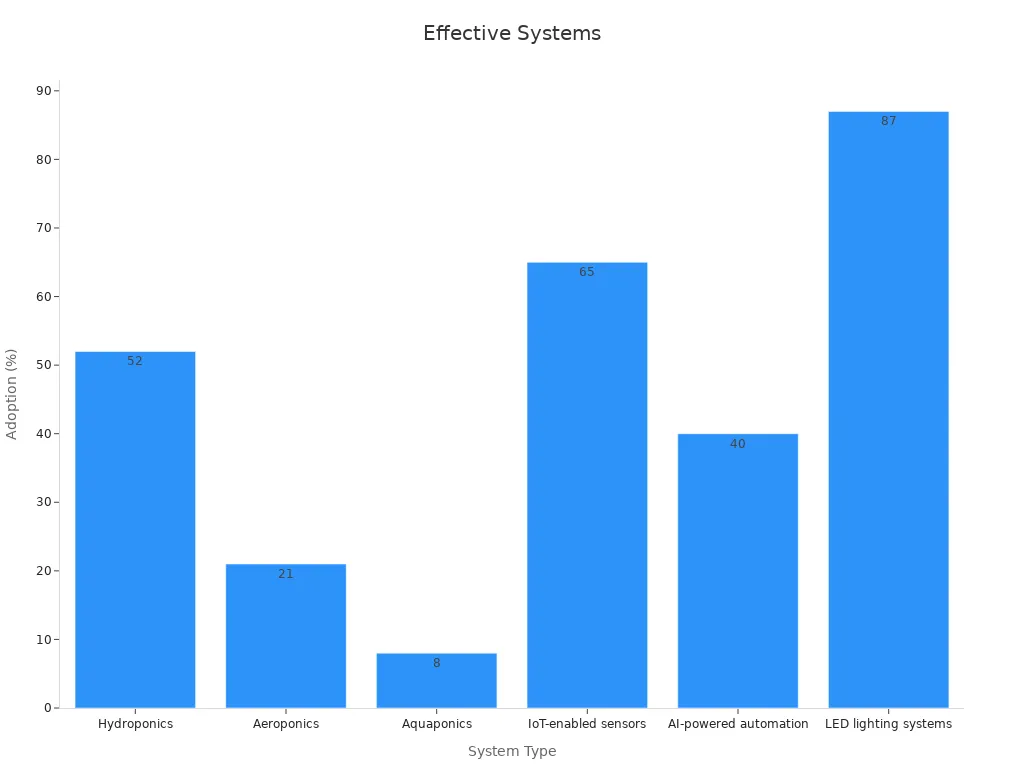
Tip: Hydroponics and modular units help you grow more leafy greens. You can use up to 90% less water than normal farms.
Fruiting Vegetables
Fruiting vegetables like strawberry tomatoes, peppers, and cucumbers need more room. They also take longer to grow. You must watch the environment for these plants. Hydroponics works, but you must check water, nutrients, and good bacteria. Good bacteria in the water can help plants grow better. LED lights give fruiting vegetables the right kind of light. This helps them flower and make fruit.
A good vertical farming system lets you change temperature, humidity, and light for each plant. This helps you get more crops and keep them healthy. Fruiting vegetables need extra support because they get heavy as they grow.

Microgreens
Microgreens are tiny plants like mustard, radish, and pea. They grow fast and do well indoors. They need little space and grow in 5 to 10 days. You can use hydroponics with peat or other materials. Change the nutrient solution to get the best results. Microgreens like changes in light. This can make them healthier and give them more nutrients.
- Microgreens need less time and space than fruiting vegetables.
- You can pick them fast and sell them for good money.
- Changing vapor pressure deficit and light can help you get better crops.
Note: Microgreens are great for vertical farming if you want fast results and to use your space well.

Technology and Automation

Lighting Solutions
Lighting is very important in vertical farming. You must pick the best lights for your plants. Most people use LED lights because they save power and last long. Lighting can be about 25-30% of your total costs. If you use smart lighting, you can cut your power bill by 12%. This does not hurt how your plants grow. This works well for leafy greens like basil and pak choi. You can also change the light during the day to match power prices. This helps you save money and keep your plants healthy.
- LED lights are best for hydroponics and indoor farms.
- Good lights help you grow more crops inside.
- Changing light strength keeps energy use low and crops high.
Tip: Use energy-saving lights and smart controls to get the most from your indoor vertical farm.
Climate and HVAC Controls
You need to control heat, wetness, and air in your indoor farm. HVAC systems help you make the best place for your plants. With smart climate control, you can grow 12% more cucumbers. You can also use 20% less power for tomatoes. Lettuce farms with smart climate systems make 28% more money. Controlled-environment agriculture lets you grow more crops in less space. You can double your tomato harvests with good climate controls.
- Use sensors to watch air and heat in your hydroponics system.
- Automated HVAC keeps crops safe from hot and cold.
- Good air flow stops plant sickness in vertical farming.
Irrigation and Water Management
Water control is very important in hydroponics and vertical farming. Closed-loop irrigation systems reuse water and let you control nutrients with sensors. This can help you use 10–50% less water than open systems. You can use drip irrigation, hydroponics, and smart timers to save water. Automation gives the right water and nutrients every time. This keeps plants healthy and cuts waste.
- Sensors help you watch water use and nutrients in controlled-environment agriculture.
- Smart irrigation helps make indoor farming better for the planet.
- Good data helps you use resources well and make your farm better.
Note: Using smart irrigation and climate controls makes your vertical farm work better and helps the planet.
Materials and Build Quality
Structure and Durability
You want your vertical farming system to be strong and last long. The frames and shelves must hold water, lights, and crops. Companies check their systems to make sure they are safe. They test things like lighting, HVAC, pumps, and robots. If a system passes tests for energy, pressure, and safety, you can trust it.
- UL checks every part, like lights and conveyors.
- UL 1598, CE, and RoHS are regulations that help ensure system safety.
- Risk checks look at machine safety and even computer safety.
A strong system breaks less and helps your farm work better.
Food-Safe Materials
You need to keep your plants healthy and your food safe. Good systems do not use bad materials like asbestos or microplastics. Most vertical farms use clean media like peat or perlite. These materials lower the risk of chemicals or pollution. Closed spaces and trained workers help keep crops safe from outside dangers. New materials, like UV-cured glass fiber, make shelves lighter and stop rust. These changes save energy and keep your plants’ nutrition high. green energy help control the farm’s environment. This helps your crops stay healthy.
Tip: Always check that your system uses food-safe materials. This keeps your plants and people safe.
Growing Medium Compatibility
The right growing medium helps your plants get good nutrition. In vertical farms, you control the environment. You can use special bacteria that help plants grow better. These bacteria work well because there are no bad weather or soil bugs. Scientists made compostable hydrogel substrates for many crops. They tested different mixes to see what helps each plant grow best. These new media break down safely and do not hurt the earth. You can pick the best medium for your crop. This means your plants grow better and stay healthy.
Note: Picking the right growing medium helps your plants grow strong and healthy. This makes your vertical farm do well.
Scalability and Flexibility
Modular Vertical Farming Systems

If you want to grow your farm later, pick a system that can get bigger. Modular systems let you add more parts when you need them. You can begin with a small setup and make it larger over time. This way, you do not spend too much money at first. It also helps you avoid big risks. If you need to move your farm or start in a new spot, modular systems are easy to take apart and set up again.
Some real farms show how modular systems help farms grow. QuantoTech uses container farms that can travel to far places. Plant Chicago changes old factories into indoor farms for many small businesses. AeroFarms uses special aeroponic systems to grow lots of crops and get bigger fast. Sky Greens in Singapore uses towers that turn so they can fit more plants in small city spaces.
| Company | Location | Modular Design Feature | Scalability Benefit |
|---|---|---|---|
| QuantoTech | Vancouver, Canada | Modular container-farming systems | Easy to send to far places; design lets the farm grow over time |
| Plant Chicago | Chicago, USA | Old factory with connected systems | Lets many small businesses work together and grow |
| AeroFarms | New Jersey, USA | Aeroponic systems with LED lighting | New technology helps grow more crops and makes it easy to get bigger |
| Sky Greens | Singapore | Rotating vertical farming system | Works well in small city spaces and helps all crops grow evenly |
Tip: Pick a modular system if you want your indoor farm to grow and move easily.
Crop Adaptability
Your vertical farming system should let you grow many kinds of crops. Some systems are best for leafy greens. Others work for fruiting vegetables or microgreens. If you want to try new plants, look for systems that can change. You can move shelves, change lights, and adjust water to help different crops grow.
Flexible systems let you change what you grow if the market changes. You can test new crops without changing your whole farm. This helps you keep up in the fast world of indoor farming. You can also use your space better by growing more than one crop at a time.
- Move shelves for tall or short plants.
- Change lights for each crop.
- Adjust water and nutrients for better growth.
Note: Flexible systems help you try new crops and meet new needs.
Efficiency, Sustainability, and Cost
Energy and Water Use
You should check how much energy and water your vertical farming systems use. These things change your bills and affect the earth. Many new vertical farming systems use less water than old farms. Some research shows vertical farming saves lots of water, especially with microgreens. Closed-loop systems let you use water again, so you waste less.
- Two Italian vertical farms growing microgreens used water very well.
- People think these systems use lots of energy, but that is not true.
- Even when energy costs are high and skilled workers are needed, these farms still did well.
- We need more studies for exact numbers, but the data now shows good savings.
Pick vertical farming systems with LED lights and smart climate controls. These tools help you save energy. Using less water and power means lower bills and helps make food in a better way.
Tip: Always look at energy and water ratings before you buy vertical farming systems for sale. This helps you choose the best one for saving money and resources.
Maintenance and Labor
Running vertical farming systems means you must plan for regular checks and workers. Skilled people need to look at pumps, lights, and climate controls. They also stop pests and keep things working right. Automation can help you spend less on workers, but you still need people who can fix and watch the systems.
| Cost Component | Description | Typical Cost or Impact |
|---|---|---|
| Labor Costs | Skilled labor for system monitoring, calibration, pest management, and upkeep | 20-40% of total operating expenses |
| Automation Savings | Reduction in manual labor through automation | Up to 30% reduction in labor costs |
| Training & Development | Workforce efficiency improvement through training | Approx. $10,000 per employee annually |
| Equipment Depreciation | Annual loss in value of pumps, lighting, climate control systems | 10-15% annually |
| Maintenance Requirements | Routine checks and repairs of pumps, lighting, climate control, and other tech components | Requires specialized knowledge and regular scheduling |
Labor is a big part of your costs, often 20% to 40%. Automation can cut these costs by up to 30%. You also need money for training and fixing equipment. Regular checks keep your vertical farming systems working well and stop bigger problems later.
Note: Spending money on automation and training helps you save and keeps your vertical farming running well.
Budget and ROI
Before you buy vertical farming systems for sale, you need to plan your budget and think about your return on investment (ROI). First, you pay for equipment, LED lighting, and climate controls. You also pay for software and automation tools. These costs can be $100,000 to $500,000 for a mid-size indoor farm.
| Cost Category | Estimated Cost Range | Impact on Operating Expenses / ROI |
|---|---|---|
| Initial Investment (CAPEX) | $100,000 – $500,000 | Mid-size indoor vertical farm setup costs |
| LED Lighting | $30,000 – $80,000 | Can reduce utility expenses by up to 20% |
| Automation & Software | $40,000 – $100,000 | Labor cost reductions of 15-20% |
| Other Technology Upgrades | $50,000 – $150,000 | Energy and maintenance cost reductions up to 25% |
| Operating Expenses (OPEX) | Energy, labor, maintenance, marketing, distribution | Energy and labor are primary expenses; automation can reduce labor costs by up to 30% |
| Marketing Costs | 5-15% of total costs | Operating expense component |
| Distribution Costs | 3-10% of total costs | Operating expense component |
| ROI Example | 20% ROI | For a hydroponic farm with $50,000 revenue, $30,000 OPEX, and $100,000 CAPEX |
| Payback Period | 1-3 years | Typical for technology investments |
You also need to think about costs for energy, labor, and repairs. Automation and energy-saving tech can lower these bills. Grants and subsidies can help with first costs. To find ROI, take your yearly profit and divide by your first investment. For example, if you make $50,000, spend $30,000, and invested $100,000, your ROI is 20%. Most farms get their money back in one to three years.
- First costs cover equipment, lighting, and automation.
- Ongoing costs are utilities, labor, and repairs.
- Grants and subsidies can help lower your costs.
- ROI depends on your sales, costs, and investment.
- Breakeven analysis tells you when your farm will make money.
Tip: Always compare costs and expected ROI for different vertical farming systems for sale before you choose.
Vertical Farming Systems for Sale
When you look for vertical farming systems for sale, you should compare features, prices, and support. Some systems are best for leafy greens, others for microgreens or fruiting vegetables. Make sure the system fits your space, crops, and budget. Look for systems with good support, easy care, and strong energy ratings.
- Write down your must-have features before shopping.
- Ask about warranties and technical help.
- Compare energy and water use for each system.
- Check if the system can grow with your business.
- Read reviews and talk to other growers.
You can find many vertical farming systems for sale online or from local sellers. Some companies have modular systems so you can start small and grow later. Always ask for a full list of costs, including setup, training, and support. This helps you avoid surprises and pick the best system for you.
Note: The right vertical farming systems for sale will help you save money, use resources well, and grow your business.
Market and Crop Selection
Target Market Needs
You need to know what your customers want before you choose what to grow. People in different places look for different things. Some want fresh leafy greens. Others want fruiting vegetables or microgreens. You should check what sells best in your area. Many people like crops from vertical farming because they see higher yields and better food safety. In the USA, UK, Singapore, and China, shoppers say they like food grown with less carbon and more care for the planet. They also want food that is safe and always available. You should also think about price. Some buyers worry about higher costs for indoor crops. Make sure you can meet your market’s needs and keep your prices fair.
Suitable Crops for Vertical Farming
Not all plants grow well in vertical farming. You should pick crops that fit your system and your market. Leafy greens, herbs, and microgreens do very well. These plants grow fast and do not need much space. Fruiting vegetables like tomatoes and peppers need more room and time. You must check if your system can support these plants. Look at the growing materials and methods. Hydroponics and aeroponics work best for many indoor crops. You should also think about the cubic dimensions of your growing space. This helps you fit more plants and get better harvests.
Here is a quick guide:
| Crop Type | Best System | Growth Time | Market Demand |
|---|---|---|---|
| Leafy Greens | Hydroponics | 3-4 weeks | High |
| Microgreens | Hydroponics | 1-2 weeks | High |
| Fruiting Veggies | Aeroponics | 6-10 weeks | Medium |
| Herbs | Hydroponics | 4-6 weeks | High |
Tip: Start with crops that grow fast and sell well. You can add more types as your farm grows.
Vertical Farming Solutions
You should pick vertical farming solutions that match your goals. Some systems let you start small and grow bigger later. This helps you meet more market needs as your business grows. You can use modular systems to add more layers or change your layout. This makes it easy to try new plants or meet new demand. Always check if your system can scale up. This way, you can keep up with your market and grow more crops when needed.
- Assess your space and growing methods.
- Choose systems that let you expand.
- Pick solutions that fit your target crops and market.
Note: The right vertical farming solutions help you meet market needs, grow the best plants, and build a strong business.
When you choose a vertical farming system, focus on your space, crops, and how you plan to run your farm. Make a checklist of the most important features. Look at layout, plant types, technology, and costs. Pick a vertical farming system that matches your goals and helps you grow healthy crops. Use this guide to make smart decisions for your farm’s future.
FAQ
What crops grow best in vertical farming systems?
You can grow leafy greens, herbs, and microgreens very well. These plants grow fast and do not need much space. Some systems also support fruiting vegetables like tomatoes and peppers.
How much space do you need for a vertical farm?
You do not need a lot of floor space. You use the height of your room. Measure the ceiling height and check for things like pipes or lights that could block your racks.
Is vertical farming expensive to start?
Starting costs can be high. You pay for equipment, lights, and automation. Many farms start small and add more layers later. Grants and subsidies can help lower your first costs.
Do you need special training to run a vertical farm?
You need to learn how to use the system, check the plants, and fix equipment. Many companies offer training. Automation can make your work easier, but you still need to know the basics.
How do you save water in vertical farming?
Vertical farms use closed-loop systems. These systems recycle water and give plants only what they need. You can save up to 95% more water than with regular farming.