

You want your hydroponic container farm to give you lots of crops and healthy plants with less trouble. Hydroponic container farming lets you grow food all year, even when the weather outside is bad. With hydroponic gardening, you can get up to 20 times more food in the same space than with regular soil farming.
- Hydroponic systems use up to 90% less water.
- Vertical hydroponic techniques let you grow more plants in small areas.
- Hydroponic farming helps your plants grow faster and gives better results.
Hydroponic gardening uses controlled spaces and the right hydroponic techniques to help your plants do well. You can get real benefits from hydroponic growing by using good methods in hydroponic gardening and hydroponic farming.
Key Takeaways
- Use vertical racks to fit more plants in small spaces. Make sure each plant gets enough light. Change rack height and move lights if needed.
- Pick LED grow lights with the right colors. Set the lights to turn on and off at the right times. This helps plants grow well at every stage.
- Use fertigation systems to give nutrients to plants automatically. This saves time and gives plants the exact nutrients they need. It also helps you grow more crops.
- Keep roots healthy by adding oxygen with air pumps. Make sure air moves well to stop diseases. Good airflow helps plants grow strong.
- Keep your system clean. Use automation and keep records to make fewer mistakes. This stops pests and helps your farm work better.
Vertical Farming Racks in Hydroponic Container Systems

Selecting the Right Vertical Rack Design
Picking the right vertical rack design helps you use your space well. You want to fill every part of your container with plants. Many hydroponic systems use racks that let you stack plants on top of each other. This way, you can grow more crops in the same spot. Dickson Despommier found that stacking plants can give you as much food as 30 acres of farmland in just one acre inside. This shows how much more you can grow with vertical racks.
Here is a quick look at common rack designs:
| Vertical Rack Design | Description | Space Utilization Features |
|---|---|---|
| Vertical Grow Racks | Steel shelves hold heavy plants and can be made taller or shorter. | You can stack them, add lights and water, and use space above the floor. |
| Mobile Carriages | These racks move on tracks so you can open or close the aisles. | They help you use more space and waste less room between racks. |
| Tabletop Caster Units | Small racks on wheels are easy to move and good for starting seeds or clones. | They save space and are great for early plant growth in hydroponic gardening. |
You can get racks made just for your container and the crops you want to grow. The Zip Container System can hold up to 6,000 crops in one container. This makes it a great choice for growing leafy greens and herbs in hydroponic gardening.
Maximizing Space and Light Efficiency
You want every plant in your hydroponic gardening system to get enough light and space. Vertical racks let you stack plants in layers so each one gets what it needs. The PMC article says vertical farms use racks with 4 to 16 rows, spaced about 40 cm apart. This gives each plant enough room and light.
When you use hydroponics with vertical racks, you control the environment. You can set the temperature, humidity, and light for your crops. LED grow lights work well in hydroponic systems. They give plants the right light to make food. Red and blue lights help plants make chlorophyll and proteins. White lights help plants grow strong and healthy. Put lights so every layer gets the same amount of light. This stops plants from being shaded or growing weak.
Princeton’s Vertical Farming Project shows that stacking plants in hydroponic gardening makes them grow faster and gives you more harvests each year. Closed-loop irrigation and nutrient delivery in hydroponic systems help you use water and nutrients wisely. You get healthier plants and more crops.
Tip: Change your rack height and move your lights as your plants get bigger. This keeps every layer healthy and helps your plants grow well.
Grow Lights in Hydroponic Container Farming
Proper grow lighting is one of the most important parts of hydroponic gardening. Plants need the right light to make food and grow strong. In hydroponics, you control the light, so you can help your plants get the best results. Scientific studies show that different types of lights, like LEDs and fluorescent bulbs, change how plants grow. For example, lettuce grown under LED lights uses nutrients better and has more chlorophyll, which means healthier leaves and bigger harvests. If you switch light types during different growth stages, you can help your plants grow even better.
Choosing the Right Grow Lights
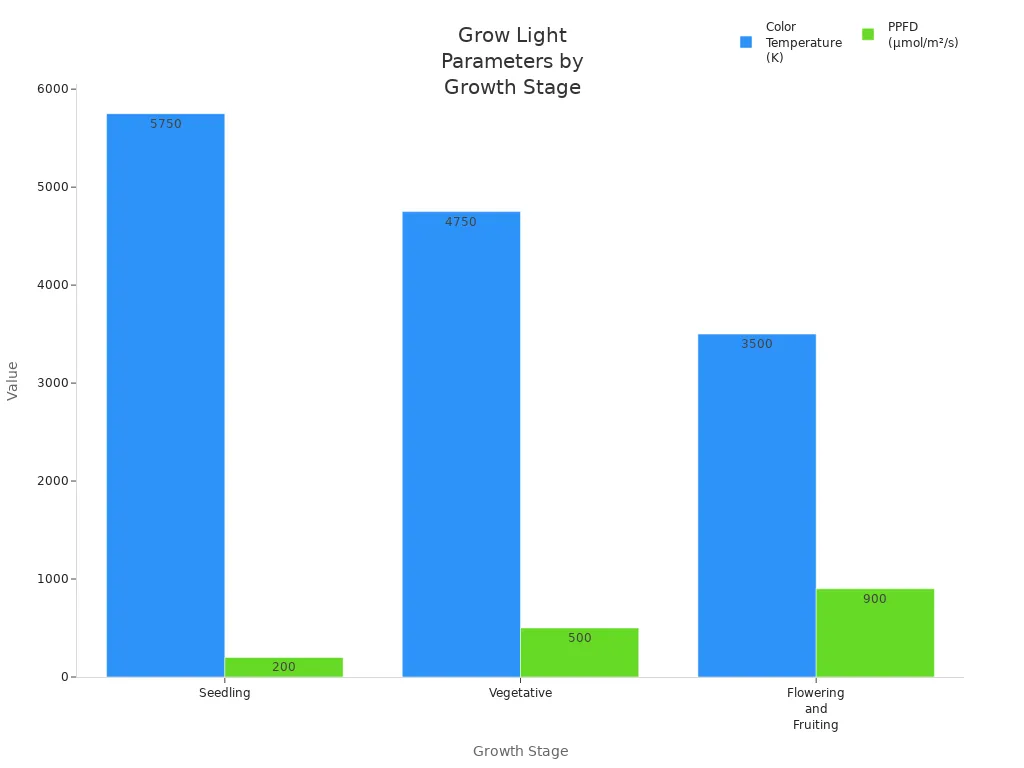
You want to pick lights that match your plants’ needs. Most people use LED grow lights in hydroponic gardening because they save energy and give off the right colors. Blue light helps plants grow leaves, while red light helps them flower and make fruit. Each plant and each stage of growth needs a different amount and color of light. You can use this table to help choose the best light for your crops:
| Growth Stage | Light Type | Color Temp (K) | PPFD (µmol/m²/s) | Hours On/Off | Best For |
|---|---|---|---|---|---|
| Seedling | Full-spectrum LED | 5000-6500 | 100-300 | 18/6 | Compact, leafy growth |
| Vegetative | Balanced spectrum | 4000-5500 | 400-600 | 18/6 | Strong stems, leaf growth |
| Flowering/Fruiting | Red-enriched LED | 3000-4000 | 800-1000 | 12/12 | Flowers, fruit, tomatoes |
Light Placement and Duration
You need to place your lights so every plant gets enough light. In hydroponic gardening, you can mount lights on the ceiling, walls, or use stands. Ceiling mounts work well for saving space. Wall mounts fit small areas. Stands are good for big farms. Keep lights 24-36 inches above seedlings, 18-24 inches above growing plants, and 12-18 inches above flowering plants. Use adjustable hangers to move lights as plants grow. Make sure the light covers all plants evenly. Use reflective walls to bounce light back to your crops.
Set your light timers for the right hours. Seedlings need 16-18 hours of light. Growing plants need 18 hours. Flowering plants need 12 hours. Use a light meter to check if your plants get enough light. If leaves feel too hot, raise the lights. Match your light schedule with feeding times for the best results. These steps help you get optimal growth and healthy plants in hydroponic gardening.
Tip: In hydroponic gardening, always check your lights and timers every week. Small changes can make a big difference in your harvest.
Automated Nutrient Solution Systems

Automated nutrient solution systems make hydroponic gardening easier. These systems give water with nutrients to your plants. You do not need to water by hand. A fertigation system saves you time. It also makes sure plants get what they need.
Types of Automated Nutrient Delivery Systems
You can pick from many fertigation systems in hydroponic gardening. Here are some common types:
- Gravity-based fertigation system: This uses gravity to move water with nutrients to plants.
- Pump and timer controlled fertigation system: A pump and timer send water and nutrients at certain times.
- In-line injection fertigation system: Nutrients mix into water as it goes to plants.
- Deep Water Culture (DWC) and Nutrient Film Technique (NFT): These use water and nutrients that flow around plant roots.
- Aeroponics and wick systems: These give nutrients as a mist or through a wick.
- Kratky method: Plants sit in a container filled with water and nutrients.
A study looked at three ways to give nutrients in hydroponic gardening. The ways were volume-based, time-based, and EC plus volume-based. Each way changes how much and how often plants get nutrients.
Key Features and Benefits
A good fertigation system in hydroponic gardening gives you:
- Exact nutrient delivery for each crop
- Less work for you and more free time
- Easy to use for bigger hydroponic systems
- Saves water and gives roots more oxygen
- Smart features like pH and EC control
Some fertigation systems have sensors to check pH, EC, and temperature. They change the mix so plants always get the right balance. Some systems let you use your phone to control them. This helps your hydroponic gardening work well and can give you up to 30% more crops.
Tip: Automated pH control in your fertigation system keeps plants healthy and protects roots.
Selecting and Maintaining Your System
Pick a fertigation system with good sensors for hydroponic gardening. Radar-type sensors work well in tough hydroponic systems. Make sure your system can check and change nutrient levels all the time. This stops waste and helps plants grow strong.
Keep your fertigation system clean and check for clogs. Regular care keeps your hydroponic gardening running well. Good fertigation helps you use less and grow better crops.
Oxygenation and Root Health
Air Circulation Techniques
You need to give your plant roots enough oxygen for strong growth and optimal plant health. In hydroponic gardening, roots sit in water or mist, so you must add oxygen to the root zone. Many growers use air pumps and air stones. These tools push bubbles into the nutrient solution, making sure roots get fresh oxygen. You can also use the air gap technique, which leaves a small space between the roots and the water. This space lets roots breathe and helps prevent problems.
Other methods include falling water or splashing, which stirs up the water and adds oxygen. Some systems use the Venturi effect, where water flow pulls air into the solution. Ebb and flow systems flood and drain the roots, giving them time to take in oxygen between cycles. Aeroponics sprays a fine mist on roots, giving them lots of air and nutrients. Air pruning works by letting roots touch the air, which makes them branch out and stay healthy.
Here is a table that shows how oxygenation affects your plants:
| Aspect | What Happens | Why It Matters for Hydroponic Gardening |
|---|---|---|
| Yield Increase | More oxygen means higher yields | You get more crops from the same space |
| Root Physiology | Good oxygen keeps roots long and healthy | Roots can absorb more water and nutrients |
| Disease Susceptibility | Low oxygen raises risk of root diseases | Healthy roots fight off harmful bacteria |
| Root Microbiome | Oxygen supports good bacteria in the roots | Plants resist disease and grow stronger |
Tip: Use a mix of air pumps, air stones, and water movement to keep oxygen levels high for optimal plant health.
Preventing Root Issues Through Proper Airflow
Root problems can ruin your hydroponic gardening results. Root rot is a common issue. It happens when roots do not get enough oxygen or when water stays still for too long. You can spot root rot by looking for brown, mushy roots and wilting plants. To stop this, always keep water moving and add air to the solution.
Proper airflow also helps prevent calcium deficiency. When air moves around the plants, it breaks the boundary layer and helps the plant take up nutrients. This keeps leaves healthy and stops problems like tipburn. Make sure you use containers that let roots spread out and get enough air. Check your system often for signs of crowding or blocked airflow.
- Use air pumps and air stones to bubble oxygen into the water.
- Keep water temperature in the right range to hold more oxygen.
- Clean your system often to stop bacteria from building up.
- Watch for signs of root problems and act fast if you see them.
When you balance airflow and oxygen, you support optimal plant health and get better harvests from your hydroponic gardening system.
Streamlining Daily Operations in Hydroponic Container Farming
Simplified Routine Tasks
You can make your work easier by breaking jobs into small steps. Start your day by looking at your plants, water, and tools. Use a checklist to remember what you need to do. Many growers use smart sensors to watch nutrients, temperature, and humidity. These sensors send alerts if something changes. This helps you fix problems fast. Automated irrigation and fertigation systems give water and nutrients at the right time. This means you do not have to do it by hand. Clean your tools and work area every day to stop pests and diseases. When your routine is simple, you spend less time fixing mistakes. You get more time to grow healthy crops.
Tip: Use standard operating procedures (SOPs) for each job. SOPs help you do things the same way every time. This lowers mistakes and keeps your hydroponic gardening system working well.
Tools and Automation for Efficiency
The right tools and automation save you lots of time each week. Seedling trays and propagation domes help young plants grow strong roots. Strong containers and trellises hold up your crops and help air move. Tools like thermometers, hygrometers, and pH meters show you real-time data. This helps you keep the right conditions. Many growers use IoT sensors to check water, nutrients, and temperature. These sensors let you change settings right away. This helps you stop waste. Automated systems can control lights, climate, and even harvest crops. When you use these tools, you make a steady workflow from planting to harvest in hydroponic gardening.
Reducing Errors and Saving Time
You can stop big mistakes by using some easy methods. Always use clear SOPs so everyone does jobs the same way. Software tools help you collect and look at data. This lets you find problems early. Try new ideas on a small area before using them everywhere. Check your plants often to catch problems before they spread. Keep your farm clean and use good water to stop pests and diseases. Automate controls for temperature, humidity, and light to keep things steady. When you do these steps, you spend less time fixing problems. You get more time to keep your farm running well.
Note: Only change one thing at a time when you try something new. This helps you see what works best for your hydroponic gardening system.
System Cleanliness in Hydroponic Growing
Cleaning Routines
Keeping your hydroponic growing system clean helps your plants stay healthy and grow well. Experts like Colin Clark from CropKing say a clean space is very important for good results. In hydroponic growing, you control everything that goes into the system. This means you can stop most problems before they start. Clean tools and equipment help stop diseases and pests from spreading.
Here are some easy cleaning steps:
- Wash all pots, trays, and containers with hydrogen peroxide.
- Take apart your hydroponic growing system and clean every piece.
- Check tubes and drip lines for buildup or damage and replace them if needed.
- Use footbaths, clean clothes, hair nets, and gloves to keep germs out.
- Clean nutrient lines and tubing every day with safe cleaners.
- Do a deep clean when you change crops by taking everything apart and cleaning it.
- Write down when you clean, change nutrients, and check pH levels.
Make a cleaning schedule and stick to it. Clean reservoirs every 2-3 weeks. Clean pumps once a month. Clean growing channels after each harvest. Cover reservoirs to keep out light and stop algae. Add hydrogen peroxide every week to keep water clean. Good cleaning habits help you find problems early and keep plants strong.
Tip: Always keep new plants away from your main hydroponic growing system at first. This helps stop new diseases from getting in.
Disease Prevention
Stopping disease starts with keeping things clean. Many diseases in hydroponic growing, like root rot and powdery mildew, spread when dirt, algae, or pests build up. You can stop most problems by cleaning and checking your system often.
Here is a table of common diseases and how to stop them in hydroponic growing:
| Disease | Symptoms | Causes | Prevention Protocols |
|---|---|---|---|
| Root Rot | Brown, slimy roots; wilting | Poor oxygen, warm water | Clean equipment, add air to water, remove sick roots |
| Powdery Mildew | White patches on leaves | High humidity, poor airflow | Move air around, keep humidity under 60%, remove sick leaves |
| Botrytis | Gray mold on leaves/stems | Too much moisture, crowding | Give plants space, control moisture, cut off dead parts |
| Downy Mildew | Yellow/brown spots, fuzzy leaves | Damp, cool, bad airflow | Keep humidity under 55%, move air, do not water from above |
| Fusarium Wilt | Yellow, curling leaves | Dirty tools/water | Clean tools, use strong plants, keep pH and nutrients steady |
| Algae Growth | Slimy green/brown in reservoirs | Light, warm water | Cover tanks, clean often, use hydrogen peroxide or good bacteria |
Check your plants often for signs of sickness. Take off any sick leaves or roots right away. Move air around and control humidity to stop mold and mildew. Clean your tools and hands before touching plants. Keep good records to help you fix problems and get better at hydroponic growing.
Note: Keeping things clean in hydroponic growing saves your money and helps you grow more food with fewer problems. When you follow these steps, you make your hydroponic gardening more successful.
Environmental Control for Successful Hydroponic Gardening
Light and Temperature
You can boost your results in successful hydroponic gardening by controlling light and temperature. Plants need the right amount of light to grow strong. Most leafy greens do best with 12–18 hours of light each day. You should use LED grow lights and place them 18–24 inches above your plants. Adjust the height as your crops grow taller. For vegetative growth, aim for a light intensity of 400-500 µmols/m²/sec. This helps your plants make food and grow healthy leaves.
Temperature also plays a big role in plant health. Keep daytime temperatures between 68–82°F for most crops. At night, lower the temperature to 64–72°F. This range supports strong growth and helps prevent stress. If you grow crops like lettuce or basil, check their preferred temperature range. For example, lettuce grows well at 45–70°F, while basil likes it warmer, around 65–95°F. Water temperature matters too. Keep it between 62–72°F to give roots enough oxygen.
Tip: Use a thermometer and light meter to check your setup every day. Small changes in light or temperature can make a big difference in your harvest.
Humidity and Airflow
Humidity and airflow are key parts of a successful hydroponic gardening system. Plants lose water through their leaves, so you need to keep humidity in the right range. Too much humidity can cause mold, while too little can stress your plants. Instead of using a fixed number, watch the vapor pressure deficit (VPD). VPD tells you how much water your plants lose to the air. Aim for a balanced VPD to help your plants take up nutrients and avoid stress.
Good airflow helps keep your plants healthy. Use fans to move air across all layers of your vertical racks. This stops hot spots and keeps humidity even. Uniform airflow also helps prevent diseases like powdery mildew. In multi-layer farms, airflow can change from top to bottom. Check each layer to make sure air moves well everywhere.
You can maintain a healthy growing environment by using sensors to track humidity and temperature. Adjust fans and dehumidifiers as needed. This approach helps you create the best conditions for successful hydroponic gardening and strong plant growth.
Note: Check your airflow and humidity every day. Even small changes can affect your plants’ health and your harvest.
Automation and Record-Keeping
Automated Systems
Automated systems can help your hydroponic container farm do better. These systems control pH and nutrients very carefully. When you use an automated fertigation system, it keeps pH and EC just right. This stops your plants from getting too many or too few nutrients. Sensors check pH, EC, temperature, and water levels all the time. You get alerts right away and can change things from your phone or computer.
Automated systems use machine learning to give the right nutrients for each plant stage. This helps your plants grow faster and healthier. Farms with automation can get up to 90% more growth than old ways. You also use less water and waste fewer nutrients, which helps the environment.
Tip: Automated systems help stop mistakes and save you time. You can do other jobs while your system works by itself.
Tracking Progress
Good records help you make your farm better every season. Start by making clear goals, like how many crops you want or how much water to save. Use inventory software to track supplies, plant growth, and harvest times. Barcode or RFID tags help you follow each crop from seed to sale.
IoT sensors can collect data on temperature, humidity, and nutrients. Some farms use blockchain to keep this data safe and share it with buyers. Regular checks help you find and fix problems early. Look at your data often to see patterns and make better choices. For example, you can change your light or nutrients based on what worked before.
Note: Using data to track your progress helps you grow better crops, waste less, and build trust with your customers.
You can get better results in hydroponic container farming by using these eight tips. Each tip helps you control light, nutrients, and airflow. This makes your plants grow faster and stay healthy. Hydroponic farming lets you grow crops all year. You use less water and have fewer pests. If you use automation and keep things clean, your farm works better. Try these ideas and share your own hydroponic farming stories or questions below!
FAQ
What crops grow best in hydroponic container farms?
You can grow leafy greens like lettuce, spinach, and kale very well. Herbs such as basil and mint also thrive. Some farms grow strawberries or tomatoes, but these need more care and support.
How often should you check nutrient levels?
You should check nutrient levels every day. This helps you catch problems early. Use a digital meter for fast and accurate results. Keeping nutrients balanced gives your plants the best chance to grow strong.
Do you need special water for hydroponics?
You should use clean, filtered water. Tap water may have chlorine or minerals that harm plants. Many growers use reverse osmosis water. This keeps your nutrient solution pure and helps roots absorb nutrients better.
Can you run a hydroponic container farm in winter?
Yes, you can grow crops all year. Hydroponic systems use grow lights and climate controls. You do not need to worry about cold weather or frost. Your plants stay warm and healthy inside the container.