
Many people think growing healthy plants is hardest. But poor planning and design can slowly take away profits. They also cause big, costly problems. When you design a commercial indoor vertical farm, you need to make smart choices. You should have clear goals. Careful planning keeps your money safe. It also helps you stay away from hidden problems.

Key Takeaways
- Careful planning is very important. Think about the design before you start planting. This helps you avoid expensive mistakes.
- Know your market well. Find out which crops people want to buy. Look at local needs and how much things cost.
- Make your design work well. Plan how people will move and work in the space. This saves time and cuts down on work costs.
- Look at the ceiling height early. It can limit how much you can grow. It also changes how air and light move in the room.
- Put systems together. Make sure lighting, racks, and irrigation all work as one. This makes things run better and saves money.
Introduction — Why Most Vertical Farms Fail Before the First Harvest
Growing plants is not the problem — poor design is

You may feel confident about growing healthy crops. You know how to nurture seedlings and watch them thrive. Most people who start commercial vertical farms share this passion. The truth is, plants rarely let you down. The real challenge comes from the design choices you make before the first seed touches the soil. Poor layouts, bad lighting plans, and overlooked workflow issues can drain your profits faster than any pest or disease. Many operators discover too late that the biggest risk is not the plants—it is the farm itself.
The real fears of first-time commercial operators
You might worry about losing money. You may fear that your investment will not pay off. Many new operators feel anxious about making mistakes that cannot be fixed. Some dread the thought of wasted space, high energy bills, or equipment that does not fit. Others lose sleep over labor costs that spiral out of control. These fears are real. They come from stories of farms that failed before the first harvest. You want to avoid becoming one of those stories.
Note: Most failures happen because people ignore the details that matter most. You do not want to see your dream fade because of a simple design error.
What this guide will help you avoid
When you Design a Commercial Indoor Vertical Farm, you need to sidestep the traps that catch so many first-timers. This guide will help you spot the warning signs early. You will learn how to avoid costly mistakes that others have made. You will see how smart planning protects your investment and keeps your farm running smoothly. By understanding the risks, you can build a farm that lasts and grows with your business.
| Common Pitfalls | Impact on Your Farm |
|---|---|
| Poor space planning | Lost revenue, wasted area |
| Wrong lighting setup | High bills, weak crops |
| Bad workflow design | Slow harvests, tired workers |
Before You Design Anything: Understand the Commercial Reality
Commercial vertical farms are not hobby or demo projects
You may feel excited to start growing crops indoors. You might picture rows of green plants and high-tech lights. In reality, a commercial vertical farm is a business system. You must treat it like a company, not a science experiment. Every decision affects your profits and long-term success. If you focus only on growing, you risk missing the bigger picture. You need to plan for sales, costs, and daily operations. Your farm must run smoothly and make money.
Tip: Always ask yourself, “Will this choice help my business grow?” before you invest in equipment or space.
Why “what crops to grow” is the wrong starting question
Many people begin by asking, “What should I grow?” This question seems important, but it can lead you down the wrong path. You should first look at your market, your costs, and your resources. The best crop for your farm is the one that fits your business plan and local demand. If you pick crops without research, you may waste time and money. You need to know who will buy your produce and how much they will pay.
| Wrong Approach | Better Approach |
|---|---|
| Start with crops | Start with market and costs |
| Guess demand | Research buyers and prices |
| Ignore business plan | Build around business goals |
Labor, energy cost, and scalability as design drivers
When you Design a Commercial Indoor Vertical Farm, you must think about labor, energy, and growth. Labor costs can eat into your profits if you do not plan for efficient workflows. Energy bills rise fast if you choose the wrong lights or climate systems. Scalability means your farm can grow with your business. You should design systems that allow you to expand without starting over. Focus on these drivers to build a farm that lasts.
Note: Smart planning now saves you money and trouble later. Make every design choice with your business goals in mind.
Space Planning: The Most Underestimated Design Factor

Why floor area alone is misleading
You may think a big floor means more crops. Many new operators make this mistake. They look at the total space and expect high yields. But much of the area cannot be used. Pillars, walls, and equipment take up space. You must check how much space is good for growing. If you skip these details, you might waste money and get less harvest.
Tip: Always measure space for racks and plants, not just the whole floor.
Usable growing space vs theoretical layout

You might design a layout that looks great on paper. It shows many racks and lots of plants. When you build, problems appear. Some racks block doors or windows. Others are too close together, so you cannot reach plants. Paper layouts miss real-world problems. You need to plan for space you can use. Leave room for workers, equipment, and air to move.
| Layout Type | What You Get | What You Lose |
|---|---|---|
| Theoretical (on paper) | Maximum plant count | Poor access, workflow |
| Usable (real world) | Efficient workflow | Fewer plants, better yields |
Service aisles, access paths, and workflow efficiency
You must design service aisles and paths. Workers need space to walk, harvest, and fix equipment. Small paths slow down work and cost more in labor. Wide aisles help workers but take away growing space. You need to balance these things. When you Design a Commercial Indoor Vertical Farm, plan for daily jobs. Think about how people move in the farm. Good space planning saves time and money.
🚶♂️ Note: Smart access paths help workers do their jobs. Your farm should work for people and plants.
Ceiling Height: A Constraint You Cannot Fix Later
How ceiling height limits rack levels and lighting choices
Ceiling height decides how much you can grow. You can change racks and lights, but not the ceiling. If the ceiling is low, you get fewer rack levels. Fewer racks mean less room for crops and less money. Tall ceilings let you stack more racks. You can use better lighting setups. This gives you more options and bigger harvests. When you Design a Commercial Indoor Vertical Farm, always check ceiling height first.
Tip: Measure from the finished floor to the lowest ceiling spot. Count beams, pipes, and ducts in your measurement.
The impact of ceiling height on heat and airflow
Ceiling height changes how air and heat move. Short ceilings trap heat and make cooling tough. Plants can get hurt if it gets too hot. Air does not move well, and humidity can rise. Tall ceilings help air flow and keep temperatures steady. Your crops stay safe and energy bills go down. Good airflow means healthy plants and lower costs.
| Ceiling Height | Airflow Quality | Heat Build-Up | Plant Health |
|---|---|---|---|
| Low | Poor | High | Risky |
| High | Good | Low | Strong |
Common ceiling height mistakes in commercial facilities
Many people make mistakes with ceiling height. Some pick places with low ceilings to save money. Others forget to look for pipes or beams above. You may think you can fit more racks, but obstacles take away space. Some ignore rules that need extra clearance. These mistakes hurt your farm’s growth and how well it works.
- Not measuring real usable height
- Missing overhead obstacles
- Forgetting building code rules
⚠️ Alert: You cannot change ceiling height after building. Plan ahead so you do not regret it.
Rack System Design: More Than Just Shelves
Structural load, water weight, and long-term stability

When you choose racks for your farm, you need to think about more than just holding plants. Each rack must support the weight of plants, water, and equipment. Water adds a lot of weight, especially when you use deep trays or hydroponic systems. If you ignore this, racks can bend or even collapse. This can damage crops and cause safety problems.
You should check the load rating for every rack. Make sure it can handle the full weight when all trays are filled with water and plants. Over time, weak racks can sag or rust. This leads to costly repairs and lost crops. Strong racks last longer and keep your farm safe.
Tip: Always plan for the heaviest load, not just the average. This keeps your system reliable for years.
Fixed racks vs modular rack systems

You have two main choices for rack systems: fixed or modular. Fixed racks stay in one place. They cost less at first, but they limit your options. If you want to change your layout or grow new crops, fixed racks make it hard.
Modular racks give you more flexibility. You can move or adjust them as your farm grows. This helps you save money on future changes. Modular systems also make cleaning and repairs easier. Workers can reach plants without trouble, which saves time and lowers labor costs.
| Rack Type | Flexibility | Maintenance | Labor Efficiency | Long-Term Cost |
|---|---|---|---|---|
| Fixed | Low | Harder | Lower | Higher |
| Modular | High | Easier | Higher | Lower |
When you Design a Commercial Indoor Vertical Farm, smart rack choices help you avoid costly mistakes. Good rack design supports your plants, your workers, and your profits.
Lighting Design: Where Most Money Is Lost
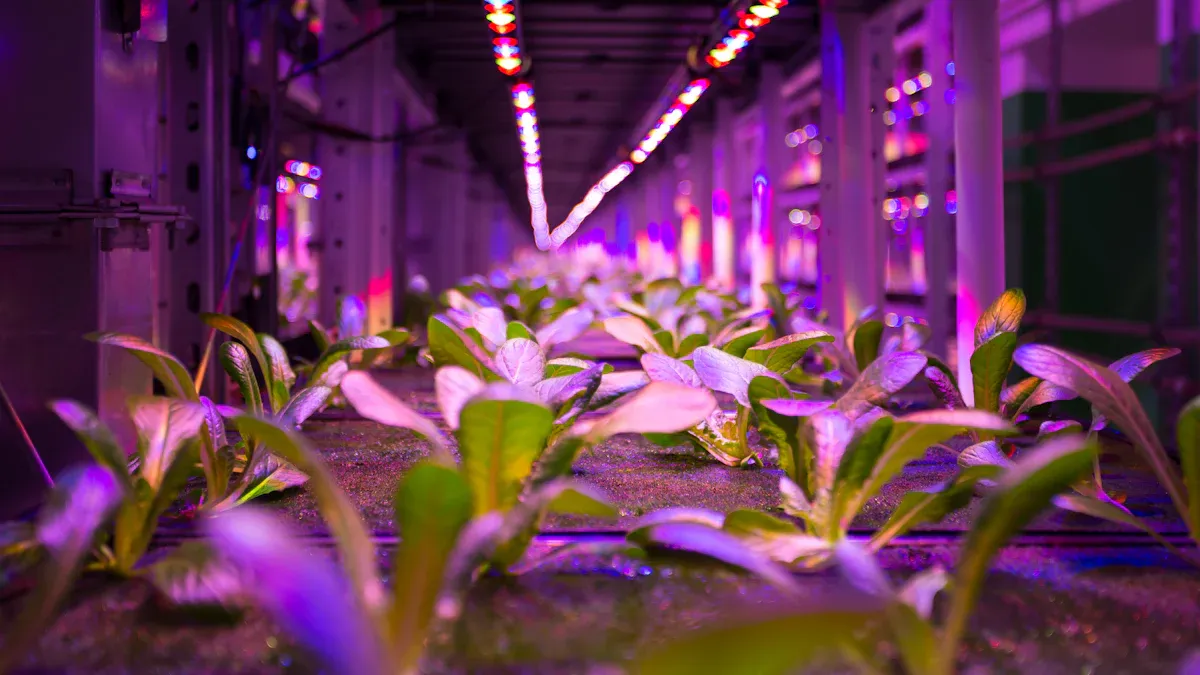
Why PPFD alone is not enough
Many people look at PPFD (Photosynthetic Photon Flux Density) and think it tells the whole story. You might believe that high PPFD means better plant growth. This idea can lead you to spend too much on powerful lights. PPFD only shows how much light hits a spot at one moment. It does not show how much light plants get during the whole day. You need to think about more than just one number.
Tip: Do not choose lights based only on PPFD. You need a complete plan for your crops.
Understanding DLI and light uniformity in vertical farms
DLI (Daily Light Integral) tells you how much light plants get in a day. You must give your crops enough DLI for strong growth. If you ignore DLI, your plants may grow weak or slow. Light uniformity also matters. Some areas get too much light, while others get too little. Uneven light causes poor yields and wasted energy.
| Factor | What It Means | Why It Matters |
|---|---|---|
| DLI | Total daily light | Healthy growth |
| Uniformity | Even light spread | Consistent yields |
Edge loss and overlapping light zones
You may notice that the edges of your racks get less light. This is called edge loss. Overlapping light zones can waste energy and create hot spots. You need to plan your lighting layout to avoid these problems. If you ignore edge loss, some plants will not grow well. Overlapping zones can raise your energy bills.
- Edge loss: Weak growth at rack edges
- Overlap: Wasted energy and uneven crops
Why low-wattage lighting performs better in vertical setups
Low-wattage lights work better in vertical farms. You can place them close to plants without burning leaves. These lights use less energy and keep heat low. High-wattage lights may seem powerful, but they waste energy and create hot spots. You save money and grow better crops with low-wattage options.
🌱 Note: Low-wattage lights help you control heat and save on energy costs.
The importance of custom-length and mounting solutions
Standard lights do not always fit your racks. You need custom-length fixtures and smart mounting solutions. These help you cover every plant and avoid dark spots. Custom setups make your lighting system work for your farm, not against it. When you Design a Commercial Indoor Vertical Farm, you must plan your lighting to match your layout.
- Custom-length lights fit your racks
- Smart mounts give even coverage
- Better design means higher yields
Irrigation and Nutrient Systems: Simplicity Wins
Why over-engineered systems fail in commercial farms
Some people think more pumps and sensors are better. But complicated systems break down a lot. You spend time fixing leaks and changing parts. Simple irrigation and nutrient systems work best for commercial farms. They cost less to buy and fix. You can teach workers how to use them quickly. When you Design a Commercial Indoor Vertical Farm, pick systems that work without extra gadgets. Simple setups keep crops healthy and costs low.
💡 Tip: Focus on reliability, not perfection. Simple systems last longer and need fewer repairs.
Common irrigation problems: clogging, leaks, and algae
Problems happen if you skip the basics. Pipes and nozzles can clog with dirt or minerals. Leaks waste water and nutrients. Algae grows in wet spots and blocks water flow. These problems slow harvests and raise bills. You must check your system often. Look for trouble before it gets worse.
| Problem | What Happens | How to Prevent |
|---|---|---|
| Clogging | Poor water flow | Clean pipes regularly |
| Leaks | Water loss | Inspect connections |
| Algae | Blocked system | Keep areas clean |
Designing systems for cleaning and maintenance
You need to plan for cleaning and upkeep early. Cleaning stops algae, mold, and pests. Clean hydroponic or aeroponic systems, including nutrient reservoirs, pipes, and nozzles. This keeps things working and stops clogging. You should check nutrient levels, pH, and water quality often. Simple designs make these jobs easier. Workers can reach every part of the system. You save time and avoid costly repairs.
- Clean growing areas and equipment often.
- Flush nutrient reservoirs, pipes, and nozzles.
- Check pH and nutrient concentration.
- Test water for contaminants.
🛠️ Note: Easy-to-clean systems help your farm run smoothly. Good design means less downtime and better yields.
Environmental Control: Design for Consistency, Not Perfection
When you Design a Commercial Indoor Vertical Farm, you face special risks. Stacking plants creates layers with different climates. You must keep conditions steady on every level. Trying for perfect temperature or humidity wastes energy. It also causes uneven plant growth. Consistency is more important than perfection.
Temperature stratification in vertical farming environments
Temperature changes from bottom racks to top racks. Warm air goes up, so top racks get hotter. Lower racks stay cooler. If you ignore this, plants grow at different speeds. You should check temperature on each rack. Use fans to mix the air. This helps all racks stay close in temperature.
Tip: Put sensors on every rack. Check them often. Change airflow to fix hot or cold spots.
Humidity management across multiple growing levels
Humidity is different on each level. Water from plants and irrigation adds moisture. Top racks dry out faster. Bottom racks hold more humidity. High humidity causes mold and disease. Low humidity slows plant growth. You must control moisture for every layer. Use dehumidifiers or vents to balance humidity.
| Problem | What Happens | Solution |
|---|---|---|
| High humidity | Mold, disease | Ventilate, dry air |
| Low humidity | Slow growth | Add moisture |
Airflow design and its impact on plant health
Airflow helps plants stay healthy. Still air makes weak stems and brings pests. Good airflow removes heat and moisture. You should use vents and fans to move air everywhere. Do not let air get stuck in corners or between shelves. Test airflow with smoke or ribbons. Change things if you find dead spots.
- Use fans that move air sideways and up.
- Check airflow on every rack.
- Fix blocked paths fast.
🌬️ Note: Even airflow keeps plants strong and healthy. Focus on steady air movement, not just fast air.
Automation and Control Systems: Only Automate What Matters

Why more automation does not mean higher profitability
You may think more technology will help your farm. Many people believe sensors and robots will make more money. But too much automation can cause problems. Complex systems break down a lot. You spend time fixing things and teaching workers. High-tech tools can make your farm weak. If one part fails, everything can stop. When you Design a Commercial Indoor Vertical Farm, pick automation that lowers risk and saves work. Do not let technology make your choices.
⚠️ Alert: Automation should make your farm easier to run. It should not bring extra stress or risk.
What should be automated in a commercial vertical farm
You need to pick what to automate carefully. Start with jobs that take lots of time or cause mistakes. Good automation helps control climate, lighting, and irrigation. You can use timers for lights and pumps. Sensors check temperature and humidity. Simple alarms warn you about trouble. Only automate things that make work safer and easier.
Key areas to automate:
- Climate control (temperature, humidity)
- Lighting schedules
- Irrigation timing
- Nutrient dosing
- Alarm systems for failures
| Task | Should Automate? | Why |
|---|---|---|
| Climate control | Yes | Consistency |
| Lighting | Yes | Saves labor |
| Harvesting | No | Too complex |
| Cleaning | No | Needs human touch |
Keeping control systems reliable and easy to operate
You want controls that work every day. Simple controls are best for workers. Workers should learn them fast. If controls are hard, mistakes happen. Pick systems with clear screens and easy buttons. Stay away from software that needs special lessons. Test controls before you build your farm. Make sure you can fix problems quickly.
💡 Tip: Reliable automation keeps your farm safe. Easy controls help your team do better work.
Maintenance and Daily Operations: Design for Real People
Daily tasks operators must perform
Every day, your team needs to do many hands-on jobs. You must check plants for health and growth. Workers mix nutrients and refill water tanks. Cleaning trays and wiping down surfaces keeps pests and mold away. You also need to inspect lights, fans, and pumps. Harvesting, packaging, and moving crops to storage or delivery areas happen often. If you skip these steps, your farm will not run well.
Common daily tasks:
- Inspect plants for pests or disease
- Mix and add nutrients
- Clean trays and equipment
- Check and adjust lighting
- Monitor temperature and humidity
- Harvest and package crops
🛠️ Tip: Make a checklist for each shift. This helps workers remember every step.
Ergonomics, access, and worker efficiency
You need to think about how people move and work in your farm. If racks are too high or too low, workers will stretch or bend too much. This causes pain and slows them down. Tight spaces make it hard to reach plants or clean equipment. Good design gives workers enough room to move and work safely. Tools and supplies should be easy to reach. When you Design a Commercial Indoor Vertical Farm, plan for real people, not just plants.
| Good Design | Poor Design |
|---|---|
| Easy access to racks | Hard-to-reach areas |
| Comfortable height | Awkward bending |
| Clear walkways | Crowded paths |
How poor design increases labor cost over time
If you ignore daily tasks when planning, you will pay more for labor. Workers spend extra time moving around obstacles or using ladders. Cleaning takes longer in tight spaces. Mistakes happen when controls are hard to use. Over time, these small problems add up. You may need more workers or pay overtime. Profits drop because of simple design errors.
⚠️ Alert: Every minute wasted on a bad layout costs you money. Smart design keeps your team fast and your costs low.
Design Mistakes That Are Very Hard to Fix Later
When you Design a Commercial Indoor Vertical Farm, you must avoid certain mistakes. Some errors can lock your farm into low profits, no matter how hard you work. You cannot fix these problems easily after you build. Learn from the experience of others and plan carefully.
Ceiling height locked too low
If you choose a space with a low ceiling, you limit your farm forever. You cannot add more rack levels or improve airflow. Your lighting options shrink. You may struggle with heat and humidity. Many operators regret not checking ceiling height before signing a lease. You cannot raise the ceiling later without huge costs. Always measure and plan for the tallest racks you want.
⚠️ Warning: Low ceilings block your growth. You lose money every year because you cannot expand.
Electrical capacity underestimated
You need enough power for lights, pumps, fans, and climate control. If you misjudge your electrical needs, you face outages and equipment failures. Upgrading electrical systems after you build costs a lot and takes time. You may need to shut down your farm for weeks. Always ask an expert to check your power needs before you start.
| Mistake | Result |
|---|---|
| Not enough power | System failures |
| Wrong wiring | Safety risks |
| No backup | Lost crops |
Inflexible lighting and rack layouts

Fixed racks and standard lights seem easy at first. Later, you may want to grow new crops or change your workflow. Inflexible layouts make changes hard or impossible. You spend more on labor and get lower yields. Modular racks and custom lighting help you adapt. If you skip flexibility, you lock your farm into old methods.
- Modular racks allow easy changes.
- Custom lighting fits new crops.
- Flexible layouts save money over time.
No allowance for future crop changes
Markets change. You may want to grow new crops or try new systems. If your design cannot handle different plant sizes or types, you miss new opportunities. You lose sales and fall behind competitors. Always plan for future changes. Leave space for new equipment and different rack heights.
💡 Tip: Build with tomorrow in mind. Flexibility keeps your farm profitable and ready for growth.
Designing the Farm as an Integrated System

Why lighting, racks, irrigation, and controls must be designed together
You need to think about your farm as a single system. Lighting, racks, irrigation, and controls all work together. If you design each part alone, you miss how they affect each other. For example, your lights need to fit your racks. Your irrigation system must reach every plant. Controls should help you manage everything easily. When you Design a Commercial Indoor Vertical Farm, you make better choices by planning all parts at the same time.
Tip: Draw a map of your farm. Show where each system goes. Check if they fit together before you build.
The risks of designing each subsystem separately
If you design each system by itself, you create problems. Lights may not fit your racks. Water pipes might block walkways. Controls could be hard to reach. These mistakes cost money and slow down your work. You may need to rebuild parts of your farm. This wastes time and hurts your profits.
| Mistake | What Happens |
|---|---|
| Separate lighting design | Shadows, poor growth |
| Racks not matched | Hard to reach plants |
| Irrigation not planned | Leaks, wasted water |
| Controls not linked | Confusing operation |
⚠️ Alert: Always check how each system connects to the others. Small errors can become big problems.
How integrated design reduces long-term operating cost
When you plan your farm as a whole, you save money over time. Integrated systems use less energy and water. Workers move faster and make fewer mistakes. You spend less on repairs and upgrades. Your farm runs smoothly and grows with your business. You avoid costly changes later.
Benefits of integrated design:
- Lower energy bills
- Easier cleaning and maintenance
- Faster workflow
- Fewer repairs
🛠️ Good design helps you build a farm that lasts. Plan every part to work together from the start.
Conclusion — Getting the Design Right Before You Build
Why the design phase is the cheapest time to avoid mistakes
You save the most money by making smart choices before you build. The design phase lets you spot problems early. You can fix mistakes on paper for almost no cost. Once you start building, every change costs more. If you skip careful planning, you risk expensive fixes later. You also avoid delays and stress when you plan well. Think of the design phase as your safety net. It protects your investment and helps your farm succeed.
💡 Tip: Spend extra time on design now. You will save money and avoid headaches in the future.
When to seek professional design support
You do not need to do everything alone. Sometimes, you need help from experts. If you feel unsure about electrical systems, airflow, or workflow, ask a professional. Experts can spot risks you might miss. They know the rules and best practices. You should seek help if you plan a large farm or want to scale up. Professional advice can prevent costly errors and keep your project on track.
Consider professional support when:
- You plan a large or complex farm
- You need to meet strict safety codes
- You want to use new technology
- You feel unsure about any part of the design
Who this approach is best suited for (and who it is not)
This guide works best for people who want to build a real business. If you want to Design a Commercial Indoor Vertical Farm that grows with your goals, this approach fits you. You should care about planning, efficiency, and long-term success. If you only want a small hobby project, you may not need this level of detail. This process helps those who want to avoid mistakes and build a farm that lasts.
| Best Suited For | Not Suited For |
|---|---|
| Commercial operators | Hobby growers |
| Investors | Small home setups |
| Scaling businesses | Demo projects |
Take action now. Careful design is your best tool for a profitable, trouble-free farm.
You can avoid costly mistakes when you Design a Commercial Indoor Vertical Farm by following a clear process. Start with strong planning and market research. Focus on simple systems and flexible layouts. Check every detail before you build. Keep learning and improve your farm over time. Take action now to protect your investment and grow your business. Careful design helps you build a farm that works well and lasts.
📝 Remember: Smart choices today lead to long-term success.
FAQ
What is the biggest mistake new vertical farm owners make?
You often overlook design details. Many people focus on growing plants but ignore space, ceiling height, or workflow. These mistakes can limit your profits and make daily work harder.
How do I choose the right crops for my vertical farm?
Start with your local market. Research what buyers want and what sells well. Do not guess. Pick crops that fit your business plan and match your farm’s design.
Can I automate everything in my vertical farm?
No. You should only automate tasks that save time and reduce errors. Too much automation can cause breakdowns and confusion. Focus on climate, lighting, and irrigation controls first.
Why does ceiling height matter so much?
Ceiling height sets the limit for your rack levels and lighting. You cannot change it later. Low ceilings reduce your growing space and make airflow problems worse. Always check ceiling height before you build.