

Growing strawberries vertically allows you to enjoy fresh fruit even in small spaces. Many gardeners find that growing strawberries vertically saves space and provides clean, tasty berries right near home. This method can also result in steady fruit production throughout the year and reduce the need for pesticides. However, you may face challenges such as setting up special tools, managing water, and selecting the right plants. Consider your available space, goals, and willingness to learn new techniques before deciding if growing strawberries vertically is the best choice for you.
Key Takeaways
- Growing strawberries vertically uses less space. You can grow more fruit in small places like balconies or patios.
- LED grow lights help strawberries grow better. They also let you get fruit all year, even inside.
- Vertical gardens let air move better. They lower the chance of diseases. They also make picking strawberries easier because plants are higher up.
- Starting a vertical garden can cost more money. You need special tools. You must water carefully and take care of the garden often.
- Picking the right strawberry types and watering them well helps you get the best results from vertical growing.
LED Strawberry Grow Light

What Is an LED Strawberry Grow Light
You can use an LED strawberry grow light to help your strawberry plants grow indoors or in vertical gardens. These lights use special technology to give your plants the exact type of light they need. LED strawberry grow lights stand out from other grow lights because of several key features:
- High photosynthetic photon efficacy (PPE) means you get more usable light for less electricity, which saves you money.
- Uniform light distribution ensures all your strawberries receive the same amount of light, so fruit develops evenly.
- Adjustable power output lets you match the light intensity to your setup, preventing your plants from getting too much or too little light.
- Dimmable and spectrum-tunable settings allow you to change the color and strength of the light for different growth stages.
- Daisy chain compatibility helps you control several lights at once, making it easier to manage larger setups.
- The light spectrum is designed just for strawberries, with the right mix of blue, red, far-red, and green light to boost growth and fruit quality.
- Lower heat output keeps your plants healthy and reduces the risk of disease.
Tip: Using LED strawberry grow lights can help you grow healthier plants, get more fruit, and use less energy than traditional lights.
Common LED Grow Light Systems
You have many options when choosing an LED grow light system for vertical strawberries. Some of the most popular systems include:
- Full-spectrum LED lights, mimic natural sunlight and help you spot plant problems early.
- Lights with far-red wavelengths (around 730 nm) encourage faster growth and bigger harvests.
- Adjustable spectrum lights let you change the light mix for each stage of strawberry growth.
- Smart control systems, such as programmable timers and remote controls, make it easy to set the perfect light schedule.
- Waterproof LED lights work well in humid or wet environments.
- Vertical grow racks paired with these LED systems save space and support healthy, productive plants.
With the right LED system, you can improve fruit quality, increase yields, and enjoy fresh strawberries all year long.
Benefits of Growing Strawberries Vertically

Space Saving
Growing strawberries vertically helps you use space better. You can stack plants in layers with racks or towers. The plants grow up instead of spreading out on the ground. Stackable units can give you up to four times more growing area than flat beds. You do not need a bigger garden or greenhouse for more plants. This system saves land and lowers building costs. It also lets you grow more strawberries in small places like balconies or patios.
Tip: Vertical gardening is great if you have little space or want to grow more strawberries in the same spot.
Higher Yield
Vertical systems help you get more strawberries from the same space. The table below shows how much your harvest can grow:
| Metric | Value | Explanation/Conversion |
|---|---|---|
| Yield increase (%) | 30–50% | Using elevated bench systems |
| Yield per acre (lbs) | 35,000–50,000 | Annual yield with vertical system |
| Yield per sq ft (lbs) | ~0.8 to 1.15 | Converted from per acre yield |
| Yield per square meter (kg) | 12.5 | With hydroponic lifting system |
| Yield increase | ~100% (doubling) | Compared to other soilless greenhouse systems in Japan |
You can see that vertical growing can give you 30% to 100% more strawberries. This means you get more fruit without needing extra land.
Better Airflow
Vertical gardens spread your strawberry plants out in layers. This stops plants from getting too crowded. Each plant gets more air around it. Good airflow keeps leaves and fruit dry. Dry plants are less likely to get diseases like powdery mildew or gray mold. Lifting plants up also keeps them away from bugs and soil diseases. Better drainage and less wet leaves mean healthier strawberries and fewer chemicals.
- Plants stay dry and healthy.
- Less chance of disease.
- Fewer bugs reach your fruit.
Easier Harvest
Picking strawberries is easier with a vertical system. The plants grow at a height that is easy to reach. You do not have to bend or kneel to pick fruit. This makes picking less hard and more fun. Many people say they can pick fresh strawberries every day in season, even from a balcony or small garden. Vertical setups can use automatic watering, which saves time. You can also grow other plants under your strawberry towers to use space well.
Note: Vertical gardens help you keep plants organized and make picking and caring for them easier.
Year-Round Growing
Vertical systems let you grow strawberries all year, especially with LED grow lights and controlled rooms. You do not have to wait for the right season or worry about bad weather. This way, you always have fresh strawberries, even in winter or places with short summers. You can eat homegrown fruit any time.
Growing strawberries vertically lets you control the growing space, so your plants keep making fruit all year.
Challenges of Growing Strawberries Vertically
Setup Cost
You may notice that starting a vertical strawberry garden costs more than planting in the ground. Commercial hydroponic towers, like the Nutraponics Hydroponics Tower, can cost between $549 and $1,499. These systems often include automated controls, LED grow lights, and stackable designs. They help you save space and grow more fruit, but the price is much higher than regular gardening tools. If you want a cheaper option, you can build your own system.
Equipment Requirements for Commercial Vertical Strawberry Farming
Establishing a commercial vertical strawberry farming system requires professional-grade equipment to ensure high yields, operational efficiency, and consistent crop quality. Below is a list of essential components commonly used in large-scale vertical farming environments:
Core Equipment for Commercial Vertical Systems
-
Modular vertical grow racks designed for space optimization and airflow
-
Integrated irrigation systems, including automated drip or ebb-and-flow setups
-
LED grow lights with adjustable spectrum to match each growth stage
-
Climate control systems, including air conditioning, ventilation, and dehumidifiers
-
Water reservoirs with filtration and nutrient dosing systems
-
High-efficiency potting or hydroponic substrates
-
Certified strawberry seedlings for predictable yield and disease resistance
📦 Optional Upgrades for Smart Farm Integration:
-
IoT-based environmental sensors for real-time data monitoring
-
Automated control panels for lighting, watering, and CO₂ management
-
Mobile racks for flexible workflow and improved maintenance access
-
Remote farm management software to streamline operations
With the right setup, commercial growers can cultivate hundreds of strawberry plants per square meter, increase cropping cycles, and reduce manual labor. Compared to traditional horizontal farming, vertical systems offer higher space utilization, improved resource efficiency, and scalability for year-round production.
Root Space
Strawberry plants need enough room for their roots to spread. In vertical systems, root space is limited. If roots do not have enough space, plants may grow slowly or produce less fruit. You must choose the right containers and avoid crowding your plants. Some gardeners use larger pots or stack fewer layers to give roots more room. If you notice small berries or weak plants, check if the roots have enough space.
Note: Healthy roots lead to healthy strawberries. Make sure each plant has enough soil and space to grow strong.
Watering
Watering is one of the biggest challenges when growing strawberries vertically. Vertical systems often use hydroponic methods or drip irrigation. These methods give each plant the right amount of water, but they need careful management. If you use drip irrigation, you must watch for clogged tubes and broken drip tape. Overhead sprinklers use more water and can cause diseases by keeping leaves wet.
| Irrigation System | Common Challenges | Effective Solutions |
|---|---|---|
| Drip Irrigation | Needs careful management; tubes can clog or break | Gives each plant the right amount of water; keeps leaves dry; can be automated |
| Overhead Sprinklers | Uses more water; can cause leaf diseases | Simple to set up; helps protect plants from frost |
You should water deeply, not just a little at a time. Let the soil dry out a bit between waterings. This helps roots get enough oxygen and prevents rot. Use a “squeeze test” to check soil moisture. Start watering early in the day and change how often you water as the seasons change. Watch the quality of your water, too. Water with too much salt or high pH can hurt your plants.
- Overwatering can cause root rot and weak plants.
- Underwatering leads to dry, stressed strawberries.
- Use soil moisture sensors if possible to help you water at the right time.
Maintenance
Vertical strawberry gardens need regular care. You must check for clogged irrigation lines, clean water reservoirs, and watch for pests. Plants in small containers dry out faster, so you need to water and feed them more often. You may need to replace worn-out parts, like drip tape or old pots. If you use LED grow lights, you must adjust them as plants grow. Keeping everything clean and working well takes time and effort.
Reminder: Regular checks and quick fixes keep your vertical strawberry garden healthy and productive.
Growing strawberries vertically brings many rewards, but you must plan for these challenges. With the right tools and care, you can enjoy fresh berries even in a small space.
Tips for Success
System Choice
Select vertical grow racks or stacked troughs based on your space and budget. For better yield control, indoor or greenhouse setups with automation are ideal. These systems support higher plant density and year-round production.
Variety Selection
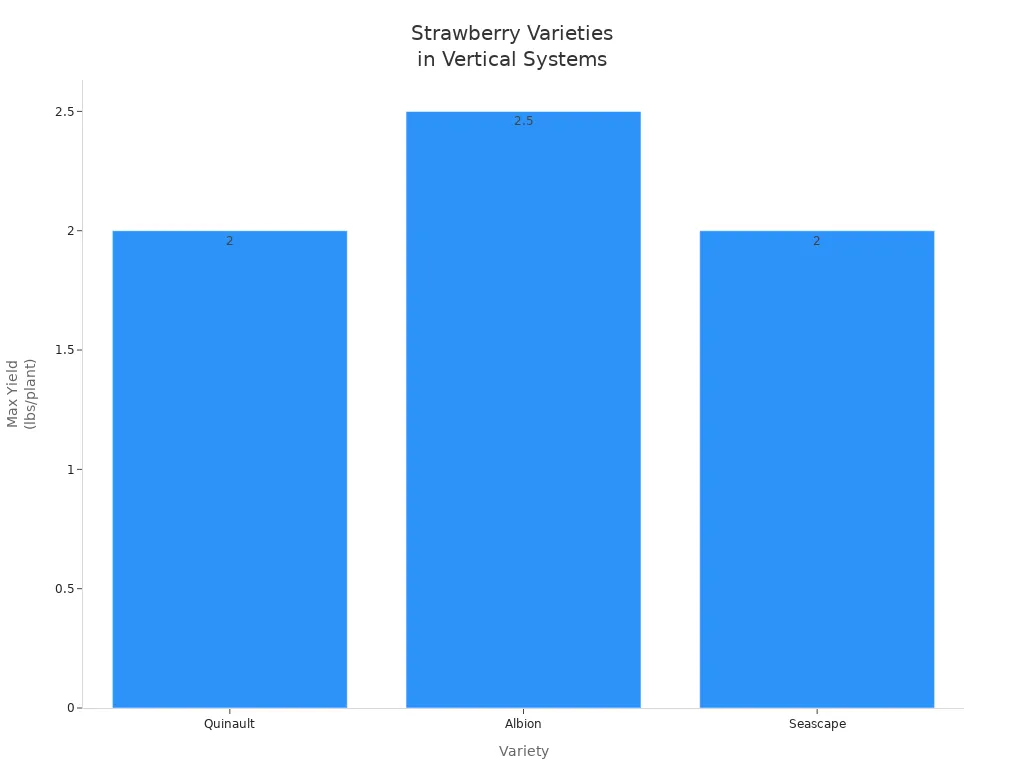
Some types of strawberries do better in vertical gardens. Pick ones that match your weather and how you want to grow them. Quinault, Albion, and Seascape are good choices for these systems. Each type has its own special features:
| Variety | Growth Profile | Yield (lbs/plant) | Flavor | Key Benefits | Best Season |
|---|---|---|---|---|---|
| Quinault | Compact, strong crown | 1-2 | Sweet, balanced | Self-pollinating, disease resistant | Fall, cool weather |
| Albion | Large, vigorous | Up to 2.5 | Rich, sweet | Large berries, heat resistant | Summer |
| Seascape | Medium, strong roots | 1.5-2 | Bright, aromatic | Quick to establish, heat tolerant | Spring, winter (indoors) |
Watering and Feeding
Keep the roots damp but not soaked. Water every 3 to 5 days if you use soil. In hot weather, check your plants more often. For hydroponics, watch the nutrient mix. Keep pH between 5.8 and 6.2. Keep EC around 1.0 to 1.4. Use a bloom mix with more phosphorus and potassium when fruit starts to grow. Feed young plants less often. Cut off runners during flowering so the plant can focus on fruit.
- Add water when the tank is low.
- Use a timer for drip watering if you can.
- Mix perlite or vermiculite into soil for better drainage.
Regular Care
Look at your plants often for bugs or sickness. Water them on a schedule, but do not give too much. Use a balanced fertilizer like 10-10-10 as the label says. Cut off dead leaves and runners to keep plants healthy. Make sure your strawberries get enough Light Exposure and air. Pick berries when they are all red and come off easily. Clean your tools and pots to stop problems.
Tip: Taking care of your plants all the time helps you get the best strawberries when you grow them vertically.
Is Vertical Strawberry Farming Right for Your Business?
Who Benefits Most
Vertical strawberry farming is ideal for commercial growers aiming to maximize yield in limited space. This method is especially beneficial for:
Agribusinesses operating in urban or high-rent areas
Commercial greenhouses seeking higher ROI per square foot
Entrepreneurs starting indoor farming ventures
Growers aiming for year-round production using LED grow lights
Operations looking to reduce labor and improve harvest efficiency
With vertical hydroponic systems or multi-layer grow racks, you can cultivate hundreds of strawberry plants in compact indoor facilities. Integrated LED lighting and automated irrigation systems reduce manual workload while enhancing consistency and crop quality.
Tip: If your goal is high-density, scalable strawberry production with lower operational costs and higher output per square meter, vertical farming is a strategic investment.
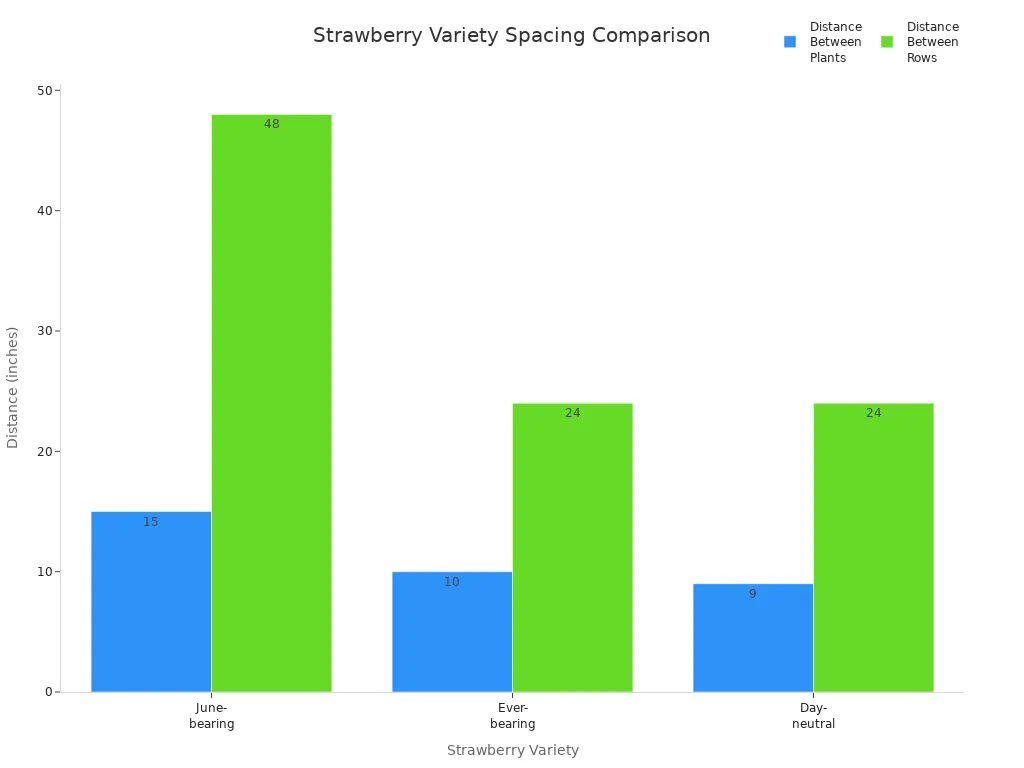
Growing strawberries vertically gives you more fruit in less space, but you need to plan for setup and care. Use the table below to check if your space fits the plant spacing needs for different strawberry types:
| Strawberry Variety | Distance Between Plants | Distance Between Rows |
|---|---|---|
| June-bearing | 12-18 inches | 4 feet |
| Ever-bearing | 8-12 inches | 2 feet |
| Day-neutral | 8-10 inches | 2 feet |
If you want fresh berries and have limited space, growing strawberries vertically could be a great fit. Why not give it a try this spring? 🍓
FAQ
How often should you water strawberries in a vertical system?
You should check the soil every day. Water when the top inch feels dry. In hot weather, you may need to water more often. Use a timer for drip systems to keep watering regular.
Can you grow strawberries vertically indoors?
Yes, you can grow strawberries indoors. Use LED grow lights to give plants enough light. Keep the room temperature between 65°F and 75°F for best results.
What is the best strawberry variety for vertical gardens?
Choose everbearing or day-neutral varieties. Good options include Albion, Seascape, and Quinault. These types produce fruit over a long season and fit well in small spaces.
Tip: Everbearing strawberries give you more harvests throughout the year.
Do vertical strawberry gardens need fertilizer?
Yes, you need to feed your plants. Use a balanced fertilizer every two weeks during the growing season. Follow the instructions on the label. Healthy plants produce more fruit and resist disease better.