

You will probably see that greenhouse led grow lights are now common in many big greenhouses. In the cannabis industry, over half of growers use LEDs instead of old lights. You can get some clear benefits, like better plant growth, saving energy, and bulbs that last longer. But you might have to pay a lot at first and see some changes in how plants look. Many growers say these lights help them grow plants all year, but you should think about both the good and bad sides before you decide.
Key Takeaways
- LED grow lights save up to 70% energy and last over 50,000 hours, cutting costs and maintenance.
- You can control light spectrum and brightness to help plants grow better at every stage.
- LEDs produce less heat, so plants stay healthier and you spend less on cooling.
- High upfront costs and a learning curve exist, but grants and training can ease the switch.
- Start small, watch your plants closely, and adjust light height to avoid light burn.
What Are Greenhouse LED Grow Lights?

How They Work
Greenhouse led grow lights use special technology to help your plants grow strong and healthy. These lights have tiny parts called light emitting diodes, or LEDs. When you turn them on, electricity passes through the LEDs and makes them shine. Each LED can give off a certain color of light. You can choose the right mix of colors for your plants. For example, blue light helps plants grow leaves and stems, while red light helps them make flowers and fruit.
You can also find full-spectrum LED grow lights. These lights copy the sun’s natural light, so your plants get what they need at every stage. Some advanced models let you change the spectrum and brightness. This means you can give seedlings more blue light and switch to more red light when your plants start to flower. Because LEDs do not make much heat, you can put them close to your plants without burning them. This helps you save space and control the temperature in your greenhouse.
Tip: Using greenhouse led grow lights lets you grow crops all year, even when sunlight is weak or days are short.
LED vs. Traditional Lights
You might wonder how LED grow lights compare to older types like HPS (high-pressure sodium) or fluorescent lamps. Here is a quick look at the main differences:
| Feature | LED Grow Lights | Traditional Lights (HPS / Fluorescent) |
|---|---|---|
| Energy Use | Up to 70% less power | High, especially HPS |
| Light Spectrum | Customizable, full-spectrum | Limited (HPS mostly red, fluorescents better for seedlings) |
| Heat Output | Very low, less cooling needed | High, may need extra cooling |
| Lifespan | 50,000+ hours | 10,000-24,000 hours (HPS), less for fluorescents |
| Environmental Impact | Mercury-free, more sustainable | Contains mercury (fluorescents), higher energy use |
LED grow lights use less electricity and last much longer than traditional lights. They also let you control the color of light, which helps your plants at every stage. Traditional lights often waste energy as heat and need to be replaced more often. LEDs are safer for the environment because they do not contain mercury.
Pros of Greenhouse LED Grow Lights

Energy Efficiency
Switching to greenhouse led grow lights saves a lot of energy. These lights use much less power than HPS or fluorescent lamps. Most growers save between 25% and 70% on energy. The table below shows how much energy you might save:
| Source | Energy Savings (%) | Notes |
|---|---|---|
| iGrow News Article | Up to 40% | 600W HPS replaced by 360W LED |
| Seed Connect Blog | 50–70% | LEDs generally require 50-70% less energy than HPS |
| ScienceDirect Article | 10–25% | Savings depend on previous lighting energy use |
A real greenhouse tested 436 LED fixtures against 436 HPS fixtures. The LEDs used about 47% less energy each year. This saved over $230,000 in energy costs every year. In five years, the greenhouse saved more than $1.3 million by using LEDs.
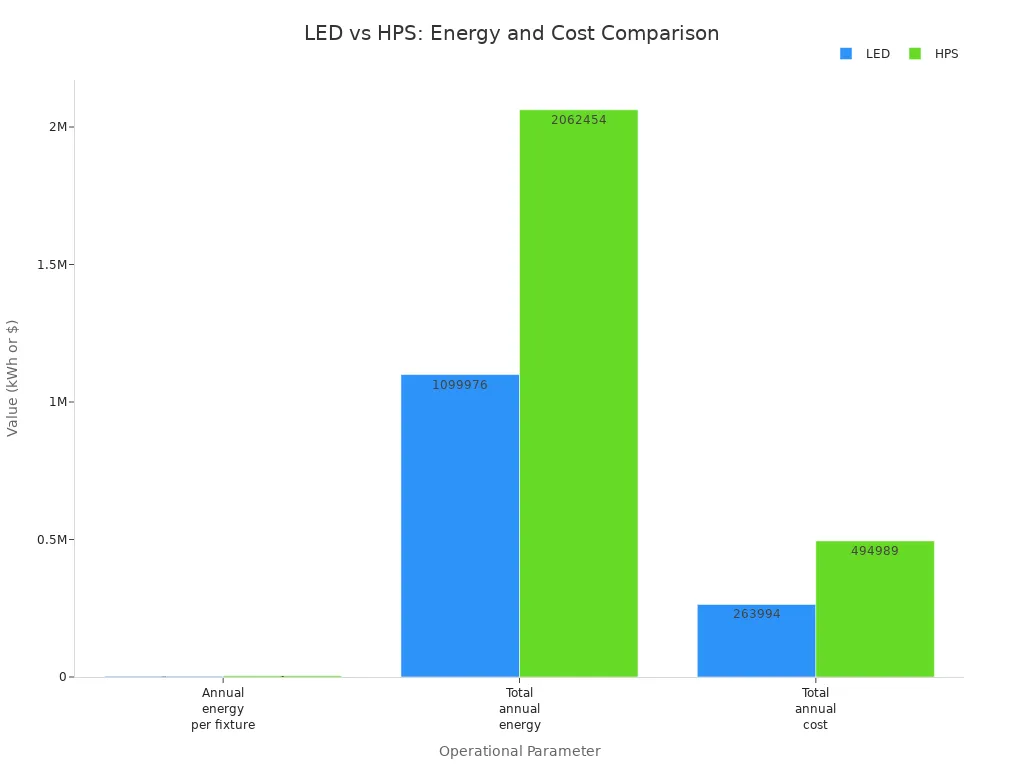
Note: Using less energy means you pay less for electricity. You can use the money you save for other things in your greenhouse.
Low Heat Output
Greenhouse led grow lights make much less heat than old lamps. HPS lights waste about 65% of their energy as heat. LEDs turn more energy into useful light. You can put LEDs closer to your plants, about 25 cm above the leaves. This helps you use space better and keeps your plants safe.
| Light Type | Placement Height Above Canopy | Heat Output Impact | Energy Efficiency |
|---|---|---|---|
| HPS | ~75 cm | High heat, needs ventilation and tall grow spaces | 30–35% of energy to light, 65% wasted as heat |
| LED | ~25 cm | Low heat, close placement, no leaf burn | 50–60% of energy to light, 40–60% lower power use |
LEDs lower the greenhouse temperature by 2 to 4°F. This makes it easier to control humidity. You do not need as many cooling systems. Plants grow better in cooler air, and you can keep the lights on longer.
- LED grow lights make little heat, so you need less cooling.
- Plants get less heat stress and grow stronger.
- You can grow plants for longer and get more crops.
Long Lifespan
You do not need to change greenhouse led grow lights as often. LEDs last over 50,000 hours. This is more than five times longer than HPS or metal halide lamps. Old lights last about 10,000 hours and need changing every 1-2 years.
- LEDs last 50,000 hours or more, so you change them less.
- Fewer changes mean lower costs and less work.
- You do not have to stop growing to change bulbs.
Light Spectrum Control
A big benefit of LED grow lights is spectrum control. You can change the color and strength of the light for your plants. Studies show different colors help plants in different ways:
- Red light (640–720 nm) helps plants make more fruit and vitamin C.
- Blue light (425–490 nm) helps plants grow short and strong.
- Green light (490–560 nm) goes deeper into leaves and helps nutrition.
- Far-red light (~720–750 nm) can make tomato crops up to 16% bigger.
You can make special “light recipes” for each plant and stage. This helps you grow better plants, save energy, and use fewer chemicals. Smart LED systems let you change the light anytime for the best results.
- You can match the light to what plants need.
- Plants grow faster and healthier with better yields.
- You use fewer chemicals and have more control.
Environmental Impact
Greenhouse led grow lights help you be more eco-friendly. They use up to 70% less energy than old lights. This lowers greenhouse gas emissions. LEDs last longer, so you throw away fewer bulbs. Unlike fluorescent lamps, LEDs do not have mercury or other toxic stuff, so they are safer to get rid of.
- Using less energy means a smaller carbon footprint.
- Long life means less waste and saves resources.
- No mercury or toxic materials, so disposal is safer.
- LEDs help with sustainable farming and work well with smart controls and renewable energy.
Tip: Using LED grow lights helps protect the planet and supports sustainable farming.
Cons of Greenhouse LED Grow Lights
High Upfront Cost
You may notice that greenhouse led grow lights cost much more at the start than traditional lighting. The price for a good LED system can be three to four times higher than older HID lights. For example, if you want to cover 16 square feet, you might pay about $500~800.
| Lighting System Type | Upfront Cost Multiplier vs. HID | Average Cost per 16 sq ft Coverage | Cost per Square Foot |
|---|---|---|---|
| LED Grow Lights | 3-4 times higher | $500~800 | $31~50 |
| Traditional HID | Baseline | N/A | N/A |
| UbiGro Inner | Much lower | Much lower than LED | Much lower |
Note: Some growers lower their costs by using government grants, subsidies, or working with investors. In Japan, for example, the government pays up to half the cost for LED installations. Many growers also choose to upgrade their greenhouses step by step, instead of all at once.
- You can look for financial help from grants or subsidies.
- Some growers use retrofits to save money instead of replacing everything.
- Partnerships with companies or investors can also help cover the cost.
Light Burn Risk
LEDs give you strong, focused light, but this can sometimes harm your plants if you do not use them carefully. Light burn happens when the lights are too close or too bright. You might see yellow or pale leaves, especially at the top of the plant. The tips may turn white, and the leaves can curl or point up. These signs often show up slowly over days or weeks.
Common causes and symptoms of light burn include:
- Placing LED lights too close to the plants.
- Using too much light intensity for the crop.
- Yellowing or bleaching of leaf tips.
- Leaves pointing upwards or curling.
- Bleached buds or pale leaves at the top.
You can prevent light burn by:
- Adjusting the height of your lights as your plants grow.
- Using adjustable hangers or dimmers to control brightness.
- Picking the right light spectrum and intensity for each crop.
- Using light-diffusing covers to spread light evenly.
- Cleaning your lights to keep them working well.
Tip: Always check your plants for signs of light burn, especially the top leaves. Move the lights higher or dim them if you see problems.
System Compatibility
Switching to LED lights can bring some challenges with your current greenhouse setup. LEDs use less power, but sometimes you need to upgrade your electrical system, especially if you move from low-wattage HID lights or install very powerful LEDs. LEDs also make less heat than HPS lights, so you may need to add heating in cold weather.
Some common compatibility issues:
- Your old control systems may not work with new LED features like dimming or automation.
- You may need to change how you mount or hang the lights.
- Less heat from LEDs can mean higher heating bills in winter.
Many growers solve these problems by:
- Using wireless control systems for easy adjustments and remote monitoring.
- Working with electricians to upgrade wiring and power management.
- Choosing hybrid systems that mix LEDs and HPS lights to balance heat and energy savings.
- Planning upgrades carefully to avoid downtime.
Note: Modern LED systems often come with smart controls and sensors. These help you manage your lights and keep your greenhouse running smoothly.
Learning Curve
When you switch to LED grow lights, you need to learn new ways to measure and manage light. You may have used lux or lumens before, but now you must use terms like PAR (photosynthetic active radiation), moles, and micromoles. These help you give your plants the right amount of light for growth.
You also need to:
- Learn how different light colors affect each plant.
- Use new tools and controls for adjusting light schedules and intensity.
- Understand how to use sensors and automation for the best results.
Many growers find this change hard at first. Training and support can help you and your staff learn faster. You can join workshops, talk to lighting experts, or use online resources from companies that make LED systems. FY LIGHTING Limited Company offer free lighting plans, guides, and expert advice to help you get started.
Tip: Take time to learn about your new LED system. Use training tools and ask for help when needed. This will help you get the best results from your greenhouse led grow lights.
Comparison Table
When you choose lighting for your greenhouse, you want to see the main differences quickly. The table below shows how LED grow lights compare to traditional lighting systems like HPS or CMH. You can use this table to decide which option fits your needs best.
| Aspect | LED Grow Lights | Traditional Lighting (HPS, CMH, HID) |
|---|---|---|
| Energy Efficiency | Converts up to 80% of energy into light. Saves money on electricity. | Converts about 40% of energy into light. Uses more power. |
| Heat Emission | Low heat output. You can place lights closer to plants. Less cooling needed. | High heat output. Needs more cooling. Must keep lights farther away. |
| Lifespan | Lasts 50,000–100,000 hours. Fewer replacements. | Lasts 7,000–18,000 hours. Needs more frequent changes. |
| Upfront Cost | Higher initial price. Can save money over time. | Lower initial price. Costs more in the long run. |
| Spectral Control | Customizable light spectrum. You can match light to plant growth stages. | Fixed spectrum. Less control over light quality. |
| Yield/Quality | Some growers see less dense flowers if spectrum lacks far-red light. | Often produces denser, larger flowers due to broader spectrum. |
| Total Cost Over Time | Lower total cost if you use them for several years. | Higher total cost from energy use and replacements. |
Tip: If you want to save energy and have more control over your plants’ light, LED grow lights work well. If you need higher light intensity or want to spend less at first, traditional lights might suit you better.
Key Points to Remember:
- LED grow lights help you save on energy and last much longer.
- Traditional lights give you strong light but use more power and need more cooling.
- You may pay more for LEDs at first, but you often spend less over time.
- The right choice depends on your budget, your crops, and your greenhouse setup.
Choosing LED Grow Lights for Your Greenhouse
Assessing Needs
You should start by understanding what your plants need. Each crop has its own light requirements. For example, some vegetables need 12-16 hours of light each day, while others may need more or less. Use a PAR meter to measure light intensity at the canopy level. This helps you find any dark spots or areas with too much light.
- Check your greenhouse for natural sunlight. If your plants get less than 6 hours of direct sun, you need extra lighting.
- Choose the right spectrum. Full-spectrum LEDs work for most crops, but some plants grow better with more red or blue light.
- Place your fixtures so light spreads evenly. Use diffusers or reflectors to avoid shadows.
- Set up timers or automatic controls to match your crops’ daily light needs.
- Clean your fixtures often and check for safety.
You can also look for LED systems that let you adjust the spectrum and brightness. This helps you match the light to each crop and growth stage.
ROI Considerations
When you invest in greenhouse led grow lights, you want to know how fast you will see savings. Most growers see energy costs drop by 35% to 50% compared to old HPS lights. The payback period depends on how many hours you run your lights. Facilities that use lights all day can see payback in as little as 0.6-1 year. Others may take up to 5 years.
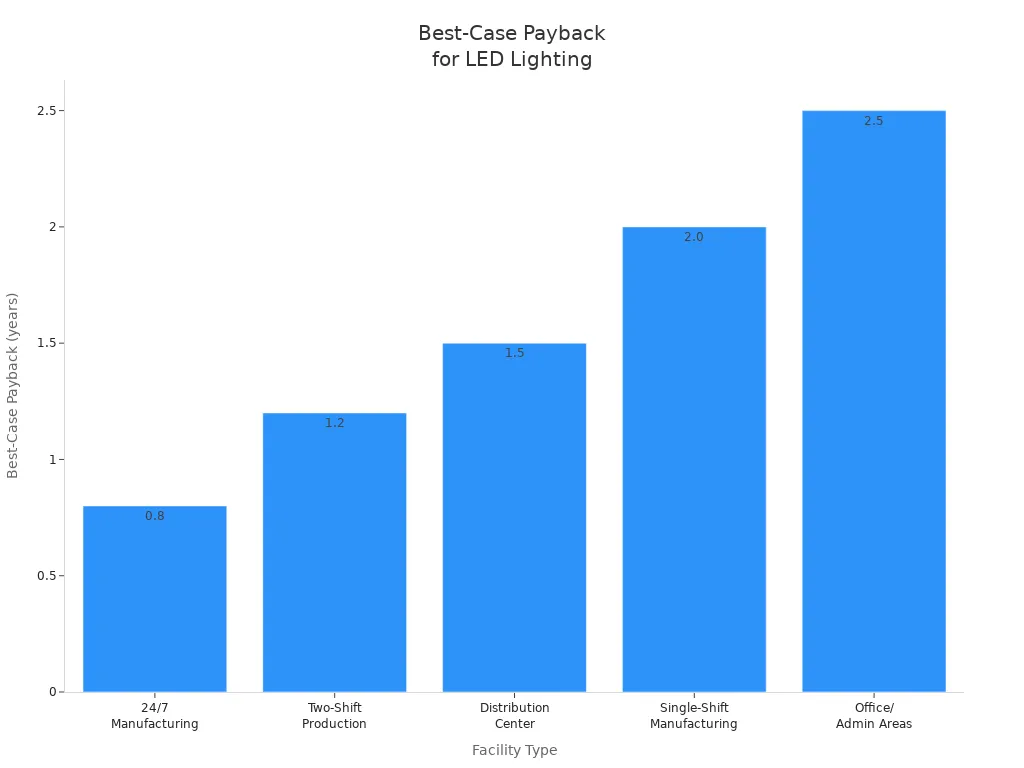
You also save money on cooling and maintenance. LEDs last longer and need fewer replacements.
Transition Tips
Switching to LEDs takes planning. You should:
- Learn how LEDs change your greenhouse environment. They make less heat, so you may need to raise the room temperature.
- Watch humidity and adjust it to keep plants healthy.
- Check your irrigation and nutrients. Plants may need less water because LEDs lower leaf temperature.
- Place LEDs closer to plants, but watch for light burn.
- Clean fixtures often and replace any that flicker.
- Use baseline measurements before and after installing LEDs to track changes.
Tip: Start with a small section of your greenhouse. Test and adjust before switching all your lights.
When you consider greenhouse led grow lights, you see both strong benefits and real challenges. You save energy, control light, and help the environment, but you face higher costs and a learning curve. Experts suggest you set clear goals, try small tests, and talk with technical advisors. Join grower networks and use research tools to stay ahead. Think about your budget, crop needs, and long-term plans before you decide.
FAQ
How long do LED grow lights last in a greenhouse?
Most LED grow lights work for 50,000 hours or more. You can use them for several years before you need to replace them. This long life helps you save money and time.
Can you use LED grow lights with any plant?
You can use LED grow lights for almost any plant. Adjust the light spectrum and intensity to match your crop. Some plants need more red or blue light for the best growth.
Do LED grow lights increase your electricity bill?
LED grow lights use much less energy than traditional lights. You will likely see a lower electricity bill after switching. Many growers save up to 50% on energy costs.
Tip: Track your energy use before and after installing LEDs to see your savings.
What is the best way to avoid light burn with LEDs?
Keep LED lights at the right height above your plants. Start with the manufacturer’s recommendation. Watch your plants for signs of stress. Adjust the distance or brightness if you see yellow or curled leaves.