

Are you thinking about starting a vertical farm using advanced vertical farming systems? You can grow fresh food all year round in the city, even if you don’t have much space. Before you begin, it’s important to understand the costs, space requirements, and technology involved in vertical farming systems. For instance, you’ll need to invest in equipment, lighting, and climate controls. The global vertical farming market is expanding rapidly and is expected to reach $6.37 billion in 2024. Careful planning and the effective use of vertical farming systems will help you achieve your goals. By following the right steps, you can bring healthy food and profits to your community.
Metric Value Market Size 2024 $6.37B Payback Period 2-4.5 years Avg Lettuce Yield 5.45 lbs/sq ft
Key Takeaways
- Make a careful budget. Include equipment, lighting, climate control, and staff costs. Always save extra money for surprises and growth.
- Pick a place with enough light and space. It is best if it is near cities. This helps you grow fresh food all year. You can also reach more customers easily.
- Choose crops like leafy greens, herbs, and microgreens. These grow well indoors. They use space well and many people want to buy them.
- Use smart technology like LED lighting, sensors, and automation. This saves energy and helps control the climate. It also helps your crops grow better.
- Start with a small farm and grow step-by-step. Set clear goals and study your market. Train your team for long-term success.
Key Considerations
Costs
You must think about your budget before you start. Small, medium, and large farms all cost different amounts. Here is a table that shows common costs:
| Cost Category | Estimated Cost Range / Percentage | Description / Notes |
|---|---|---|
| Small-Scale Startup Budget | $40000 – $150,000 | Basic hydroponic systems, LED lighting, infrastructure, climate control(FY Agricultural Intelligent Control System) |
| Mid-Sized Operation Budget | $200,000 – $1,000,000 | Advanced systems, extended infrastructure, permitsFY Agricultural Intelligent Control System) |
| Large-Scale Operation Budget | $2,000,000 – $5,000,000 | Full-scale systems, automation, facility expansion |
| Utilities Setup | Water $2k-$5k, Electricity $5k-$20k, HVAC $5k-$50k | Initial setup and ongoing monthly costs |
| Staffing & Training | $20,000 – $100,000 | Salaries, training, and benefits |
| Marketing & Branding | 10%-15% of startup budget | Website, advertising, local media |
| Distribution & Logistics | $15,000 – $50,000 | Vehicles, packaging, partnerships |
| Equipment & Technology | $100,000 – $500,000 | Systems, lighting, climate control |
| Contingency & Scaling Reserve | $30,000 – $150,000 | For unexpected costs and future growth |
💡 Tip: Always keep 10-15% of your money for surprises and growing bigger.
Space and Location
You can build a vertical farm where normal farms cannot go. Vertical farming does not need much ground space. You can grow food in cities or inside tall buildings. Places with lots of people and little land work best. Try to use empty rooftops or unused rooms in tall buildings. Light, building direction, and shadows matter for plant growth. Use city maps and light tests to pick the best place. This helps you get more crops and makes your farm work better.
- Use 3D city maps to find the best small spots.
- Make sure there is enough light for crops like lettuce and sweet pepper.
- Think about the types of buildings and how much space you have.
Crop Choice
Picking the right crops is very important. Some crops grow better and make more money in vertical farms. Microgreens, leafy greens, and herbs are good picks. They grow well inside and many people want to buy them.
| Crop Type | Seasonal Adaptability | Revenue per Square Foot |
|---|---|---|
| Microgreens | High | Up to $30 |
| Leafy Greens | Moderate | $20 – $25 |
| Herbs | Variable | $15 – $20 |
You can earn more by selling straight to buyers and wasting less food. Using green energy and recycling water saves money and helps nature.
Technology Needs
You need the right tools to run your vertical farm. LED lighting, hydroponic or aeroponic systems, and climate controls are needed. IoT sensors and machines help you check and change temperature, light, and nutrients fast. These tools make crops better and use fewer resources.
| Aspect | Details | Benefit |
|---|---|---|
| LED Lighting | Customizable, energy efficient | Lowers energy costs |
| IoT & Data Analytics | Real-time monitoring, predictive control | Improves yield, cuts waste |
| Advanced Growing Techniques | Hydroponics, aeroponics, aquaponics | Saves water, uses less space |
Operations
Running your vertical farm needs trained workers and good planning. Labor can be 30-40% of your costs. Training and machines help you save money and work faster. Energy is also a big cost, so use smart lights and climate controls to save. Recycling water can lower water use by up to 90%. These ideas help your farm last longer and make more money.

Starting a Vertical Farm
Define Goals
Before starting a vertical farm, you need to set clear goals. Ask yourself what you want to achieve. Do you want to grow food for your local community, supply restaurants, or sell to grocery stores? Maybe you want to focus on sustainability or use new technology. Your goals will guide every step of starting a vertical farm. Write down your vision and mission. This helps you stay focused when you face challenges.
Think about the size of your operation. Do you want a small farm for local sales or a large one for big markets? Decide if you want to use hydroponics, aeroponics, or aquaponics. Each system has its own benefits. When designing your vertical farm, match your goals with the right system and crops. If you want to save water and energy, choose systems that use less of both. If you want to grow rare herbs, pick a setup that supports those plants.
Set short-term and long-term goals. For example, you might want to harvest your first crop in six months. In two years, you might want to double your production. Clear goals help you measure your progress and make better decisions. When starting a vertical farm, your goals shape your business plan, your team, and your daily work.
Research Market
Market research is a key step in starting a vertical farm. You need to know who will buy your crops and what they want. Look at your local area. Are there restaurants, grocery stores, or farmers’ markets that need fresh produce? Talk to chefs and store owners. Ask them what crops they need most. Check if there are other vertical farms nearby. If there are, find out what they grow and how they sell their products.
The vertical farming market is growing fast. In the United States, the market is expected to grow at a rate of 19.5% each year from 2025 to 2030. Europe holds over 31% of the global market share in 2024. Countries like the UK and Germany are seeing strong growth because of food security and climate risks. In Asia Pacific, the market is expanding quickly as people want pesticide-free food. China is using new technology like AI and robotics to grow even faster. Around the world, governments and companies are building more vertical farms to solve problems like less farmland and climate change. These trends show that starting a vertical farm now is a smart move.
You should also look at what crops are popular. Lettuce and strawberries are good choices because they grow well in vertical farms and people buy them often. Shipping container farms are becoming popular because you can put them almost anywhere. When designing your vertical farm, think about what your market needs and how you can stand out. If you see a gap in the market, you can fill it with your crops.
📝 Tip: Visit local markets and talk to buyers. Use online surveys to learn what people want. This helps you choose the best crops and prices.
Plan Budget
Budget planning is one of the most important parts of starting a vertical farm. You need to know how much money you will spend and how much you can earn. Start by listing all your costs. Include equipment, lighting, climate control, seeds, water, and labor. Use enterprise budgets to pick the best mix of crops and systems. Whole-farm budgets help you see the big picture and plan for all your needs.
Cash flow budgets show when money comes in and goes out. This helps you avoid running out of cash during slow months. Use partial budgeting to test new ideas or changes. For example, if you want to add a new crop, use partial budgeting to see if it will make or lose money. These tools help you make smart choices and avoid surprises.
Recent projects show that you should use proforma financial statements. These include profit and loss statements, balance sheets, and cash flow projections. They help you plan for the future and set sales goals. Use ROI calculators and cash burn analysis to track your progress. Zero-based budgeting is a good way to control costs. With this method, you must explain every expense each season. Track your spending in real time and review your budget often. This helps you spot problems early and keep your farm on track.
💡 Note: Careful budget planning helps you get loans or investors. It also helps you build a strong, lasting business.
When starting a vertical farm, you may need partners or investors. Look for people who share your vision. Good partners can bring money, skills, or connections. Many successful vertical farms work with local businesses, schools, or government programs. These partnerships can help you grow faster and reach more customers.
Step-by-Step Checklist for Starting a Vertical Farm:
- Write down your goals and mission.
- Study your local market and talk to buyers.
- Choose your crops and system.
- Make a detailed budget.
- Find partners or investors.
- Design your farm layout.
- Get permits and licenses.
- Buy equipment and supplies.
- Hire and train your team.
- Start growing and selling your crops.
Starting a vertical farm takes planning and hard work. If you follow these steps, you can build a farm that grows healthy food and supports your community.
Location and Building
Site Selection
Choosing where to put your vertical farm is very important. You should build close to big cities. This makes it easier to reach more people. It also helps you spend less on delivery. Cities with lots of people need more fresh food. Most people in the U.S. like to buy food grown nearby. If you build near these places, you can sell more.
There are other things to think about, too. The price of workers and power is different in each city. Some cities give money or help to new farms. Try to find places where people care about the planet. These people often want food from green farms.
- Pick a spot close to big cities.
- Check how much workers and power cost.
- See if the city helps new farms.
- Learn what people in your area like to buy.
🏙️ Tip: Building in a city saves money on delivery and helps you find buyers who care about the earth.
Building Requirements
You have to follow many rules when you build your vertical farm. You need to plan for how much power you will use. Lights can use most of your energy. In hot cities, power costs can be even higher. You can save money by keeping plants cool and using good lights.
You must follow safety and building rules. These rules cover lights, HVAC, water systems, doors, and robots. You need to get permits and have your plans checked. You must have fire alarms and safe exits. When you buy materials, make sure they follow the rules. This keeps your farm safe and legal.
| System | Key Standards/Regulations |
|---|---|
| Lighting | UL 8800 |
| HVAC | UL 1995, NFPA 90A |
| Irrigation | UL 778, UL 508A |
| Machinery/Robotics | UL 1740, ANSI B11.19 |
| Safety Controls | UL 1998, ISO 13849-1 |
Buying the right materials helps you avoid trouble later. Always check the rules in your city before you start building.
Vertical Farming Systems

System Types
When you look at vertical farming systems, you will see three main types. These are hydroponics, aeroponics, and aquaponics. Each system gives water and nutrients to plants in a different way.
| System Type | Technical Description | Key Performance Data | Advantages | Challenges |
|---|---|---|---|---|
| Hydroponics | Plants grow in a water-based nutrient solution. Common setups include NFT and floating systems. | Machine learning helps predict plant growth. | Easy to manage, works for many crops, uses less water than soil. | Needs careful nutrient checks, risk of disease in water. |
| Aeroponics | Roots hang in the air and get misted with tiny drops of nutrients. | Roots breathe better, plants grow faster, uses the least water. | Saves water and fertilizer, fast seedling growth, less disease. | Mist nozzles can clog, needs careful control. |
| Aquaponics | Combines fish tanks with plant beds. Fish waste feeds the plants. | Plant yield matches hydroponics, recycles nutrients. | Grows fish and plants together, recycles water. | Hard to balance fish and plant needs, more complex. |
Think about what you want and what you have before you pick a system. Hydroponic vertical farming is good for leafy greens. Aeroponic vertical farming makes plants grow fast and saves water. Aquaponic vertical farming lets you grow fish and plants together, but it is harder to run.
💡 Tip: Aeroponics saves the most water and grows plants fast, but hydroponics is easier if you are just starting.
Crop Compatibility
Picking your system also means picking the right crops for your vertical farming systems. You want crops that grow quickly, use space well, and give lots of food. Most vertical farms grow leafy greens, microgreens, and herbs. These crops fit well in stacked layers and grow fast.
- Leafy greens and herbs do best in hydroponic systems. Green Sky Farm grows these crops very well.
- Microgreens grow quickly and need little space, so they are great for vertical farming systems.
- New studies help you find crops that use nutrients well and grow strong indoors.
- AI and sensors help you choose the best crops for your vertical farming systems and get more food.
- Controlled spaces let you try new crops like strawberries or tomatoes, but these need more care.
Smart watering and water recycling help you save water. Recirculating hydroponic systems use much less water than growing in soil. Automated controls let you change light, temperature, and nutrients for each crop. This helps you get the most from your vertical farming systems.
🌱 Note: Most vertical farms grow greens now, but new technology will let you try more crops soon.
Setup and Infrastructure
Structures
When you start indoor farming, you need to pick the right structures. You can use racks, shelves, or towers for your plants. These help you use space in a smart way. Stacking plants lets you grow more food in less space. Many farms use strong metal racks with shelves you can move. Some farms use tall towers for crops like strawberries or herbs.
- Racks and shelves are good for leafy greens and microgreens.
- Towers fit in small spaces and help air move around.
- Modular systems let you add more layers as your farm gets bigger.
Plan your structure based on what you want to grow and how much room you have. Experts say you should use a cost estimate before building. This helps you know how much building and running your farm will cost. Reports from groups like Alberta Agriculture and Forestry and Cambridge HOK show that bigger farms can save money. They buy lots of supplies at once and share things. In some cities, you can find buildings that mix indoor farms with homes or offices. These buildings use new technology to save energy and help many people. For example, a tall farm in Hong Kong can feed thousands and make its own power. When you plan your setup, think about how your structure can help your crops and your community.
🏗️ Tip: Use strong racks that you can change and plan for more layers later. This helps your farm last longer and cost less.
Climate and Lighting
Indoor farms need careful control of temperature, humidity, and light. You must keep the climate steady so your plants grow well. Most crops like it when the temperature is between 64°F and 75°F. Leafy greens and herbs like more humidity, around 50-70%. Other crops need 40-60% humidity. If you keep these levels steady, you stop problems like mold or root rot.
Lighting is very important too. LED grow lights work best for vertical farms. You can change their color and brightness for each crop. Blue light helps plants grow thick stems and leaves. Red light helps plants flower and make fruit. Using the right light can help you grow up to 20% more food. Smart controls and sensors let you change the light and climate for each layer. This saves energy and helps you grow better crops.
| Metric/Aspect | Recommended Range/Strategy | Impact/Notes |
|---|---|---|
| Temperature | 64-75°F (18-24°C) | Keeps crops healthy and growing fast |
| Relative Humidity | 40-60% general; 50-70% for greens/herbs | Prevents water stress and disease |
| Lighting Spectrum | Blue (400-450 nm), Red (600-660 nm) | Improves yield and crop quality |
| Lighting Technology | Adjustable LED grow lights | Saves energy and fits crop needs |
| HVAC System Integration | Smart controls, AI, IoT sensors | Cuts energy bills by up to 20%, keeps climate steady |
| Building Envelope | Good insulation and glazing | Reduces energy waste and keeps climate stable |
You can also use systems that reuse heat or cool air. This lowers your energy use and keeps your farm comfy. Smart software and sensors help you watch energy use and find ways to save more. When you set up your lights and climate, always match them to your crops. This helps you get the best results and waste less energy.
🌡️ Note: Good climate and lighting control can save up to 22% on energy and help you grow more crops.
Irrigation and Nutrients
Water and nutrients are very important for indoor farms. You need a system that gives both in the right amounts. Many vertical farms use hydroponic systems. These send water and nutrients right to the roots. Studies show that using EC sensors with volume dosing works well. This keeps nutrients steady, even if plants drink more or less water. It also cuts waste and stops you from using too much fertilizer.
Sensor-based watering is another smart idea. You can use cheap moisture sensors to check how much water your plants need. For microgreens, keeping water at about 17.5% of the tray works best. This saves water and keeps your crops healthy. Automated systems can change water and nutrients right away. This makes your farm work better and helps you grow more food.
💧 Tip: Use sensors and smart controls for water and nutrients. This saves money and helps the planet.
Energy Use
Energy is one of the biggest costs in indoor farming. Most energy goes to lights and climate control. On average, vertical farms use about 38.8 kWh for every kilogram of crops. This is much more than regular farms. Still, you can use less energy by picking the right tools and using smart controls.
| Metric | Benchmark / Target Value | Impact on Efficiency and Sustainability |
|---|---|---|
| Energy Consumption | ~38.8 kWh per kg of harvested crop | Lowering this saves money and helps the planet |
| Water Usage Efficiency | Up to 90% less than traditional farming | Reduces water bills and environmental impact |
| Water Recycling Rate | 80-85% recycled water | Cuts down on fresh water use |
| Irrigation System Uptime | ≥95% uptime | Keeps crops healthy and growing |
| Energy Use Reduction | Up to 30% with LED lighting and controls | Makes your farm more efficient |
| Crop Yield Improvement | Up to 40% with hydroponics and LEDs | Grows more food in less space |
| Production Cycle Time | Up to 20% shorter | Lets you harvest more often |
You can save energy by using LED lights, smart HVAC, and energy software. Some farms use solar panels to use less fossil fuel. Energy recovery systems can reuse heat from air, lowering heating and cooling needs. Machine learning and AI can help you find new ways to save even more. As technology gets better, indoor farming will use less energy and cost less.
⚡ Tip: Watch your energy use and look for ways to save. Every bit you save helps your farm and the earth.
Starting an Indoor Farm
Indoor Climate
When you are starting an indoor farm, you must control the climate inside your space. Indoor farming lets you grow crops all year, but you need to keep the right temperature, humidity, and CO₂ levels. Good climate control systems help you make small changes for each crop. These systems boost plant growth and lower the risk of pests or disease. Sensors check the air and soil every minute. You can use this data to change the settings and keep your crops healthy.
| Component/Technology | Role in Indoor Vertical Farming Climate Control and Optimization |
|---|---|
| Climate Control Systems | Regulate temperature, humidity, and CO₂ for best growth |
| Sensors | Track moisture, light, temperature, and humidity |
| LED Lighting Systems | Give plants the right light and save energy |
| Software Solutions | Help you plan, monitor, and adjust your farm in real time |
You can use dynamic controls to change the climate during the day. This helps your plants grow better and saves energy. Many indoor farming experts use software and sensors together. These tools help you spot problems early and fix them fast. When you are designing your indoor farm, always plan for strong climate control.
🌱 Tip: Adjusting your climate during the day can improve yield and cut energy costs.
Lighting Setup
Lighting is key when starting an indoor farm. Plants need the right kind of light to grow strong. Most indoor farming uses LED lights. These lights use less energy and let you pick the best color for your crops. You can set up LED light above your trays. The best size for a light is about 47.24 inches. Growth trays are usually 47 by 21 inches. You can move the lights closer or farther from the plants to change how much light they get.
| Lighting Setup Aspect | Details / Configuration |
|---|---|
| LED grow light | 4 inches(3PCS) |
| Growth Tray Size | 47 × 21 inches |
| Separation Distances Tested | 45 cm, 35 cm, 25 cm, 15 cm |
| PPFD Levels (Yield-Enhancement Scenario) | 160 (45 cm), 280 (35 cm), 350 (25 cm), 480 (15 cm) µmol m⁻² s⁻¹ |
| Spectral Composition | 82% red, 9% blue, 9% green light |
| Reflective Curtain Setup | Polyethylene curtains at 25 cm to boost light use |

You can see from research that moving lights closer and using reflective curtains helps your plants get more light and saves energy.
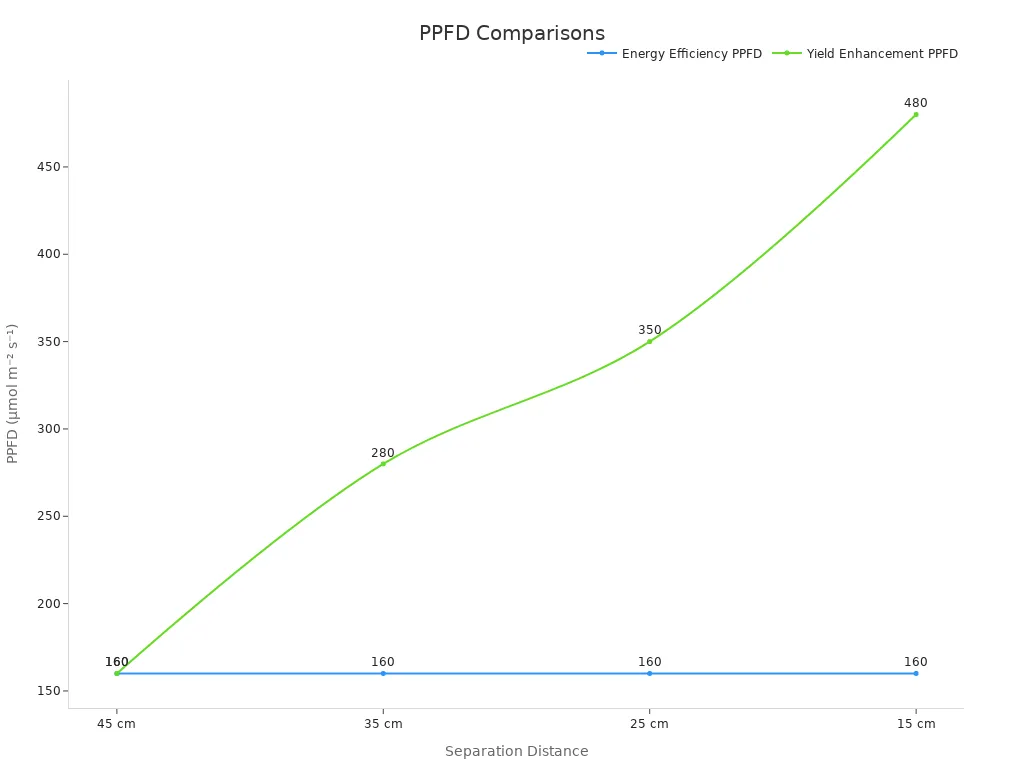
Indoor farming uses different LED types. Some LEDs give only red and blue light for leafy greens. Others use full-spectrum light for all plant stages. You can pick the best setup for your crops. Energy meters help you track how much power your lights use. When you are starting an indoor farm, always test your lighting setup to find what works best.
💡 Note: Close-canopy lighting and reflective curtains can lower your energy bill and help your crops grow faster.
Here is a table that shows top planting techniques and their impact:
| Technique/Method | Description/Statistic | Impact on Vertical Farming Performance |
|---|---|---|
| Crop Selection | Fast-growing, harvestable crops like leafy greens, herbs, microgreens, strawberries | Rapid turnover, efficient space use |
| Nutrient Delivery | Hydroponics and aeroponics deliver nutrients directly to roots | Precise supply, optimal growth |
| Water Conservation | Closed-loop water recycling, precision irrigation | Saves up to 90-95% water |
| Lighting | Advanced LED lighting tailored to plant needs | Year-round growth, energy efficiency |
| Environmental Monitoring | IoT sensors and AI for real-time monitoring | Optimizes growth conditions |
| Yield Statistics | Up to 300% higher productivity than traditional farming | Higher yields |
| Plant Density | Up to 50 plants per square foot | Maximizes space |
| Automation and Smart Technologies | Automation and AI-driven farming | Efficiency, consistency |
🌱 Tip: Use sensors and automation to plant faster and get better results.
Daily Care
Check your farm every day to keep plants healthy. Sensors watch temperature, humidity, light, and nutrients. These tools help you fix problems quickly. Automation and robots can plant, harvest, and pack crops. This lowers labor costs by up to 30%. It also helps you avoid mistakes.
- Watch your system with real-time IoT sensors.
- Use automation for jobs you do over and over.
- Keep climate steady with HVAC and CO₂ systems.
- Let AI and machine learning help you set the best conditions.
- Track how well your team works and how much you grow.
💡 Note: Daily care and smart technology help your farm run well and give you bigger harvests.
Harvest and Sales
Harvesting
You need to harvest your crops at the right time to get the best quality. Most vertical farms use automation to help with this step. Machines can cut and collect leafy greens or microgreens quickly. You should check your crops every day. Look for signs that they are ready, such as full leaves or bright color. Use clean tools to avoid spreading disease. After harvesting and selling, you must keep your crops cool to keep them fresh.
- Harvest in the morning for the best taste.
- Use gloves and clean trays.
- Move crops to a cool area right away.
🥬 Tip: Fast and careful harvesting and selling help you keep your produce fresh and safe.
Post-Harvest
After you harvest, you need to handle your crops with care. Wash and sort your produce to remove dirt or damaged leaves. Dry the crops gently to prevent mold. Pack them in clean, food-safe containers. Label each package with the date and type of crop. Store your produce in a cool room until you deliver it. Good post-harvest steps help you reduce waste and keep your customers happy.
- Wash and sort crops right after harvest.
- Use food-safe packaging.
- Store at 35-40°F for most greens.
The global vertical farming market is growing fast. Urbanization and the need for fresh food drive this growth. Many people want organic produce from local farms. You can use this demand to grow your business by focusing on quality and freshness.
Marketing
You need a strong plan for harvesting and selling your crops. Start by finding local buyers, such as restaurants, grocery stores, and markets. Show them how your crops are fresher and safer than those shipped from far away. Use social media to share your story and photos of your farm. Offer samples to new customers. You can also join local food events to meet more buyers.
| Marketing Strategy | Benefit |
|---|---|
| Direct sales to stores | Higher profits |
| Social media promotion | Reaches more customers |
| Local food events | Builds trust and connections |
The Asia-Pacific region leads in market share because of urban growth and less farmland. Companies like AeroFarms and Plenty use technology to improve harvesting and selling. You can follow their example by using smart tools and focusing on what your customers want. As more people look for fresh, local food, your vertical farm can stand out by offering quality and fast delivery.
📈 Note: Good marketing and careful harvesting and selling help you grow your business and reach more customers.
Gradual Expansion
Growing your vertical farm slowly helps you avoid big mistakes. You can begin with a small setup. Add more layers, crops, or new technology as you get bigger. Many farms grow in steps instead of all at once. For example, Nordic Harvest grew from 200 to 1,000 metric tons in one year by adding more space little by little. They worked with local stores and sold food in cities. This way, your farm grows with what the market wants and what your team can handle.
There are different ways to make growing your farm easier. The table below shows some good ideas:
| Strategy | Key Benefit | Measured Impact |
|---|---|---|
| Production Cycle Scheduling | Saves energy and keeps yields steady | Cuts energy use by 15-20% during slow times |
| Precision Agriculture Techniques | Makes crops better and more efficient | Makes crop quality 25% better |
| Advanced Water Recycling Systems | Uses less water and saves money | Lowers water use by up to 70% |
| Sustainable Waste Management | Cuts trash costs and helps the planet | Turns up to half of waste into compost |
Using these ideas helps you spend less, use fewer resources, and grow better crops.
Starting a vertical farm takes careful planning. You need to research your market before starting a vertical farm. Set clear goals when starting a vertical farm. Make a budget for starting a vertical farm. Choose the right crops for starting a vertical farm. Pick the best location for starting a vertical farm. Use smart technology when starting a vertical farm. Train your team for starting a vertical farm. Check your systems daily after starting a vertical farm. Connect with experts before starting a vertical farm. Take your first step today. Starting a vertical farm can help your community and the planet.
📝 Create a checklist for starting a vertical farm. Reach out to local experts for advice.
FAQ
What crops grow best in a vertical farm?
Leafy greens, herbs, and microgreens grow best. You can also try strawberries and some small fruits. These crops grow fast and need less space. They work well with hydroponic and aeroponic systems.
How much money do you need to start a vertical farm?
You need at least $100,000 for a small setup. Bigger farms cost more. Your budget should cover equipment, lighting, climate control, and staff. Always save extra money for surprises.
Do you need special training to run a vertical farm?
You do not need a degree, but you should learn about plant care, technology, and farm management. Many online courses and local workshops can help you get started.
💡 Tip: Hands-on practice helps you learn faster than just reading.
How do you control pests in an indoor farm?
You keep your farm clean and check plants every day. Use sensors to spot problems early. Remove sick plants right away. Try natural pest control methods first.
- Wash hands before touching plants
- Clean tools often
- Use sticky traps for insects