

Higher Yields
You want to grow more crops in your greenhouse. Many growers started using commercial greenhouse grow lights. They saw big changes. Tomato growers got 11-21% more fruit with intracanopy lighting. Cannabis growers had 20-25% more yield using under-canopy lights. Leafy greens growers saved money and worked faster. They cut costs by 25% with hydroponics and better lighting.
Some growers use spectrum-tunable LED lights. They saw up to 35% more crops. A few even got over 50% more growth with the right light recipes. Tomatoes, cucumbers, peppers, and leafy greens do very well with these lights. Adding more light usually means more crops. If you give 1% more daily light, you get about 1% more yield. This rule helps you plan for bigger harvests.
“We switched to LED grow lights last year. Our tomato yield went up by almost a third. The plants look healthier. We harvest more often.”
— Commercial Tomato Grower
| Metric / Aspect | Statistic / Finding |
|---|---|
| Yield Increase (≥80 grams/sq ft) | Jumped from 14% in 2023 to 47% in 2024 |
| High Yield (≥130 grams/sq ft) | 12% of 2024 participants reached this level |
| Yield ≥50 grams/sq ft (canopy) | Rose from 55% in 2022 to 70% in 2024 |
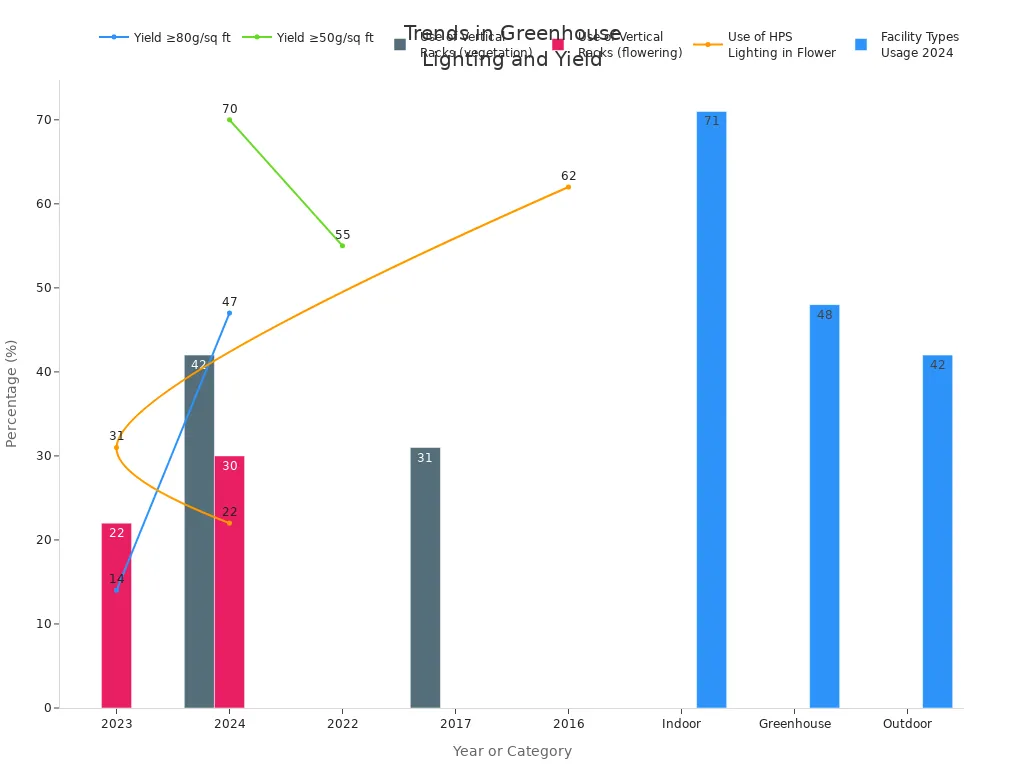
You can use these real results to help your own greenhouse.
Key Takeaways
- Using commercial greenhouse grow lights, like LEDs, helps growers get more crops and better plants. – LED lights use less energy and cost less because they need less power and last longer than old HPS lights. – Changing the light color and where lights are placed can help crops grow better, look nicer, and have more nutrients for different plants and times. – Keeping lights clean and using smart controls makes lighting work well, stay safe, and be simple to use. – Smart greenhouse systems with sensors and remote controls help growers save energy, make crops healthier, and earn more money.
Success Stories

Better Crop Quality
You want your crops to be high quality. Commercial greenhouse grow lights help with this. They make your produce look, taste, and feel better. You can change the light spectrum and intensity. This boosts nutrients like vitamin C and antioxidants. Blue and red LED lights raise vitamin C in lettuce, cabbage, and tomatoes. They also lower nitrate levels. This makes your crops safer and healthier.
| Crop Quality Metric | Improvement Range / Effect | Notes |
|---|---|---|
| Biomass Yield (fresh & dry mass) | Went up by 39.55% to 95.95% in 13 vegetable and herb species | Biggest gains with red and blue LED combinations |
| Vitamin C Concentration | Increased with blue and red LED lights | Lettuce, cabbage, tomatoes, rocket, mustard, spinach |
| Antioxidant Activity | Went up with LED lights | Better nutrition and health quality |
| Nitrate Concentration | Dropped a lot with red and green LED light | Safer, higher-quality crops |
| Morphological Traits | Better compactness and shape with blue light | Improved look and structure |
| Pigment Concentration | Went up with blue and green light | Brighter color quality |
You can also use light to change how crops look. Shade management and timing of light can stop problems like cracked tomato skin. Many growers say their crops grow faster and look better. This is true even when there is less sunlight.
Profit Growth
You want your business to do well. Commercial greenhouse grow lights help you save money and make more profit. Many growers pay 30 to 40% less for energy after switching to LEDs. LEDs use 40-60% less energy than old lights. They last longer, so you buy fewer replacements and need less labor.
Here are some real numbers from growers:
- One farm saved over $230,000 a year on energy after switching to LED lights.
- Maintenance costs dropped because LEDs do not need new bulbs every year.
- A 10-acre herb farm in Colorado saw a 30% better return on investment in 18 months. Their yearly yield went from 8.2 tons to 11.7 tons. Energy use per kilogram dropped from 0.32 kWh to 0.19 kWh.
💡 Tip: LEDs make less heat. You can plant crops closer together. This lets you use more space and grow more.
You can also get rebates and incentives for upgrading your lighting. These savings, plus higher yields and better crops, make commercial greenhouse grow lights a smart choice for your business.
Choosing Commercial Greenhouse Grow Lights

LED vs. HPS
When you choose between LED and HPS lights, you want to get the best results for your crops and your business. Many commercial growers look at daily light needs, energy use, and heat output. LEDs give you strong light with less electricity. They also make less heat, so you spend less on cooling. HPS lights cost less at first but use more power and make more heat. This can raise your bills and make it harder to control the greenhouse temperature.
| Factor | HPS Grow Lights | LED Grow Lights |
|---|---|---|
| Energy Efficiency | High power use, lots of heat | Low power use, little heat |
| Light Spectrum | Mostly yellow/red, good for flowering | Full spectrum, good for all growth stages |
| Lifespan & Maintenance | 24,000 hours, more replacements needed | 50,000+ hours, less maintenance |
| Initial Cost | Lower upfront, higher long-term costs | Higher upfront, lower long-term costs |
| Plant Suitability | Best for flowering crops | Works for all crops and stages |
Growers who switched to LEDs say they get denser crops, better quality, and save money over time. One farm saved over $72,000 in ten years by using LEDs instead of HPS.
Light Spectrum
The light spectrum you choose can change how your crops grow. They give your plants all the colors they need, just like sunlight. Red light helps with flowering and fruiting. Blue light makes plants strong and compact. Some crops, like lettuce, grow best under full spectrum light. Others, like basil, may need more red and blue. If you use too much red or blue, your plants can grow too tall or lose quality. Many growers now use spectrum-tunable LEDs to match the light to each crop and stage.
🌱 Tip: Try different light recipes for each crop. You may see better yields and higher quality.
Energy and Heat
Energy use and heat are big concerns in commercial greenhouses. HPS lights use more energy and make a lot of heat. This means you need more cooling, which costs more money. LEDs use up to 70% less energy and make less heat. You can place them closer to your plants and use your space better. Still, LEDs do make some heat at the power supply. You should keep your lights clean and check for dust or moisture. Good airflow and waterproof fixtures help prevent problems. Regular checks keep your system safe and working well.
If you want to save money and grow better crops, commercial greenhouse grow lights with LED technology are a smart choice. They last longer, cost less to run, and help you control your greenhouse environment.
Practical Tips for Growers
Light Positioning
Getting the right light setup in your greenhouse makes a big difference. You want every plant to get the same amount of light. Here are some tips from experienced growers:
- Adjust the angle and height of your lights as your plants grow. Move them closer for seedlings (about 12 to 24 inches) and raise them as plants get taller.
- Rotate or tilt your lights during winter to help all plants grow evenly.
- Avoid placing lights too far from the canopy. If you do, you waste energy and your crops may not grow well.
- Use close-canopy lighting by keeping lights 15–25 cm above the plants. This helps save energy and gives even coverage.
- Make sure your lights are spaced evenly. This prevents shade spots and uneven growth.
- Use reflective curtains or surfaces to bounce light back onto your crops.
- Always check airflow around your lights. Good airflow stops heat and humidity from building up.
💡 Tip: Many growers now use AI-driven systems to adjust light position and intensity automatically. This helps you get the most out of your commercial greenhouse grow lights.
Maintenance
Keeping your lighting system in top shape saves you money and trouble. Here’s what you should do:
- Clean your LED fixtures with a soft cloth and mild cleaner. Focus on the lenses and diffusers.
- Check for dust, condensation, or debris every week.
- Use waterproof fixtures and keep power supplies away from wet areas.
- Inspect wiring and connections often. Look for any damage.
- Measure light intensity at the canopy with a PAR meter. This helps you spot problems early.
- Adjust fixture height and spacing as your plants grow.
- Rotate plant positions to make sure all crops get even light.
Train your staff on these steps. Keep records of all maintenance. This helps you track performance and fix issues fast.
Maximizing Efficiency
You want to get the best return on your investment. Here’s how you can boost efficiency:
- Choose energy-efficient LED lights with customizable spectrums and long lifespans.
- Use supplemental lighting to extend growing hours during cloudy days.
- Place reflective surfaces near your crops to reduce wasted light.
- Set up digital controls to automate lighting schedules and adjust intensity.
- Combine natural sunlight with artificial light for steady growth all year.
- Monitor airflow with fans and vents. Good airflow keeps temperature and humidity in check.
- Use sensors to track light levels and avoid overexposure.
“Switching to energy-efficient lighting systems can lead to a 20-30% increase in crop yields,” say agricultural experts.
Smart use of commercial greenhouse grow lights, paired with good airflow and automation, helps you grow more, save energy, and boost profits.
Intelligent Agricultural Growing System
Integrated Lighting and Environmental Control
Smart greenhouses use sensors to check temperature, humidity, CO2, and light. These sensors send live data to the system controllers. The system can change lights, fans, vents, and CO2 levels by itself. If it gets too hot, the system opens vents or turns on fans. If plants need more light, the system turns on grow lights or changes their color and brightness. This keeps plants in good conditions all day and night. You save energy and waste less because the system only uses what plants need. Many growers say this setup helps them grow healthier plants and get bigger harvests.
Remote Monitoring and Automation
You do not have to be inside the greenhouse to know what is happening. With remote monitoring, you can check your greenhouse from your phone or computer. The system sends alerts if something changes, like a drop in temperature or a broken fan. You can change settings or turn equipment on and off from anywhere. Automation takes care of watering, feeding, and even pest control. Some systems use drones or robots to spray plants or move crops. You can manage many greenhouses at once, making your work easier and more organized.
- Cloud-based controls let you run your greenhouse from anywhere.
- Automated systems handle lighting, irrigation, and climate.
- Real-time data helps you make quick decisions.
- Less time spent on manual checks means more time for planning and growth.
User Feedback on Smart Systems
Many commercial growers say smart systems make their work faster and more reliable. One grower used a smart system called DynaGrow and saved up to 64% on lighting energy while keeping crop yields high. Others say they spend less on labor because the system does routine tasks. You can train new staff quickly since the system gives reminders and alerts. Some growers report that their crops grow faster and look better because the environment stays steady. Even though the first setup costs more, most growers see a strong return on investment over time. Government grants and new technology make it easier to get started. Smart systems help you grow more, use less, and stay ahead in the market.
You have seen how smart lighting helps you grow more, save energy, and boost profits. Many commercial growers learned to match light spectrum and intensity to each crop and stage. They use sunrise and sunset settings to keep plants healthy. You can try these tips in your own greenhouse. Talk with experts or visit other growers to see new systems in action. The future looks bright with smart controls, wireless lighting, and better yields for your business.
FAQ
What crops benefit most from commercial greenhouse grow lights?
You can boost yields in tomatoes, cucumbers, peppers, leafy greens, and herbs. Many commercial growers see the biggest gains with fruiting crops and fast-growing greens. Specialty crops like strawberries and cannabis also respond well to advanced lighting.
How do you choose the right light spectrum for your crops?
You should match the light spectrum to your crop and growth stage. Full spectrum works for most crops. Red light helps with flowering and fruiting. Blue light makes plants strong. Many growers use spectrum-tunable LEDs for the best results.
Can you save money by switching to LED grow lights?
Yes! Most commercial growers cut energy costs by 30–60% after switching to LEDs. You also spend less on maintenance and replacements. Many growers see a return on investment within two years.
How often should you maintain your greenhouse lighting system?
Check your lights every week. Clean fixtures, inspect wiring, and measure light levels. Regular maintenance keeps your system safe and efficient. Many growers set a schedule to avoid missed checks.
What are the main challenges when upgrading your lighting system?
You may face high upfront costs and need to train your staff. Some growers need to adjust cooling systems because LEDs make less heat. Planning and expert advice help you avoid problems.